

















Opposition single candidate plan
Nigeria’s opposition parties are struggling to preserve plans for a single presidential candidate against President Bola Tinubu after several influential politicians emerged on competing platforms ahead of the 2027 general election.
The disagreement has raised fears that the opposition single candidate plan may collapse entirely, recreating the divided electoral field that helped Tinubu and the All Progressives Congress secure the presidency in 2023.
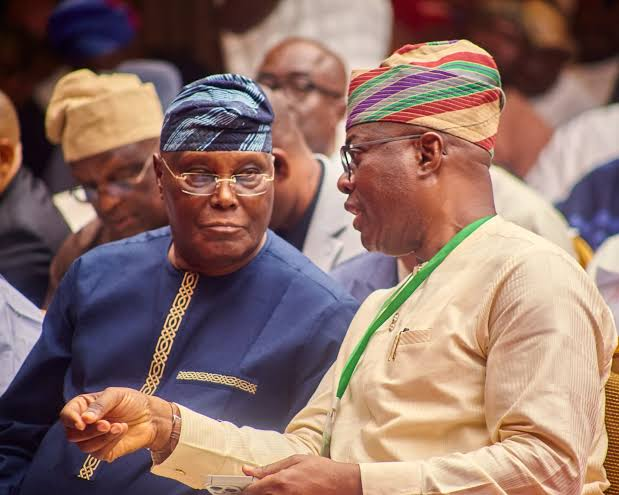
Opposition leaders had gathered in Ibadan, Oyo State, on April 25, 2026, where they agreed to work towards greater cooperation and explore the possibility of presenting one candidate against the incumbent President.
The summit brought together leading political figures, including former Vice-President Atiku Abubakar, Peter Obi, Rabiu Kwankwaso, Oyo State Governor Seyi Makinde, former Minister of Transportation Rotimi Amaechi and former Senate President David Mark.
Representatives of several opposition parties also signed the Ibadan communiqué supporting closer collaboration.
However, the unity displayed at the summit has weakened following party primaries and the emergence of different presidential tickets.
Atiku and Amaechi have emerged as the presidential and vice-presidential candidates of the African Democratic Congress, while Obi and Kwankwaso are leading the Nigeria Democratic Congress ticket.
Makinde, meanwhile, has emerged as the presidential candidate of the Allied People’s Movement.
These developments have left the opposition single candidate plan facing serious political, legal and personal obstacles.
Ibadan agreement begins to unravel
The April summit was presented as an important step towards preventing opposition votes from being divided among several candidates.
Party leaders recognised that no single opposition organisation appeared strong enough to challenge the APC’s national structure, incumbency advantage and control of most state governments.
Their proposed solution was to build a common platform or negotiate an arrangement under which opposition parties would support one presidential candidate.
That understanding was always politically difficult.
Each major opposition figure commands a different support base, possesses personal presidential ambitions and operates through a party whose members expect to contest elections under its identity.
The opposition single candidate plan began to falter when some parties distanced themselves from the Ibadan resolutions and leading politicians pursued separate nominations.
Peter Obi and Rabiu Kwankwaso later withdrew from the ADC-led alliance, citing internal disputes, court cases, suspicion and division.
Their departure weakened the coalition and led them towards the Nigeria Democratic Congress, where they eventually secured a joint presidential ticket.
Atiku and Amaechi lead ADC ticket
Atiku Abubakar has emerged as the ADC presidential candidate, with Rotimi Amaechi as his running mate.
The ticket combines a prominent northern politician with a former governor and minister from the South-South.
Atiku has contested the presidency several times and retains an extensive political network across the country.
Amaechi brings experience as a former governor of Rivers State, former minister and influential figure within Nigeria’s political establishment.
Supporters of the ADC ticket may argue that Atiku’s national structure and Amaechi’s southern background provide the experience required to confront Tinubu.
However, their emergence also complicates the opposition single candidate plan, especially because other opposition leaders are unwilling to abandon their own tickets.
The Atiku camp has reportedly maintained that opposition parties may still cooperate even though they have already selected presidential candidates.
Such cooperation could involve negotiations, regional agreements, coordinated campaigns or the withdrawal of some candidates before the election.
Nevertheless, any arrangement would require difficult concessions from politicians who have already secured party nominations.
Obi-Kwankwaso ticket creates rival centre
Peter Obi and Rabiu Kwankwaso have emerged as another major opposition force under the Nigeria Democratic Congress.
Obi finished third in the 2023 presidential election after building strong support among young Nigerians, urban voters and sections of the South.
Kwankwaso finished fourth but demonstrated substantial influence in Kano State and parts of the North-West.
Their joint ticket is designed to combine Obi’s southern and youth appeal with Kwankwaso’s established northern political organisation.
Supporters believe the partnership could create a competitive regional balance and attract voters dissatisfied with both the APC and older political structures.
However, the emergence of the Obi-Kwankwaso ticket has further weakened the opposition single candidate plan because it provides a serious alternative to the Atiku-Amaechi ticket.
Neither group has publicly demonstrated a willingness to surrender its presidential position to the other.
The dispute is therefore not merely about party ideology.
It is also about who should lead the opposition, which region should produce the presidential candidate and how political positions should be shared among coalition partners.
Makinde offers another option
Seyi Makinde’s emergence as the APM presidential candidate adds another important dimension to the contest.
The Oyo State governor has presented himself as a younger alternative capable of offering a different style of leadership.
His supporters argue that his performance in Oyo State gives him a governance record that can be used to build a national campaign.
Makinde’s candidacy could attract voters in the South-West, including those dissatisfied with Tinubu but reluctant to support Atiku or other opposition candidates.
It could also divide votes within a region considered central to the President’s political base.
However, Makinde’s decision to contest independently creates another obstacle to the opposition single candidate plan.
A credible unity arrangement would require him, Atiku, Obi, Kwankwaso and other contenders to agree on one candidate, one running mate and a common campaign structure.
Such negotiations become more difficult after candidates have invested resources, received party nominations and made commitments to supporters.
PDP factions take different positions
The internal conflict within the Peoples Democratic Party has added another layer of uncertainty.
The Tanimu Turaki-led faction has kept the possibility of an opposition alliance open, arguing that no single party can defeat the incumbent without broader cooperation.
Its spokesperson, Ini Ememobong, said strategies capable of achieving the ultimate objective of defeating the ruling party remained under consideration.
In contrast, the PDP faction associated with Federal Capital Territory Minister Nyesom Wike reportedly rejected the alliance proposal.
The conflicting positions demonstrate how factional disputes within individual parties can undermine the wider opposition single candidate plan.
Before opposition parties can negotiate successfully with one another, some must first resolve leadership conflicts within their own organisations.
A divided party cannot bargain effectively because rival factions may separately endorse different candidates or challenge agreements in court.
That uncertainty also makes potential coalition partners reluctant to commit resources to arrangements that could later be invalidated.
https://ogelenews.ng/2027-opposition-unity-falters-as-rival-candidates-e…
Why one candidate matters to the opposition
The argument for one opposition candidate is largely based on the outcome of the 2023 presidential election.
Tinubu won the election with 8,794,726 votes.
Atiku received 6,984,520 votes, Obi secured 6,101,533 votes and Kwankwaso polled 1,496,687 votes.
The three leading opposition candidates collectively received considerably more votes than Tinubu, although votes cannot simply be added together because their supporters may not automatically transfer their loyalty to a joint candidate.
Nevertheless, the result demonstrated how a divided field could allow a candidate to win without securing an outright majority of the total votes cast.
That experience gave rise to the opposition single candidate plan.
Coalition supporters believe that combining party structures, campaign resources and regional support could produce a stronger challenge to the APC.
They also point to the 2015 election, when opposition parties merged into the APC and defeated incumbent President Goodluck Jonathan.
Nigeria has recorded only one defeat of a sitting President since the return to civilian rule in 1999, making the 2015 coalition an important reference point for current
opposition leaders.
A coalition is not simple arithmetic
Although opposition unity could improve electoral competitiveness, it does not guarantee victory.
Supporters of Atiku, Obi, Kwankwaso or Makinde may not automatically follow their preferred candidate into an alliance led by someone else.
Some voters support candidates because of personal trust, regional identity, ideology or dissatisfaction with established political parties.
A negotiated elite agreement may therefore fail to reproduce the combined votes recorded by separate candidates in 2023.
The opposition single candidate plan must offer more than a formula for sharing positions.
It needs a clear policy programme addressing insecurity, unemployment, inflation, electricity, education, healthcare and institutional reform.
A coalition formed only to remove Tinubu may struggle to maintain unity once difficult questions arise over economic policy and governance.
Opposition leaders must explain what they would do differently and how their proposed government would manage Nigeria’s competing regional and social interests.
APC dismisses unity proposal
The APC has dismissed the opposition’s proposed alliance as incapable of stopping Tinubu’s re-election.
The ruling party benefits from incumbency, a large national organisation and the support of numerous governors, ministers and lawmakers.
It will likely portray the opposition coalition talks as an arrangement driven by personal ambition rather than a coherent programme for government.
The APC may also benefit directly from the collapse of the opposition single candidate plan.
Multiple opposition candidates would divide campaign funding, polling agents, media attention and voter mobilisation.
They could also split votes in closely contested states, allowing the APC to win with a plurality rather than a majority.
However, the ruling party cannot assume that opposition division guarantees victory.
Economic hardship, insecurity, government performance and public confidence in the electoral process will also shape the outcome.
Legal and electoral deadlines create pressure
Political parties have reportedly completed their primaries and uploaded the names of their candidates following the May 30 deadline set by the Independent National Electoral Commission.
That development makes a late alliance more complicated.
Parties seeking to replace candidates or form new arrangements must comply with constitutional requirements, the Electoral Act, INEC regulations and applicable deadlines.
The opposition single candidate plan cannot be implemented through a private political announcement alone.
Any withdrawal, substitution or endorsement must be managed within the legal framework governing party nominations.
This is especially important because poorly executed substitutions could trigger court cases capable of damaging a party’s campaign or invalidating its candidate.
Opposition leaders therefore face a narrowing period in which to reach a politically acceptable and legally valid agreement.
Regional balancing remains difficult
Nigeria’s presidential politics is strongly influenced by regional, religious and ethnic calculations.
Atiku’s supporters may argue that the North should produce the next President or that he possesses the strongest nationwide structure.
Obi’s supporters insist that his performance in 2023 and popularity among young voters make him the natural opposition leader.
Kwankwaso’s movement believes his organisation in Kano and the wider North-West cannot be ignored.
Makinde’s camp may present him as a younger southern candidate with executive experience.
These competing claims are among the greatest obstacles facing the opposition single candidate plan.
Selecting one candidate means asking several influential politicians and their supporters to accept reduced roles.
The negotiation must also determine the running mate, party leadership, campaign funding and distribution of political positions.
Without trust, such negotiations can quickly become accusations of betrayal, domination or secret collaboration with the ruling party.
Opposition needs transparent selection process
A single candidate imposed by a small group of political leaders may create more division than unity.
The opposition needs a transparent selection process that gives participating parties and major political blocs confidence in the outcome.
Possible methods include a joint primary, negotiated consensus or independent assessment based on national support, organisational strength and electoral viability.
Each method has weaknesses.
A joint primary would require an agreed register and rules.
Consensus could favour wealthy or influential political figures.
Opinion polls may be unreliable where respondents fear disclosing preferences or where polling coverage is uneven.
The success of the opposition single candidate plan will depend on whether defeated aspirants believe the process was fair enough to justify supporting the winner.
Public commitments should be written, clear and enforceable within party rules.
Voters deserve policy debate
The continuing focus on personalities risks overshadowing the issues that will determine Nigerians’ welfare.
Citizens are confronting high living costs, unemployment, insecurity and pressure on public services.
They need to know how each opposition candidate intends to address those challenges.
An alliance that spends months debating who receives the presidential ticket without publishing a credible programme may lose public confidence.
The opposition single candidate plan should therefore be accompanied by a common policy document.
Such a document should explain the coalition’s positions on fuel pricing, taxation, debt, electricity, policing, constitutional reform and social protection.
It should also state how the coalition would prevent the internal conflicts that have weakened previous opposition arrangements.
Tinubu enters race with structural advantage
Tinubu remains the candidate to beat because he controls the federal executive, leads the ruling party and enjoys access to an established national campaign organisation.
The APC also controls many states and has continued to attract defectors from opposition parties.
These advantages do not determine the election, but they provide the President with stronger structures for fundraising, mobilisation and election-day coordination.
The opposition’s division therefore strengthens Tinubu before formal campaigns gather full momentum.
Reuters reported that analysts considered the earlier coalition agreement to be in serious danger after Obi and Kwankwaso left the ADC alliance, warning that rival opposition candidates could divide their own votes.
The opposition single candidate plan was intended to remove that advantage.
Its collapse would leave the challengers confronting both the APC and one another.
Final decision still possible
Despite the divisions, the possibility of further negotiations has not disappeared.
Candidates can still hold talks, agree on coordinated strategies or endorse one another, provided any arrangement complies with electoral laws and party rules.
Political alliances often change rapidly as elections approach and opinion polls, campaign finances and regional calculations become clearer.
However, time is working against the opposition.
The longer rival candidates campaign separately, the more difficult it will become to persuade supporters to accept a late coalition.
Each public attack between opposition camps also reduces trust and supplies the APC with material for its campaign.
The opposition single candidate plan can survive only if the major contenders place collective strategy above personal ambition and agree on a credible process for choosing a flag bearer.
For now, the opposition remains divided among competing presidential tickets.
That division gives Tinubu an early political advantage, but the election will ultimately be decided by voters assessing the President’s record, the strength of his challengers and the credibility of the electoral process.