




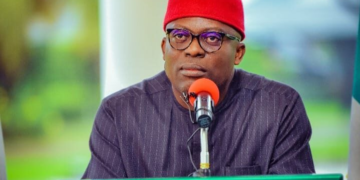










PSC Osun election monitoring team
The Police Service Commission has deployed a special monitoring delegation to Osun State ahead of the August 15, 2026 governorship election, warning police officers assigned to election duties that misconduct, political bias or actions capable of undermining the credibility of the poll will attract sanctions.
The PSC Osun election monitoring team will independently observe the conduct of police personnel before, during and after voting as part of efforts to ensure professionalism and strengthen public confidence in the electoral process.
The delegation is led by retired Deputy Inspector-General of Police Taiwo Lakanu, a member of the Police Service Commission board and Chairman of its Standing Committee on Police Matters.
The Commission said the deployment was necessary because police officers will play a critical role in maintaining order, protecting election officials and materials and ensuring that voters can exercise their franchise without intimidation.
Head of Protocol and Public Relations at the PSC, Torty Njoku Kalu, said the monitoring delegation would assess whether officers deployed for the election comply strictly with the principles and guidelines governing election security.
The Commission warned that officers found compromising the credibility of the election would be sanctioned.
PSC demands neutrality from officers
A central responsibility of the PSC Osun election monitoring team will be assessing the neutrality of police officers deployed across Osun State.
The Commission said officers must remain apolitical and avoid conduct that could suggest support for any candidate or political party.
Police personnel are expected to create a safe environment in which citizens can vote freely and peacefully.
This responsibility is particularly important during highly competitive governorship elections, where public confidence in security agencies can affect perceptions of the entire electoral process.
The PSC said police conduct must remain impartial, rule-based and civil throughout the election period.
Officers must therefore resist attempts by political actors to influence their decisions or use security personnel to intimidate opponents and voters.
The Commission’s warning also serves as a reminder that election security does not mean controlling voters. It means protecting them.
Officers who compromise poll face sanctions
The PSC has made clear that the PSC Osun election monitoring team is not being deployed merely as an observer group without disciplinary authority behind it.
The Commission is constitutionally responsible for appointment, promotion and discipline within the Nigeria Police Force, excluding the Inspector-General of Police.
That gives its monitoring operation considerable significance.
If credible evidence establishes that an officer violated election-duty guidelines, the Commission can initiate disciplinary action in accordance with applicable procedures.
The PSC specifically warned that it would not hesitate to sanction officers found compromising the credibility of the election.
That should include any verified case of partisan conduct, intimidation, failure to protect voters or deliberate disregard for lawful election-security rules.
The warning is necessary because an election can be technically well organised by INEC and still lose public confidence if security personnel are perceived as partisan.
15,000 police officers deployed
About 15,000 police officers have already been deployed for the Osun governorship election.
The size of the deployment reflects the importance of security to the exercise.
Officers are expected to cover polling locations, collation centres and other strategic areas while also maintaining wider security across the state.
The PSC Osun election monitoring team will therefore be evaluating the conduct of personnel operating across a large security deployment.
The presence of thousands of police officers should reassure voters, but numbers alone do not guarantee a credible election.
Professional conduct is equally important.
An officer who understands electoral rules, respects voters and remains politically neutral contributes more to election credibility than an officer who merely carries out a visible security presence.
The Police Service Commission’s intervention is intended to reinforce that distinction.
August 15 poll draws closer
The Independent National Electoral Commission has confirmed Saturday, August 15, 2026, as the date for the Osun governorship election.
The election will determine who governs the state for the next four-year term.
With political campaigns reaching their final stage, security agencies are under pressure to ensure that competition does not deteriorate into intimidation or violence.
The PSC Osun election monitoring team will be operating against this backdrop.
Police officers may have to manage political gatherings, movement around polling areas, potential disputes and attempts to disrupt voting.
Their response must remain lawful and proportionate.
Election officers and materials also require protection because attacks on voting materials or collation centres could affect the credibility of the process.
Public confidence at stake
Trust in security agencies is particularly important during Nigerian elections.
Voters need confidence that police personnel stationed at polling units are there to protect the electoral process rather than influence it.
Even isolated examples of misconduct can spread rapidly through social media and create suspicion about the wider exercise.
That makes transparency important.
The PSC Osun election monitoring team should document complaints carefully, distinguish verified incidents from rumours and ensure that serious cases receive prompt attention.
Citizens should also be encouraged to report genuine misconduct through recognised channels rather than circulating allegations without evidence.
Where an officer performs professionally in difficult circumstances, that conduct should also be acknowledged.
Effective monitoring should identify both violations and examples of exemplary service.
Lessons from previous elections
The Police Service Commission has previously deployed monitors during governorship and general elections to observe police conduct.
During the 2018 Osun governorship election, the Commission deployed officials across the state’s three senatorial districts and 30 local government areas.
After that election, the PSC described police conduct as largely satisfactory, while acknowledging isolated incidents including situations where officers were overwhelmed and unable to prevent some electoral offences.
The current PSC Osun election monitoring team therefore continues an established oversight practice.
But the standard should continue to improve.
Nigeria’s electoral institutions have increasingly introduced technologies and administrative reforms aimed at strengthening elections. Security institutions must improve at the same pace.
Professional policing is an essential part of that process.
Police must protect voters, not political interests
Election security requires a delicate balance.
Police officers must be strong enough to prevent violence and electoral offences but restrained enough not to intimidate peaceful voters.
They must protect candidates and party agents without becoming attached to any political interest.
The PSC Osun election monitoring team should therefore pay particular attention to how officers interact with voters, electoral officials, journalists, observers and party representatives.
Officers should not interfere with lawful observation of the electoral process.
They should also not prevent citizens from exercising rights permitted under electoral regulations.
At the same time, voters and political supporters have a responsibility to obey lawful security instructions and avoid violence.
A peaceful election cannot be achieved by the police alone.
https://ogelenews.ng/psc-osun-election-monitoring-team
Monitoring should extend beyond election day
The PSC’s mandate covers police behaviour before, during and after voting.
That is important because electoral tension does not automatically end when polling units close.
Collation can become one of the most sensitive stages of an election.
Political supporters may gather around collation centres, while disputes over results can increase tension.
The PSC Osun election monitoring team should therefore continue its work until the security-sensitive stages of the election are completed.
Police officers deployed around collation centres must remain disciplined and avoid allowing unauthorised persons to interfere with the process.
They must also protect journalists and accredited observers carrying out legitimate duties.
After the results are announced, security personnel may still be required to prevent violence involving celebrating supporters or dissatisfied political groups.
PSC oversight must produce consequences
Monitoring becomes meaningful only when violations produce consequences.
If the Commission receives credible evidence that an officer acted improperly, the matter should be investigated quickly and transparently.
The PSC Osun election monitoring team should produce a post-election assessment detailing the general performance of police personnel and any significant violations observed.
Such reporting can strengthen future election-security planning.
It can also help citizens understand whether complaints were merely recorded or actually investigated.
Where disciplinary proceedings follow, the public should receive appropriate information about their outcome without compromising legitimate personnel procedures.
A warning issued before an election has little deterrent value if officers believe nothing will happen after misconduct.
Police leadership also warns against interference
The wider Nigeria Police Force has also emphasised professional conduct ahead of the poll.
The Inspector-General of Police has engaged civil society organisations over election security and stressed the importance of neutrality as preparations intensify for August 15.
Such commitments must now be reflected at polling-unit level.
Senior officers can issue strong directives from Abuja and Osogbo, but voters will judge the police by the conduct of the officers they encounter in their communities.
The PSC Osun election monitoring team therefore has an important role in bridging the gap between official promises and actual field conduct.
Ogele News perspective
Deploying an independent PSC monitoring delegation ahead of the Osun election is a sensible step.
Nigeria has learned repeatedly that election credibility depends on more than counting ballots correctly.
Security agencies can strengthen an election when they act professionally, but they can also damage public confidence when they appear partisan.
The Police Service Commission must therefore ensure that its monitors are visible, accessible and prepared to act on credible complaints.
The PSC Osun election monitoring team should not become a ceremonial delegation that simply observes proceedings and leaves.
Its findings should contribute to accountability.
Officers who protect voters, remain neutral and handle difficult situations professionally deserve recognition.
Those proven to have intimidated voters, supported politicians or compromised the electoral process should face appropriate disciplinary action.
Political parties also have responsibilities.
They should not attempt to induce, pressure or recruit police officers into partisan activity.
Citizens should cooperate with lawful security arrangements while promptly reporting genuine abuse.
Ultimately, the August 15 Osun governorship election will test several institutions at once: INEC’s ability to administer the poll, political parties’ willingness to compete peacefully and the police’s capacity to provide neutral security.
For the Police Service Commission, the task is clear.
The PSC Osun election monitoring team must ensure that the thousands of officers deployed to Osun understand that their loyalty on election day belongs not to candidates or parties but to the law and the Nigerian people.
https://www.inecnigeria.org/media-accreditation-for-osun-state-governorship-election