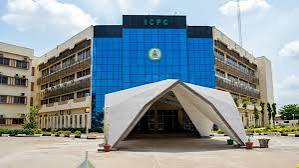
















ICPC uncovers 908 ghost workers
The Independent Corrupt Practices and Other Related Offences Commission has uncovered 908 suspected ghost workers across more than 50 federal ministries, departments and agencies, with the Nigeria Police Force accounting for the largest number of questionable payroll entries.
The anti-corruption commission said approximately ₦942 million linked to suspected fraudulent salary payments had been recovered following its investigation into irregularities in the Federal Government’s payroll system.
ICPC Chairman, Dr Musa Adamu Aliyu, SAN, disclosed the findings while providing an update on the commission’s investigation into payroll fraud in federal institutions. The investigation began in 2024 after irregularities were detected in pension and salary payments.
The disclosure that ICPC uncovers 908 ghost workers has again exposed weaknesses in the Integrated Payroll and Personnel Information System, which was established to eliminate payroll fraud, improve transparency and ensure that government salaries are paid only to legitimate public servants.
Police account for 570 suspected ghost workers
According to figures presented by the ICPC chairman, the Nigeria Police Force topped the list with 570 suspected ghost workers. This means that the police accounted for nearly 63 per cent of the 908 questionable payroll entries identified during the exercise.
The National Water Resources Authority followed with 80 suspected ghost workers, while the Federal Ministry of Works recorded 56.
The Ministry of Foreign Affairs had 24 suspected ghost workers, while the Ministry of Defence recorded 19. The Federal Ministry of Power and the Ministry of Industry, Trade and Investment each had 17 suspected cases.
The Federal Ministry of Health recorded 15, while the Office of the Head of the Civil Service of the Federation had 12 suspected ghost workers.
The ICPC also listed the Office of the Accountant-General of the Federation and the Ministry of Interior among the affected institutions, although the commission did not publicly state the number of suspicious entries linked to the two bodies.
The figures were reported as ICPC uncovers 908 ghost workers, but it is important to describe those affected as suspects until investigations, administrative hearings or court proceedings establish individual responsibility.
Officials allegedly enrolled relatives
The ICPC chairman said investigators discovered cases in which senior public officials allegedly inserted the names of relatives and associates into government payrolls, even though those individuals were not legitimate employees.
In one particularly disturbing case, an unnamed suspect allegedly enrolled his wife, son and mother-in-law on the payroll. The suspect was also accused of collecting the salaries assigned to 12 other workers.
Such schemes ordinarily require more than the appearance of a fictitious name on a salary list. Payroll information, personnel records, bank details and employment documentation may have to be created or manipulated before payments can be processed.
The discovery that ICPC uncovers 908 ghost workers therefore raises serious questions about the officials responsible for recruitment, documentation, payroll approval, auditing and salary disbursement across the affected institutions.
It also raises the possibility that some insiders may have exploited gaps in the IPPIS platform or bypassed established verification procedures.
https://ogelenews.ng/police-top-list-as-icpc-uncovers-908-suspected-ghos…
Court orders forfeiture of ₦941.9m
The latest disclosure followed a Federal High Court order granting the final forfeiture of exactly ₦941,994,079.86 linked to the suspected IPPIS payroll fraud.
The official ICPC account said Justice Binta Nyako of the Federal High Court in Abuja ordered the money permanently forfeited to the Federal Government after considering an application filed by the commission.
The commission had earlier published the names of 910 suspected beneficiaries in two national newspapers on March 18, 2026, giving anyone with a legitimate interest in the frozen funds an opportunity to present a claim.
The ICPC said the investigation traced salary payments to accounts linked to fictitious employees. Some of the receiving accounts reportedly bore names that did not match those of the supposed workers, while certain accounts received several salary payments at the same time.
The court-ordered forfeiture gives financial weight to the announcement that ICPC uncovers 908 ghost workers, but it does not automatically establish the criminal guilt of every person whose account was investigated.
Criminal liability must still be determined through proper investigation and prosecution, where sufficient evidence exists.
Investigation started with IPPIS review
The wider investigation followed an ICPC systems study conducted in 2023. The study reportedly identified numerous suspected ghost workers embedded in the payrolls of federal ministries and agencies.
President Bola Tinubu subsequently approved a comprehensive audit of the Integrated Payroll and Personnel Information System.
In April 2024, the ICPC began a joint investigation with the Office of the Accountant-General of the Federation. The initial exercise identified 587 suspected ghost workers on the IPPIS platform.
The commission later placed Post No Debit restrictions on suspicious accounts between August and November 2024, preventing money from being withdrawn while investigators examined the transactions.
A verification exercise conducted in 2025 cleared 120 civil servants whose identities and employment records were confirmed. They were subsequently restored to the payroll.
However, the ICPC said 467 bank accounts remained connected to individuals who could not be verified. The ₦941.9 million frozen in those accounts became the subject of the forfeiture proceedings.
This background is crucial when reporting that ICPC uncovers 908 ghost workers. The case has developed through several stages, including a systems review, account restrictions, physical verification and judicial proceedings.
More institutions affected
The commission’s official statement on the court case listed several institutions affected by the wider payroll investigation.
They included the Nigeria Police Force and the federal ministries responsible for defence, education, agriculture, works, water resources and interior.
Educational institutions named by the ICPC included the University of Benin, University of Calabar, University of Nigeria, Nsukka, University of Maiduguri and Ahmadu Bello University, Zaria.
The National Board for Arabic and Islamic Studies and the Office of the Accountant-General of the Federation were also mentioned.
However, inclusion on the list does not mean every official or employee of the institutions participated in fraud. Responsibility must be assigned to the individuals who created, approved, managed or benefited from the suspected false records.
The announcement that ICPC uncovers 908 ghost workers should therefore prompt targeted investigations rather than sweeping accusations against entire institutions.
Nigeria’s persistent payroll problem
Nigeria has spent years attempting to eliminate ghost workers from federal, state and local government payrolls.
The IPPIS platform was introduced to centralise personnel records and salary payments, but anti-corruption investigations have repeatedly revealed attempts to manipulate public payroll systems.
In February 2025, the ICPC chairman announced that the commission had recovered more than ₦20 billion allegedly diverted through fraudulent ghost-worker pension arrangements during 2024.
The latest case demonstrates that digital payroll platforms cannot eliminate fraud without accurate personnel records, regular biometric verification, secure access controls and consequences for officials who manipulate the system.
Technology may identify irregular payments, but corrupt insiders can continue exploiting the platform when passwords are shared, employment records are falsified or supervisory officials fail to conduct proper checks.
Questions for the Nigeria Police Force
The Nigeria Police Force’s position at the top of the list deserves an official explanation.
With 570 of the 908 suspected names attributed to the police payroll, the force should explain how the entries were created, the commands or departments involved and whether serving officers assisted in processing the payments.
The police authorities should also state whether any officers have been suspended, invited for questioning or referred for prosecution.
Public confidence will not be restored merely because ICPC uncovers 908 ghost workers. Nigerians deserve to know who inserted the names, who approved the payments, which accounts received the money and how long the alleged scheme operated.
The Police Service Commission, the Ministry of Police Affairs and other supervisory institutions should cooperate fully with the ICPC investigation.
Recovery must be followed by prosecution
The recovery of nearly ₦942 million is important, but asset recovery alone is not enough.
If investigators establish that officials deliberately created fictitious employees or diverted salaries, the responsible individuals should face prosecution under the relevant anti-corruption and criminal laws.
The government should also calculate the total amount lost throughout the period during which the suspicious names remained on the payroll. The forfeited ₦941.9 million may represent funds frozen in identified accounts, not necessarily the entire historical loss.
As ICPC uncovers 908 ghost workers, the Federal Government must strengthen payroll controls across all affected MDAs. Biometric information should be routinely matched with appointment records, attendance data, pension details and verified bank accounts.
Officials responsible for payroll changes should also leave secure digital records so that investigators can identify who created or approved each entry.
A test of Nigeria’s anti-corruption campaign
The latest investigation is a major test of the government’s commitment to reducing corruption and the cost of governance.
Every naira paid to a fictitious employee is money denied to legitimate workers, public hospitals, schools, roads, security operations and social programmes.
The case should not end with the removal of names from a database. Authorities must expose the networks behind the scheme, prosecute culpable officials and repair the administrative weaknesses that allowed the suspected fraud to continue.
The revelation that ICPC uncovers 908 ghost workers is both an enforcement success and an indictment of Nigeria’s payroll administration.
The ICPC has recovered a substantial sum and secured a forfeiture order. The next and more difficult responsibility is to establish individual culpability, protect innocent workers wrongly flagged during verification and ensure that ghost workers cannot quietly return to the federal payroll.
https://icpc.gov.ng/icpc-secures-final-forfeiture-of-n941-million-linked-to-ippis-fraud/