















Senate expands Safe Schools probe
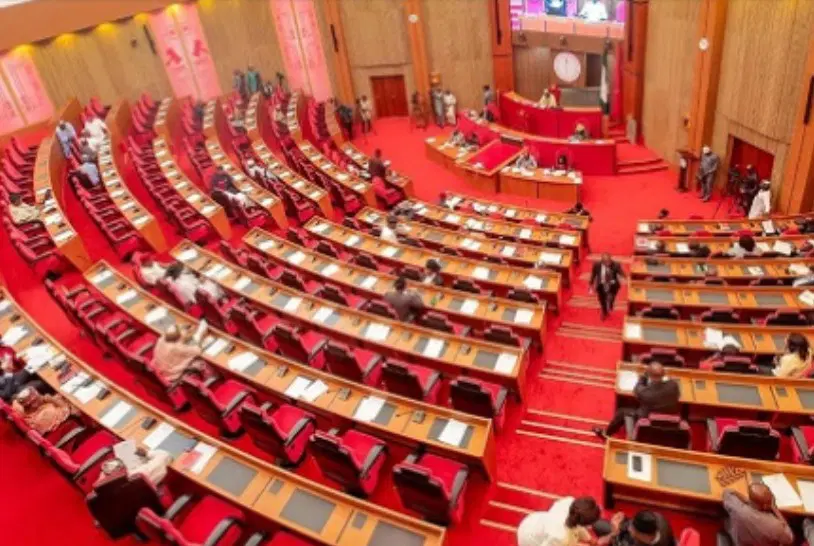
ABUJA — The Nigerian Senate has broadened its investigation into the implementation and financing of the Safe Schools Initiative, bringing major education and social-intervention agencies under legislative scrutiny.
The upper chamber also granted its ad hoc committee an additional three weeks to conclude the investigation and submit a comprehensive report on the programme’s finances, operations and effectiveness.
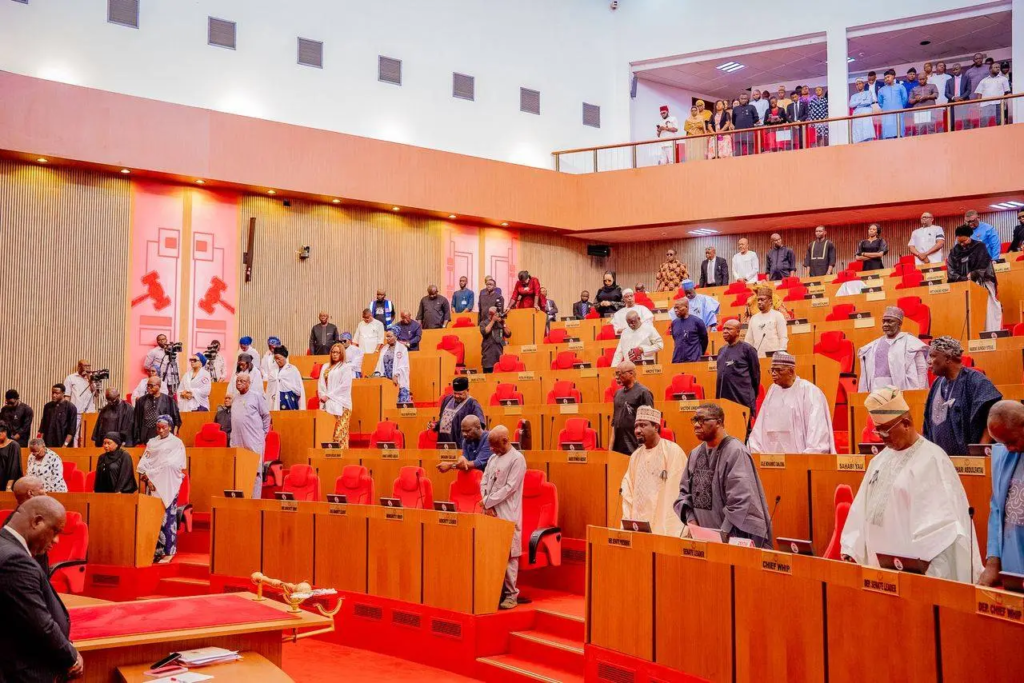
The decision that the Senate expands Safe Schools probe followed the adoption of a motion presented during Tuesday’s plenary by the chairman of the investigative panel, Senator Orji Uzor Kalu, who represents Abia North Senatorial District.
Under the expanded mandate, the committee will investigate the Tertiary Education Trust Fund, the Nigerian Education Loan Fund and the Universal Basic Education Commission. Its inquiry will also cover relevant programmes managed by the Federal Ministry of Humanitarian Affairs and Poverty Alleviation and the National Social Investment Programme Agency.
Kalu presented the motion pursuant to Orders 41 and 51 of the Senate Standing Orders, arguing that the committee could not produce a complete assessment of school security without examining agencies responsible for educational infrastructure, student financing, humanitarian assistance and social protection.
Senate President Godswill Akpabio subsequently put the request to a voice vote, after which lawmakers approved the expansion and extension. Multiple reports said the panel received three additional weeks, although one account described the extension as two weeks. The three-week period was reported by Channels Television, PUNCH and other outlets covering the plenary.
TETFund, NELFUND and UBEC enter investigation
The announcement that the Senate expands Safe Schools probe significantly widens what began as an examination of a security programme created to protect pupils, teachers and educational facilities from terrorist attacks, kidnappings and other forms of violence.
According to the revised terms of reference, the committee will audit infrastructure and security projects financed by TETFund in tertiary institutions.
It will also assess NELFUND’s disbursement processes, operational readiness, administrative efficiency and the accessibility of its student-loan programme.
UBEC’s interventions in basic education will equally come under examination, while the committee will review social-safety-net allocations connected to school feeding, emergency assistance for displaced learners and educational rehabilitation programmes administered through the humanitarian ministry and NSIPA.
The inclusion of these agencies does not automatically establish that public money was misappropriated. It means the Senate intends to determine whether education and welfare programmes that affect vulnerable students are properly coordinated, transparently financed and effectively implemented.
The committee is expected to examine financial records, project execution, operational obstacles and the systems used to hold officials and contractors accountable.
Kalu warns against fragmented oversight
Explaining why the Senate expands Safe Schools probe, Kalu said preliminary findings revealed important links between the Safe Schools Initiative and agencies responsible for education financing, infrastructure development, humanitarian services and student welfare.
He argued that school security cannot be examined in isolation from the physical condition of educational facilities or the welfare arrangements available to vulnerable children.
According to the senator, limiting the investigation to the original initiative would produce fragmented oversight and prevent lawmakers from understanding the broader challenges affecting learners.
Kalu said the expanded investigation would allow the committee to prepare a report capable of strengthening transparency, improving accountability in the management of intervention funds and enhancing student protection.
He also disclosed that political-party primaries and nomination exercises had affected the committee’s ability to undertake some planned oversight visits, making additional time necessary.
The explanation will, however, attract scrutiny because the committee was originally established in November 2025 and asked to complete its assignment within four weeks. Several months later, the panel has yet to present its final report.
Investigation began after renewed school attacks
The move that the Senate expands Safe Schools probe is the latest stage of an inquiry initiated amid renewed concern about attacks on educational institutions.
The Senate constituted the 13-member ad hoc committee on November 27, 2025, following a motion sponsored by Senator Abdullahi Yahaya of Kebbi North.
At the time, lawmakers expressed alarm over recurring kidnappings and assaults on schools and other public institutions, despite years of expenditure on programmes intended to protect vulnerable communities.
The Safe Schools Initiative was launched in 2014 following the abduction of 276 schoolgirls from Government Girls Secondary School in Chibok, Borno State.
The initiative attracted financial support from the Federal Government, Nigerian business leaders, international organisations and foreign partners. It was designed to improve physical security, community vigilance, emergency response and the resilience of schools exposed to violent attacks.
However, repeated abductions have raised questions about whether the money released for the programme produced adequate protection.
When the Senate intensified its investigation in December 2025, Kalu said more than 1,680 schoolchildren had been abducted and about 180 schools attacked since 2014. The committee promised to trace every naira and dollar allocated to the scheme and examine why schools remained vulnerable despite substantial domestic and international funding.
https://ogelenews.ng/senate-expands-safe-schools-probe
Committee scrutinises ₦15bn intervention fund
Before the latest expansion, the committee had questioned the utilisation of ₦15 billion released in 2023 to agencies participating in the Safe Schools programme.
Evidence presented before the panel indicated that the Nigeria Police Force received ₦6.225 billion, the Nigeria Security and Civil Defence Corps received ₦3.362 billion, Defence Headquarters received ₦2.25 billion, and the Federal Ministry of Education received ₦519 million.
The precise amount allocated to the Department of State Services was not publicly disclosed during that hearing.
The committee ordered officials to reconcile releases, expenditures and contractor records after senators complained that some of the financial submissions lacked clarity.
Lawmakers also raised concerns about consultancy and operational expenses contained in documents associated with an earlier phase of the initiative.
The programme’s national coordinator was directed to return with a corrected and verifiable breakdown showing funds received, payments made, contractors engaged and records connected to the Central Bank of Nigeria trust-fund account.
The fact that the Senate expands Safe Schools probe suggests that the panel now believes the security programme overlaps with a broader network of education and social-investment expenditure.
More than $30m reportedly mobilised
The committee’s original investigation focused partly on more than $30 million reportedly mobilised for the initiative between 2014 and 2021.
Evidence presented during earlier proceedings identified contributions from the Federal Government, Nigerian business leaders, the African Development Bank, Germany, Norway and other international partners.
Some foreign contributions were administered through organisations such as UNICEF, while additional support reportedly came through United Nations agencies, USAID and the Qatar Foundation.
The National Plan for Financing Safe Schools for the 2023–2026 period also proposed spending exceeding ₦144 billion on protection measures nationwide.
The central question before the Senate is not simply how much money was announced, but how much was actually released, where it went, which projects were completed and whether those interventions made schools safer.
A credible investigation must therefore distinguish pledges from disbursements and disbursements from verified expenditure.
It must also separate programmes implemented directly by security agencies from those carried out by education ministries, state governments, development organisations and community networks.
Why NELFUND’s inclusion may raise questions
As the Senate expands Safe Schools probe, the inclusion of NELFUND requires careful explanation because its primary mandate concerns student loans rather than physical school security.
The committee’s revised assignment will examine the fund’s disbursement system, administrative capacity and framework for ensuring that eligible students can access support.
This suggests the Senate is considering school safety in a broader sense that includes students’ financial welfare and their ability to remain in education.
Nevertheless, lawmakers must avoid turning one focused investigation into an excessively broad inquiry that becomes difficult to complete.
The public will expect the committee to explain the legal and policy connection between every agency examined and the original purpose of the Safe Schools Initiative.
That clarity is necessary to prevent the exercise from appearing unfocused or politically motivated.
TETFund projects face audit
TETFund’s inclusion may be more directly linked to the condition and security of infrastructure in public tertiary institutions.
The agency finances projects in universities, polytechnics and colleges of education, including lecture halls, laboratories, libraries and other facilities.
The Senate committee intends to review infrastructure and security interventions funded by TETFund, assessing whether projects were properly selected, awarded, completed and put into use.
The investigation should identify the institutions that benefited, the contractors engaged, the value of each project and the extent to which the interventions improved safety.
It should also clarify whether any projects described as security-related were abandoned, duplicated or executed below approved standards.
No allegation should be treated as established until the committee completes its work, receives responses from the affected agencies and presents evidence capable of supporting its findings.
Senate must produce more than another report
The decision that the Senate expands Safe Schools probe will only be meaningful if it produces enforceable recommendations and measurable reforms.
Nigeria has witnessed numerous parliamentary investigations that generated headlines but little visible change.
For this inquiry to command public confidence, its hearings should be transparent and its final report should identify the exact amounts received and spent by each agency.
The panel should publish the names and locations of funded projects, distinguish completed interventions from abandoned ones and recommend sanctions where breaches are supported by evidence.
It should also propose a unified system for monitoring school-security funding across federal, state and local levels.
Where records are missing, the responsible officials should be required to explain why. Where contractors collected funds without delivering projects, recovery and prosecution should follow the appropriate legal process.
Most importantly, the investigation should result in practical improvements: functional emergency-response systems, properly trained security personnel, reliable communication networks, safer school buildings and stronger cooperation with host communities.
Parents await accountability
For Nigerian parents, the expanded probe is not merely an argument about appropriations, agencies and administrative procedure.
It concerns whether children can attend school without the fear of being abducted, attacked or displaced.
The Safe Schools Initiative was launched in response to a national tragedy. More than a decade later, continuing attacks have weakened public confidence in the programme and intensified demands for accountability.
As the Senate expands Safe Schools probe, the upper chamber has assumed responsibility for explaining what happened to the resources committed to protecting learners.
The additional three weeks should not become another excuse for indefinite delay. The committee must conclude its hearings, reconcile conflicting records and present a report that Nigerians can examine.
TETFund, NELFUND, UBEC, the humanitarian ministry and NSIPA must also cooperate fully, supply the requested documents and publicly address any concerns raised about their operations.
The final measure of success will not be the number of officials summoned or agencies added to the inquiry. It will be whether the investigation strengthens oversight, recovers misused funds where established and helps deliver the safe learning environment promised to every Nigerian child.