















Tinubu Port Harcourt and Warri refineries
President Bola Tinubu has renewed his administration’s commitment to reviving Nigeria’s government-owned refineries, setting up another test of whether decades of failed rehabilitation efforts can finally produce commercially viable plants.
At the centre of the latest push are the Tinubu Port Harcourt and Warri refineries plans, which the Federal Government says will go beyond merely restarting ageing facilities to restructuring them for profitability, efficiency and long-term sustainability.
Tinubu’s position places him at odds with former President Olusegun Obasanjo, who has repeatedly expressed doubts about the future of the Port Harcourt, Warri and Kaduna refineries.
Obasanjo has argued that repeated government expenditure on the plants has failed to produce sustainable refining operations and maintains that the refineries are unlikely to work effectively as long as the same structural problems remain unresolved.
But Tinubu is taking a different view.
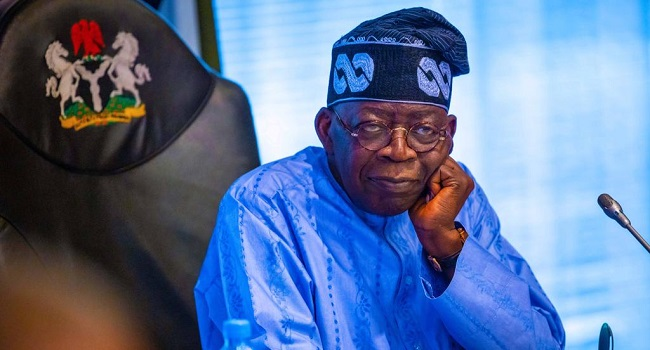
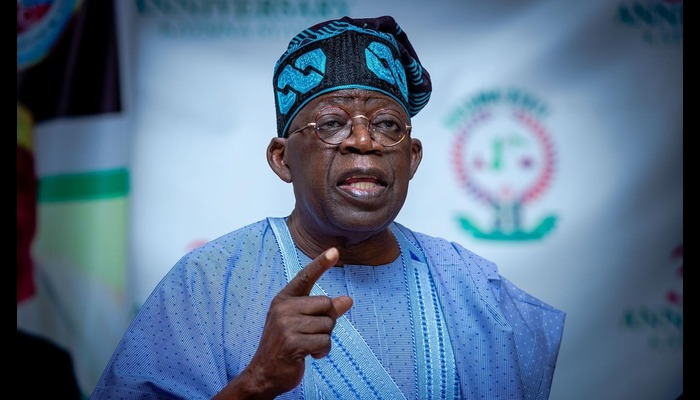
Speaking in Abuja while receiving leaders of the Nigeria Union of Petroleum and Natural Gas Workers, NUPENG, the President said the refineries would undergo what he described as a structural and operational reset.
For Tinubu, the objective is no longer simply to announce that a refinery has restarted. The plants, he said, must ultimately operate profitably and deliver value to Nigeria.
That distinction may determine whether the latest Tinubu Port Harcourt and Warri refineries programme succeeds where previous interventions have struggled.
Tinubu Says Refineries Must Make Profit
Tinubu’s latest declaration is significant because it appears to acknowledge one of the biggest criticisms surrounding Nigeria’s state-owned refining assets: restarting equipment is not the same as running a commercially sustainable refinery.
Over the years, successive administrations have announced rehabilitation projects for the Port Harcourt, Warri and Kaduna refineries, often followed by new deadlines, revised completion dates and additional spending.
The current administration insists it wants a different outcome.
Tinubu said the facilities must not only resume operations but also become profitable enterprises capable of generating value.
That makes profitability a central benchmark for the Tinubu Port Harcourt and Warri refineries strategy.
It also aligns broadly with the position of Nigerian National Petroleum Company Limited Group Chief Executive Officer, Bayo Ojulari, who has stressed the need to operate the refineries on a commercially sustainable basis rather than keep them running at a loss.
The challenge, however, is substantial.
The Port Harcourt and Warri plants have both been restarted in recent years only to suffer fresh shutdowns or operational setbacks.
NNPC Signs Deal With Chinese Firms
The latest government optimism is not based solely on presidential assurances.
On May 4, 2026, NNPC Limited announced that it had signed a memorandum of understanding with two Chinese companies, Sanjiang Chemical Company Limited and Xinganchen (Fuzhou) Industrial Park Operation and Management Co. Ltd.
The agreement is aimed at exploring a potential technical equity partnership for the completion, operation and expansion of the Port Harcourt and Warri refineries.
The arrangement is central to the Tinubu Port Harcourt and Warri refineries revival plan because it suggests that NNPC is looking beyond the traditional government-funded maintenance model.
Technical equity participation could introduce outside operational expertise and commercial discipline, depending on how the final agreement is structured.
NNPC has described the partnership as part of efforts to sustainably restart and expand the two facilities.
However, an MoU is not the same as a completed investment or operational agreement.
The real test will be whether the parties reach a binding commercial arrangement, mobilise the necessary capital and expertise, complete outstanding work and operate the facilities at competitive utilisation rates.
Port Harcourt Refinery’s Troubled Restart
The Port Harcourt Refining Company has become a symbol of both Nigeria’s refining ambitions and its difficulties.
NNPC announced in November 2024 that the old Port Harcourt refinery had resumed operations following extensive rehabilitation.
The corporation defended the restart in December 2024 amid public scepticism, insisting that loading operations were underway.
But the facility was later shut down again in May 2025 for maintenance.
That shutdown came only months after the heavily publicised restart, raising fresh questions about reliability, output levels and the commercial viability of the plant.
Those questions now sit at the heart of the Tinubu Port Harcourt and Warri refineries debate.
The Port Harcourt complex has an installed capacity of about 210,000 barrels per day across its old and newer units.
Yet installed capacity means little if a facility cannot process crude consistently, produce marketable petroleum products efficiently and generate enough revenue to cover its operating expenses.
For a refinery to be considered successful, sustained output matters far more than ceremonial reopening.
Warri Refinery Also Struggled After Restart
The Warri Refining and Petrochemicals Company has faced similar difficulties.
NNPC announced the restart of the Warri refinery in December 2024, saying the facility was operating at about 60 per cent capacity at the time.
The refinery has an installed capacity of approximately 125,000 barrels per day.
But the restart did not translate into sustained operations.
The plant subsequently experienced another shutdown, adding to concerns about whether rehabilitation work had resolved its underlying technical and commercial problems.
This history explains why the Tinubu Port Harcourt and Warri refineries pledge is being scrutinised so closely.
Nigeria has heard promises about refinery rehabilitation before.
The administration will therefore be judged not by another commissioning ceremony but by measurable outcomes: barrels of crude processed, petroleum products produced, operating costs, refinery margins, reliability and profitability.
Why Obasanjo Remains Sceptical
Former President Olusegun Obasanjo’s doubts are rooted partly in his experience while in office.
Obasanjo has recalled efforts during his administration to bring private-sector expertise into the management of the government-owned refineries.
He said Shell was approached but declined to take over their operation.
According to Obasanjo, the reasons included concerns about corruption surrounding refinery operations, the condition of the plants, their configuration and the commercial attractiveness of the assets.
He has also repeatedly referenced an earlier arrangement involving a consortium linked to Aliko Dangote.
Towards the end of Obasanjo’s administration in 2007, Bluestar Oil Services acquired controlling stakes in the Port Harcourt and Kaduna refineries in a transaction worth about $761 million.
The deal was later reversed under the administration of the late President Umaru Musa Yar’Adua.
Obasanjo has since argued that the decision to reverse private-sector participation contributed to Nigeria’s prolonged refinery problems.
His contention is therefore broader than saying old machinery cannot be repaired.
He questions whether government ownership and management can produce the commercial discipline needed to run the plants successfully.
That is the central philosophical difference between Obasanjo’s scepticism and the Tinubu Port Harcourt and Warri refineries approach.
https://ogelenews.ng/tinubu-port-harcourt-and-warri-refineries
Billions Spent on Rehabilitation
The debate is sharpened by the enormous sums committed to Nigeria’s refineries over the years.
The Federal Government and NNPC have undertaken repeated turnaround maintenance and rehabilitation programmes involving billions of dollars.
In 2021, the Federal Executive Council approved approximately $1.5 billion for rehabilitation of the Port Harcourt refinery.
The Warri and Kaduna rehabilitation programmes also involved significant financial commitments.
Yet the facilities have still struggled to maintain regular production.
That history has created understandable scepticism whenever another rehabilitation programme is announced.
For critics, the issue is no longer whether engineers can temporarily restart refinery units.
The real question is whether taxpayers and the federation will receive an adequate return on the money already invested.
Ojulari’s Profitability Test
The current NNPC leadership appears to recognise that concern.
Ojulari has previously spoken about the poor economics associated with the Port Harcourt refinery’s operation.
Following a review of the company’s refinery operations, he indicated that continuing to run inefficient plants simply to demonstrate that they were operational would make little commercial sense.
That approach could mark an important change.
A refinery that consumes valuable crude oil but produces considerably less value in usable products is not necessarily an economic asset simply because its equipment is running.
That is why the Tinubu Port Harcourt and Warri refineries programme will ultimately stand or fall on economics.
If the refineries can process crude reliably, sell products competitively and generate profit, Tinubu will have a powerful answer to Obasanjo’s doubts.
If they require continuous public funding while remaining commercially weak, the former president’s criticism will gain further weight.
Dangote Refinery Changes the Equation
Nigeria’s refining landscape has also changed dramatically with the arrival of the Dangote Petroleum Refinery.
The privately owned facility in Lagos has a nameplate capacity of 650,000 barrels per day and has significantly altered the domestic petroleum products market.
Its emergence has intensified questions over the role state-owned refineries should play.
Nigeria no longer faces a simple choice between importing petroleum products and relying on NNPC’s ageing facilities.
Private refining capacity now provides a third option.
This increases the pressure on the Tinubu Port Harcourt and Warri refineries strategy to prove that government-owned facilities can compete commercially.
State ownership alone cannot justify indefinite losses.
The plants must demonstrate economic value.
Government Rules Out Port Harcourt Refinery Sale
There had been speculation that the Federal Government might dispose of the Port Harcourt refinery.
NNPC, however, ruled out a sale in July 2025.
The company said it remained committed to completing what it called high-graded rehabilitation of the facility and retaining the asset.
That decision means the administration has effectively accepted responsibility for demonstrating that the refinery can still become viable.
The partnership being explored with the Chinese companies may provide a middle ground between full government operation and outright privatisation.
Under a technical equity partnership, private investors could potentially provide expertise, capital or operational management while the state retains an ownership interest.
But the eventual structure will matter considerably.
Nigeria Needs More Than Another Restart
The central issue in the Tinubu Port Harcourt and Warri refineries debate is therefore not whether the refineries can be made to produce petroleum products for a few months.
Nigeria has already seen restarts.
The bigger challenge is sustained commercial operation.
Successful refineries need reliable crude supply, sound maintenance, efficient management, modern process units, transparent procurement, experienced technical personnel and the ability to sell products competitively.
They also require management structures insulated from political interference.
Without those ingredients, technical repairs alone may simply postpone another shutdown.
Tinubu Versus Obasanjo: Results Will Settle Debate
Tinubu and Obasanjo are essentially offering two competing judgments about the same national assets.
Obasanjo believes decades of experience demonstrate that government management of the refineries is fundamentally flawed.
Tinubu believes they can still be rebuilt, restructured and returned to profitable operation.
Neither position will ultimately be settled by political rhetoric.
Performance will decide.
If the Tinubu Port Harcourt and Warri refineries plan results in stable crude processing, competitive product output and positive financial returns, the administration will have achieved something successive governments struggled to deliver.
But another round of rehabilitation followed by temporary operations and fresh shutdowns would deepen questions about whether Nigeria should continue committing resources to the assets.
For now, Tinubu has placed his administration firmly behind refinery revival.
NNPC has opened discussions with foreign technical partners.
Obasanjo remains unconvinced.
And Nigerians, after decades of promises and billions of dollars in expenditure, are entitled to demand more than announcements.
The final verdict on the Tinubu Port Harcourt and Warri refineries will not come from the Presidential Villa, NNPC headquarters or Obasanjo’s public commentary.
It will come from the refinery gates themselves, measured in continuous production, commercial efficiency and profit.
https://nnpcgroup.com/insights/nigeria-s-port-harcourt-refinery-not-for-sale-nnpc-limited