













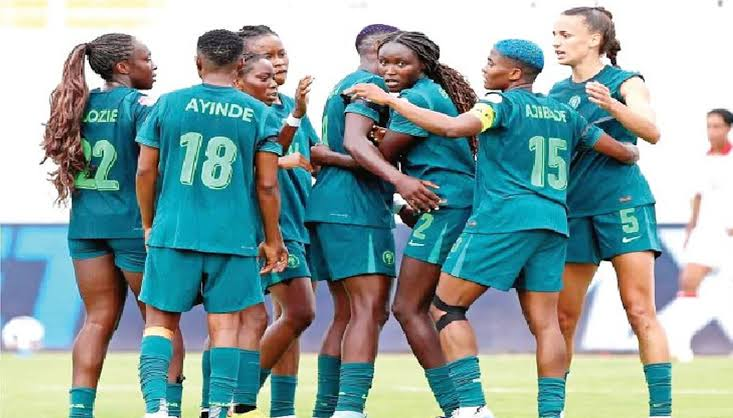
Super Falcons World Cup qualification
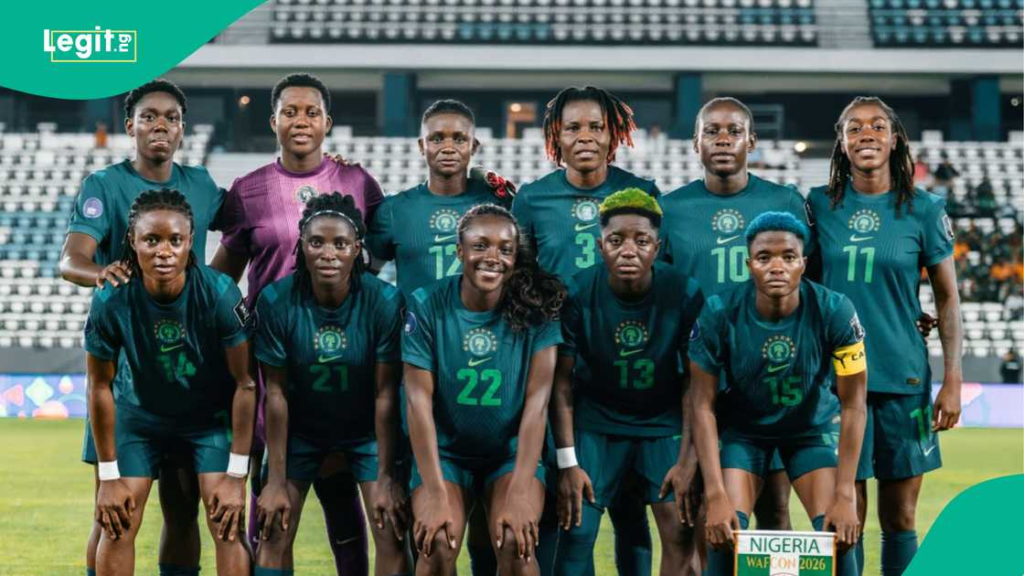
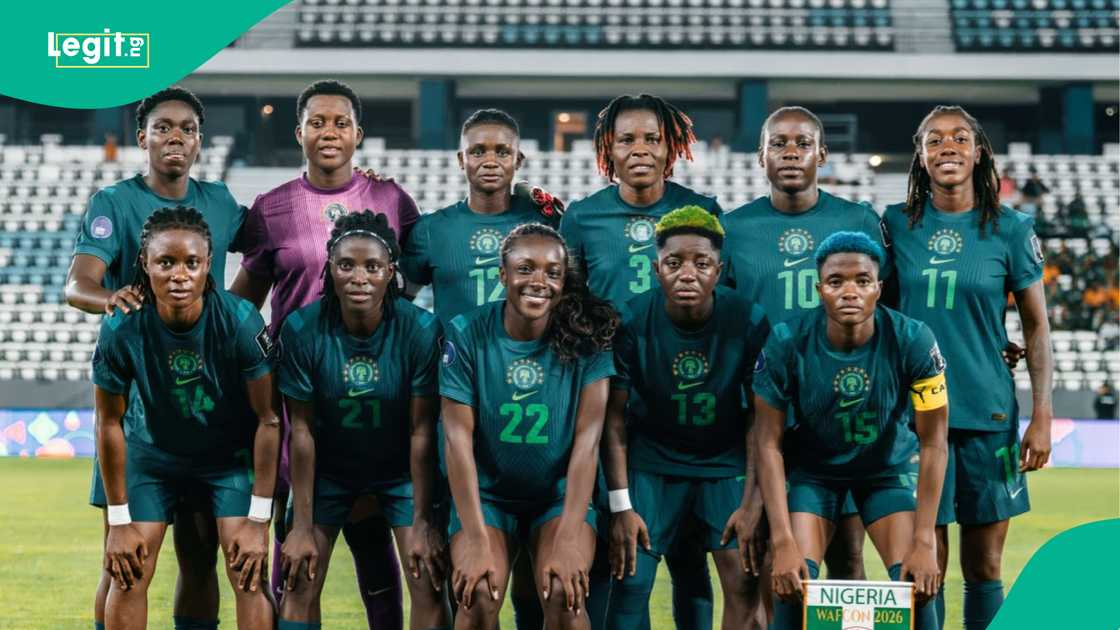
Nigeria’s Super Falcons still have a route to the 2027 FIFA Women’s World Cup despite losing the opportunity to secure automatic qualification following their quarter-final defeat to Cameroon at the 2026 Women’s Africa Cup of Nations.
The Super Falcons World Cup qualification campaign suffered a major setback when defending champions Nigeria were beaten 1-0 by Cameroon, ending their WAFCON title defence and denying them one of Africa’s four automatic tickets to the global tournament in Brazil.
But the defeat did not completely end Nigeria’s World Cup hopes.
The Super Falcons must now take a longer and considerably more difficult route involving an African play-off followed, if successful, by FIFA’s inter-confederation Play-Off Tournament.
Nigeria’s first obstacle is South Africa.
The Super Falcons must beat Banyana Banyana in their African play-off to secure one of the continent’s two places in the FIFA Play-Off Tournament.
Only then can Nigeria continue the battle for a place at Brazil 2027.
How Nigeria Lost Automatic Qualification
The 2026 Women’s Africa Cup of Nations doubles as Africa’s qualifying competition for the 2027 FIFA Women’s World Cup.
Under the qualification format, the four teams reaching the WAFCON semi-finals automatically qualify for the World Cup.
Nigeria therefore went into the quarter-final against Cameroon knowing victory would achieve two objectives: keep alive the defence of the continental title and secure automatic qualification for Brazil.
Instead, Cameroon won 1-0.
The decisive goal came in the 19th minute through Marie Gisèle Divine Ngah Manga Nyadjou, leaving Nigeria chasing the game without finding an equaliser.
The defeat brought Nigeria’s WAFCON campaign to an unexpected end and dramatically changed the Super Falcons World Cup qualification situation.
Nigeria must now rely on the play-off route.
Super Falcons Must First Beat South Africa
The first requirement is straightforward.
Nigeria must defeat South Africa.
The four teams eliminated in the WAFCON quarter-finals enter play-off matches to determine which two African countries will proceed to the FIFA Play-Off Tournament.
Nigeria will face South Africa, while Ghana and Côte d’Ivoire contest the other African play-off.
For the Super Falcons, therefore, there is no complicated calculation at this stage.
Beat South Africa and Nigeria remains alive in the Super Falcons World Cup qualification race.
Lose and Nigeria will miss the Women’s World Cup for the first time.
That makes the South Africa encounter arguably one of the most consequential matches the Super Falcons have played in recent years.
Banyana Banyana cannot be underestimated.
South Africa have developed into one of Africa’s strongest women’s football nations and have become familiar opponents for Nigeria in major continental competitions.
Nigeria will therefore require a significantly improved performance from the one produced against Cameroon.
https://ogelenews.ng/how-super-falcons-can-still-qualify-for-2027-world-…
Beating South Africa Will Not Guarantee Qualification
This is where the qualification picture requires careful explanation.
Victory over South Africa will not automatically send Nigeria to the 2027 Women’s World Cup.
It will only qualify the Super Falcons for FIFA’s inter-confederation Play-Off Tournament.
Africa has been allocated two places in that competition.
Nigeria must first become one of those two African representatives before attempting to claim one of the remaining World Cup tickets available through the global play-off system.
The Super Falcons World Cup qualification journey therefore has two major stages remaining.
First, Nigeria must survive the African play-off.
Second, the team must successfully navigate the FIFA Play-Off Tournament.
That second hurdle could be even more demanding.
How FIFA Play-Off Tournament Works
FIFA has established an inter-confederation play-off system involving teams from different regions of world football.
The first phase is scheduled for November and December 2026 at a centralised venue.
Six countries will participate at that stage.
Africa will provide two teams, Asia will provide two, while South America and Oceania will each provide one.
The participating teams will be ranked using the FIFA Women’s World Ranking applicable before the play-off draw.
Two countries will progress from the opening phase to the final phase of the Play-Off Tournament.
They will then join four seeded teams in the final stage scheduled for February 2027.
Those four seeded countries will come from AFC, CONCACAF, CONMEBOL and UEFA.
Six teams will therefore compete in the final phase, with three ultimately securing the remaining places at the 2027 Women’s World Cup.
For Nigeria, that means the Super Falcons World Cup qualification route is significantly harder than the automatic path that disappeared with the Cameroon defeat.
Nigeria Faces Battle to Preserve World Cup Record
There is much more at stake than qualification for another tournament.
Nigeria have appeared at every FIFA Women’s World Cup since the inaugural tournament in 1991.
That proud record is now under threat.
The Super Falcons participated in 1991, 1995, 1999, 2003, 2007, 2011, 2015, 2019 and 2023.
Their finest performance remains the quarter-final appearance at the 1999 tournament in the United States.
More recently, Nigeria reached the round of 16 at the 2023 World Cup in Australia and New Zealand, where the Super Falcons produced a disciplined campaign before losing to England on penalties.
Missing Brazil 2027 would therefore represent a significant setback for one of Africa’s most successful women’s national teams.
That historical context increases the pressure surrounding the Super Falcons World Cup qualification campaign.
Madugu Takes Responsibility for Cameroon Defeat
Super Falcons coach Justin Madugu accepted responsibility after the defeat to Cameroon.
The coach apologised to Nigerians following the team’s elimination and acknowledged the disappointment surrounding the result.
Attention must now shift quickly from that setback to the South Africa play-off.
There is little value in allowing the Cameroon defeat to dominate preparations for the next challenge.
Nigeria still possesses experienced international players capable of competing at the highest level, but reputation will not deliver qualification.
The Super Falcons must rediscover the organisation, attacking efficiency and resilience that have historically made Nigeria a formidable force in African women’s football.
The margin for error has disappeared.
What Super Falcons Must Do Now
The qualification equation can be reduced to three stages.
Nigeria must first defeat South Africa in the WAFCON play-off.
Victory would secure one of Africa’s two places in FIFA’s inter-confederation Play-Off Tournament.
The Super Falcons must then progress through the international play-off system and secure one of the final World Cup tickets.
Every remaining match in the Super Falcons World Cup qualification campaign is therefore effectively a knockout contest.
There is no longer an automatic route or safety margin.
That places enormous importance on preparation, player fitness, tactical discipline and the team’s ability to respond psychologically after the disappointment against Cameroon.
Brazil 2027 Remains Within Reach
The 2027 FIFA Women’s World Cup will be staged in Brazil from June 24 to July 25, 2027, with 32 teams competing for the biggest prize in women’s international football.
Nigeria had hoped to book its place through the simpler route by reaching the WAFCON semi-finals.
Cameroon closed that door.
Another, more difficult door remains open.
The Super Falcons World Cup qualification task now begins with South Africa and could extend into an intercontinental battle involving teams from several regions.
Nigeria have recovered from difficult situations before, but history and reputation offer no guarantees.
The equation is now simple: win the African play-off, advance to FIFA’s Play-Off Tournament and then fight for one of the remaining tickets to Brazil.
For a country that has never missed a Women’s World Cup, the stakes could hardly be higher.
The automatic ticket is gone, but the World Cup dream is still alive.