














Kogi kidnapping rescue operation
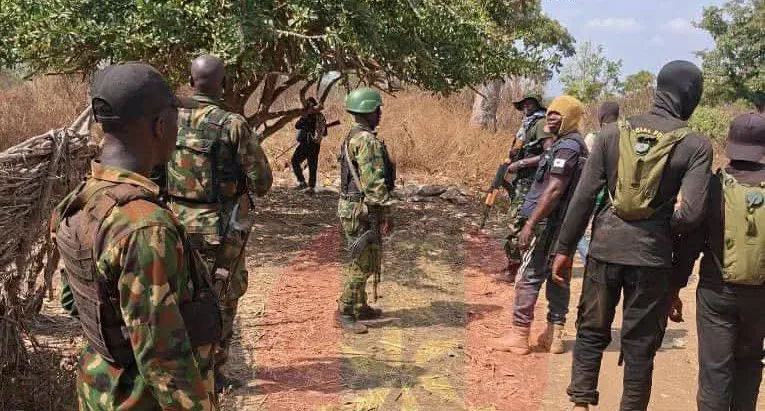
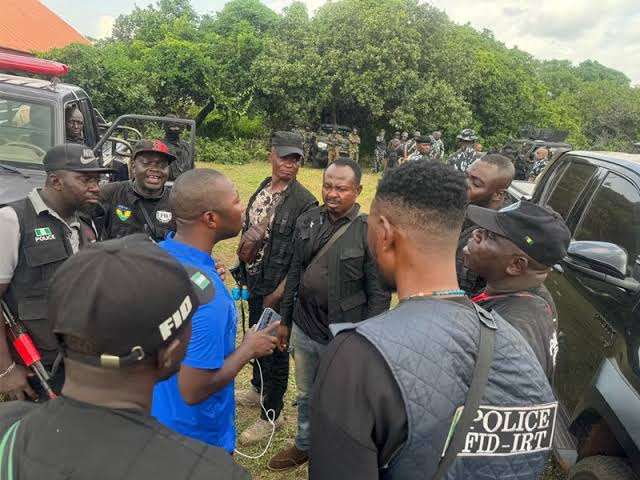
The Kogi State Police Command and the Nigerian Army have intensified a major search-and-rescue operation across forests in the state as security personnel move to locate victims of a reported kidnapping and apprehend those responsible for the attack.
The Kogi kidnapping rescue operation is concentrated around forest corridors linked to the Okene-Auchi Road, with tactical teams advancing into suspected criminal hideouts and security agencies extending surveillance towards the Kogi-Edo border.
Police authorities said the operation involves personnel from several specialised units, supported by soldiers and security operatives from neighbouring Edo State.
Drone surveillance has also been introduced as security personnel attempt to improve intelligence gathering and monitor difficult forest terrain from the air.
The latest security response follows a reported kidnapping incident along the Okene-Auchi Road, an important transport corridor connecting Kogi with neighbouring Edo State.
Kogi State Police Command spokesperson, ASP Afusat Salisu, said the command activated its rescue response immediately after receiving information about the incident.
According to the police, intelligence-led operations subsequently began across identified forest corridors within the Okene-Ajaokuta axis, particularly around Ebiya Forest and surrounding areas.
Tactical Teams Join Kogi Kidnapping Rescue Operation
The scale of the Kogi kidnapping rescue operation reflects growing cooperation among security formations operating within the state and along its boundaries.
Police personnel involved include operatives from the Area Command in Okene, 77 Police Mobile Force Squadron, Okene Division, Adavi Division, the Anti-Kidnapping Unit and the Violent Crime Response Unit.
They are being supported by Nigerian Army personnel operating from Forward Operating Bases within the affected area.
The Edo State Police Command has also joined the operation, providing personnel from its Anti-Kidnapping Unit and other tactical formations.
The cross-border collaboration is significant because armed groups operating within forest corridors can exploit difficult terrain and administrative boundaries to evade security personnel.
Authorities are therefore extending operations beyond individual communities and focusing on suspected movement corridors.
Security teams have intensified patrols around the Kogi-Edo boundary as part of efforts to prevent the suspected kidnappers from escaping through neighbouring areas.
Security Teams Discover Suspected Hideouts
As the Kogi kidnapping rescue operation progressed, security personnel identified locations suspected to have been used as hideouts.
Police said items found at the locations included food and cooking materials, an Army-pattern jungle hat and a National Identity Card, among other materials suspected to have been abandoned.
The authorities subsequently destroyed the identified hideouts to prevent them from being reused.
However, police cautioned that no kidnapped victim was recovered from the locations during the initial phase of the search.
That detail is important because the operation remains an active rescue mission.
Security personnel have therefore continued their advance into other forest areas while intelligence units work to identify possible locations where the victims may have been taken.
The operation continued into Saturday, with tactical teams moving towards locations of interest along the Ajaokuta and Adogo axes.
Army, Police Deploy Drones
Technology is playing an increasingly visible role in the Kogi kidnapping rescue operation.
The Nigerian Army and Edo State Police Command have deployed drones to support personnel searching the forest areas.
The aerial platforms are being used to strengthen surveillance and intelligence gathering while ground personnel continue their search.
Using aerial surveillance can improve visibility over difficult terrain, but the effectiveness of the operation will ultimately be measured by the safe recovery of the abducted victims and the apprehension of those responsible.
The deployment also demonstrates the complexity of conducting rescue operations across large forest corridors where conventional ground patrols may have limited visibility.
The Commissioner of Police in Kogi State, Naziru Kankarofi, has directed operational teams to maintain pressure until the victims are safely recovered and those responsible are brought to justice.
Police authorities also said the command was working closely with other security agencies and relevant stakeholders.
Residents Urged to Provide Information
As the Kogi kidnapping rescue operation continues, residents of communities surrounding the affected forest corridors have been urged to remain vigilant.
Police appealed to the public to provide credible and timely information capable of assisting security personnel.
Community intelligence can play an important role in identifying suspicious movements, unfamiliar individuals and abandoned locations, particularly in remote areas where residents have greater knowledge of the terrain.
The police also acknowledged the anxiety generated by the kidnapping and said recovering the victims safely remained an immediate priority.
The appeal places renewed attention on cooperation between residents and security agencies as the search expands.
Authorities will also have to ensure that information supplied by members of the public is properly verified to avoid exposing innocent residents to unnecessary suspicion.
https://ogelenews.ng/army-police-intensify-kogi-kidnapping-rescue-operat…
Okene-Auchi Corridor Faces Security Concerns
The current Kogi kidnapping rescue operation also brings renewed attention to security along the Okene-Auchi corridor.
The route connects communities and commercial centres across Kogi and Edo states and serves travellers moving between different parts of the country.
Previous kidnapping incidents along the corridor have led to security operations involving police, military personnel and local security formations.
This makes sustained security coverage important even after individual rescue operations have ended.
The extensive forests surrounding sections of major highways can create security challenges because criminal groups may attempt to use remote areas as temporary hideouts after attacking motorists or communities.
For security agencies, preventing attacks therefore requires more than responding after an abduction has occurred.
Intelligence gathering, surveillance, rapid response capability and cooperation between commands in neighbouring states remain critical.
The current operation appears to reflect that approach, particularly through the involvement of security formations from both Kogi and Edo states.
Kogi Has Recorded Previous Rescue Operations
The latest operation comes amid broader security efforts against kidnapping and other violent crimes across Kogi State.
In June 2026, authorities announced the rescue of five kidnapped victims during sustained military operations in forests within the state.
The Kogi State Government said at the time that troops of the Nigerian Army’s 12 Brigade had maintained pressure on criminal groups operating from forest locations.
Those operations involved cooperation among the Army, Nigerian Air Force, police, Department of State Services, Nigeria Security and Civil Defence Corps, local vigilantes and hunters.
The latest Kogi kidnapping rescue operation again demonstrates the importance authorities are placing on coordinated security responses rather than relying on a single agency.
But successful rescue operations alone will not resolve the broader security problem.
Preventing criminal groups from returning to abandoned hideouts and re-establishing operations will require sustained surveillance and intelligence gathering.
Search Continues for Victims
For the families of those abducted, the most important outcome remains the safe return of their relatives.
As of the latest police statement, security personnel had searched suspected hideouts and destroyed locations believed to have been used by the perpetrators, but the kidnapped victims had not yet been recovered from the areas searched.
The operation is therefore continuing.
Security teams are advancing into additional forest locations while drones provide surveillance support and intelligence units attempt to narrow the search.
The involvement of the Nigerian Army, Kogi State Police Command and Edo State Police Command provides the Kogi kidnapping rescue operation with a wider operational reach across the affected corridor.
The challenge now is translating that security presence into the safe recovery of the victims and the identification and prosecution of those responsible.
Until that happens, the operation remains unfinished.
For residents and travellers, developments along the Okene-Auchi corridor will remain closely watched as security agencies continue their push through the forests.
The immediate priority is clear: rescue the victims safely, apprehend the perpetrators and prevent the affected forest corridors from continuing to serve as havens for criminal activity.