













Tinubu 2027 mobilisation
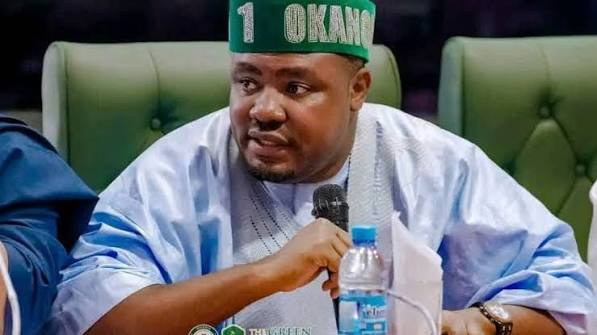
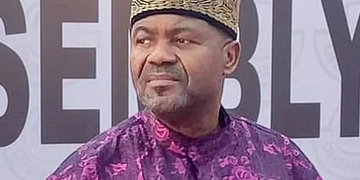
Deputy Spokesman of the House of Representatives, Philip Agbese, has launched a nationwide political network to mobilise support for President Bola Tinubu’s re-election in 2027, adding another cross-party dimension to the increasingly active contest for Nigeria’s next presidential election.
Agbese, a Labour Party lawmaker from Benue State, unveiled the Renewed Hope Labourers Network, a political structure that says it intends to establish a grassroots presence across Nigeria’s 176,846 polling units.
The latest Tinubu 2027 mobilisation effort is particularly significant because Agbese is not a member of the President’s All Progressives Congress.
Rather than presenting the initiative as a party project, the lawmaker said the network would draw supporters from different political backgrounds who believe in Tinubu’s leadership and economic programme.
Agbese is the founder and Coordinating Director-General of the organisation.
The group plans to combine conventional grassroots organising with technology and data-driven engagement as political actors begin building structures ahead of the 2027 general elections.
Tinubu 2027 mobilisation targets every polling unit
The scale proposed by the Renewed Hope Labourers Network makes the initiative more ambitious than a conventional political support group.
According to Agbese, the network wants representation across all 176,846 polling units in Nigeria.
That strategy reflects an important reality of Nigerian elections.
Presidential contests may dominate television, newspapers and social media, but votes are ultimately cast and counted at polling units.
A political organisation capable of maintaining genuine structures at that level can potentially perform several functions, from voter engagement and campaign messaging to election-day mobilisation.
Agbese said the organisation intends to reach workers and ordinary Nigerians beyond state capitals and conventional party offices.
Markets, farms, construction sites and the informal sector are expected to form part of the network’s grassroots engagement.
The strategy therefore places workers and lower-income Nigerians at the centre of the new Tinubu 2027 mobilisation structure.
Labour Party lawmaker crosses conventional party line
Agbese’s political affiliation gives the development an additional dimension.
He is a Labour Party member, while Tinubu is the leader of the governing All Progressives Congress and its presidential candidate for the 2027 election.
Ordinarily, party structures would be expected to mobilise for their respective presidential candidates.
Agbese, however, says his support for Tinubu is based on his assessment of the President’s policies rather than party affiliation.
He argues that political support should not necessarily be restricted by party boundaries when an individual believes an administration is pursuing the right policies.
The development consequently provides another example of the increasingly fluid alliances shaping preparations for the 2027 election.
Whether that cross-party approach translates into significant voter support will ultimately be determined by voters and by how extensively the new network is able to establish the grassroots structures it has announced.
Agbese defends Tinubu’s economic reforms
Central to the new Tinubu 2027 mobilisation campaign is Agbese’s defence of the administration’s economic programme.
The lawmaker pointed to fiscal reforms, infrastructure, agriculture, electricity, roads and social investment as areas where he believes the administration’s policies could eventually benefit workers and lower-income Nigerians.
He acknowledged that some of the reforms have produced short-term hardship.
That acknowledgement is politically significant because the cost of living and the effects of government economic policies are likely to remain major issues as the 2027 campaign develops.
Agbese’s argument is essentially one of continuity.
He maintains that the administration requires more time for its economic programme to mature and for Nigerians to experience the intended benefits.
That is the case his organisation intends to take to voters.
It remains a political argument rather than an established electoral conclusion. Opposition parties and critics of the administration have challenged aspects of the government’s economic record and are expected to present alternative assessments during the campaign.
For voters, those competing claims will ultimately have to be weighed against their own experiences and available economic evidence.
https://ogelenews.ng/2027-labour-party-rep-agbese-launches-nationwide-mo…
Technology to drive grassroots campaign
The Renewed Hope Labourers Network also plans to introduce a significant digital component into its Tinubu 2027 mobilisation strategy.
Agbese said the organisation would use technology and data to identify, connect with and organise supporters.
The objective is to create direct communication between campaign organisers and people at polling-unit level rather than relying exclusively on state and national political structures.
That approach reflects the changing character of Nigerian political campaigning.
Digital platforms have become increasingly important for political communication, particularly among younger Nigerians.
But online popularity and physical voter mobilisation are not the same thing.
A political movement may generate enormous engagement on social media without possessing the ward and polling-unit structures required for election-day organisation.
The challenge for Agbese’s network will therefore be to connect its proposed digital architecture with functioning grassroots structures.
Tinubu support groups multiply ahead of 2027
The launch does not exist in isolation.
Political mobilisation around President Tinubu’s re-election has been gathering pace.
The APC has already constituted its 2027 Presidential Campaign Council, with directorates covering areas including grassroots engagement, digital operations, labour union relations, community support and support-group coordination.
Other political actors have separately established organisations to mobilise support for the President.
House of Representatives member Akin Alabi earlier launched a grassroots volunteer network backing Tinubu’s re-election, while other political formations have emerged in different parts of the country.
This expanding collection of organisations shows that the Tinubu 2027 mobilisation effort is developing through both formal party structures and independent or cross-party support groups.
The Renewed Hope Labourers Network seeks to distinguish itself through its focus on workers, polling units and technology.
Cross-party politics takes shape
Agbese’s decision also deserves attention within the broader realignment taking place ahead of 2027.
Nigeria’s political parties remain the formal vehicles through which candidates contest elections, but politicians frequently cooperate across party lines.
The approaching election is already producing new alliances, support groups and political networks that do not always fit neatly within traditional party boundaries.
For Agbese, supporting an APC president while remaining identified with the Labour Party makes the new movement inherently cross-party.
That may broaden the organisation’s potential reach, but it also raises legitimate questions about party identity, loyalty and how political organisations distinguish themselves when prominent members openly campaign for candidates from rival parties.
Those questions will become increasingly relevant as the election approaches.
Grassroots voters become the main target
One of the most notable elements of the new Tinubu 2027 mobilisation strategy is its deliberate focus on Nigerians outside elite political circles.
Agbese says the organisation wants to take its campaign directly to workers and communities.
This is politically understandable.
Nigeria’s informal sector accounts for a substantial part of economic activity, while millions of voters earn their livelihoods through farming, trading, transportation, construction and small businesses.
These groups have also experienced the effects of inflation, transportation costs, energy prices and other economic pressures.
Any campaign seeking their support will therefore have to do more than simply repeat national political slogans.
Voters are likely to judge competing claims against their own experiences of food prices, income, employment, electricity, transportation, security and public services.
The effectiveness of the new network may consequently depend on whether its organisers can persuade voters that government reforms have produced, or are capable of producing, improvements that matter to their daily lives.
176,846 polling units present an enormous organisational test
Building a functioning political network across 176,846 polling units is an ambitious undertaking.
Announcing such nationwide coverage is considerably easier than creating it.
A serious polling-unit structure requires people, communication systems, training, coordination, funding and sustained local participation.
That will provide one of the clearest tests of the Renewed Hope Labourers Network as the campaign develops.
The organisation says its headquarters will operate from Abuja while structures are established across the country.
Its success or failure in translating that ambition into an actual national network will become clearer as political activities intensify.
2027 contest gathers momentum
Nigeria’s next general election is already generating significant political activity well before voters head to the polls.
Political parties are strengthening structures, candidates and their allies are building coalitions, and support groups are attempting to establish early contact with voters.
The emergence of Agbese’s organisation adds another layer to that process.
For Tinubu’s supporters, the network represents another channel through which they can make the case for continuity.
For political opponents, the President’s economic and governance record will remain open to challenge during the campaign.
And for voters, the proliferation of campaign organisations does not settle the central question of the election.
That decision will depend on how Nigerians assess the records, proposals and competing claims presented by candidates and their supporters.
What the latest Tinubu 2027 mobilisation initiative does demonstrate is that the battle for the grassroots is already taking shape.
Agbese’s Renewed Hope Labourers Network has set itself the formidable task of reaching every polling unit in Nigeria.
Whether it develops into the nationwide political machinery its founders envisage will be tested not by its launch in Abuja, but by the structures it can actually build in communities across the country before Nigerians vote in 2027.