













Dangote succession plan
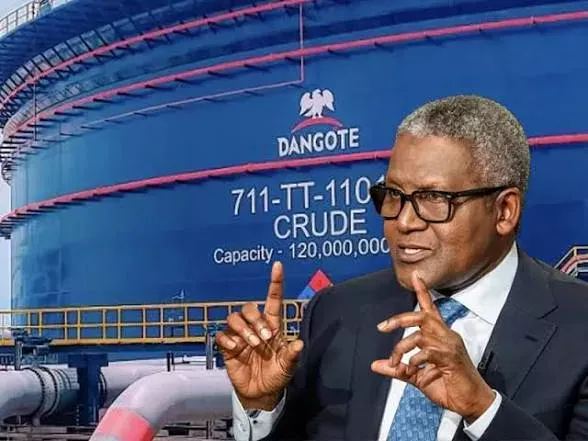
Africa’s leading industrialist, Aliko Dangote, has offered a rare insight into the future of his business empire, saying the absence of a male heir does not trouble him and expressing confidence that his three daughters have the ability to take the conglomerate forward.
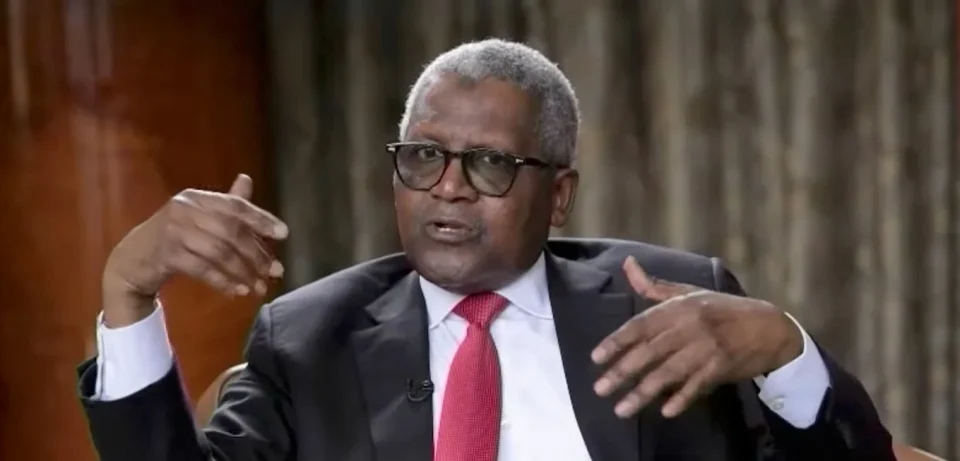
Dangote, President of Dangote Industries Limited, made the remarks during an interview with ARISE News while discussing family, succession and the long-term future of the businesses he has spent decades building.
His comments provide a clearer picture of the Dangote succession plan, which appears to place competence, professional management and corporate governance above the traditional expectation that a son should automatically inherit control of a family enterprise.
Dangote has three daughters, Halima, Fatima and Mariya, who have become increasingly involved in different parts of the family’s business interests.
Asked whether he could see one of his daughters eventually taking charge of the group, the billionaire said he believed that was possible.
He explained that he had been observing their development and could see leadership potential among them. More importantly, he said their participation in the family business was driven by their own interest rather than pressure from him.
That distinction is important to understanding the Dangote succession plan. Rather than treating succession simply as an inheritance question, Dangote presented it as a matter of preparing capable people and building structures that can survive beyond the founder.
Dangote dismisses pressure for male heir
The conversation also touched on the cultural importance often attached to male children, particularly in families seeking to preserve a prominent name across generations.
Dangote said having a son was not a priority.
He argued that having a male child does not automatically guarantee that a family’s reputation or wealth will be preserved. A son, he suggested, could perform well, but could equally damage what previous generations had built.
Dangote said he did not believe that a son would necessarily have performed better than his three daughters.
His remarks challenge a long-established assumption in many African societies that male children should naturally carry family names, businesses and inheritances into the next generation.
But Dangote’s position goes beyond the debate about sons and daughters.
At the centre of the Dangote succession plan is a more difficult question facing virtually every founder-led business: can the organisation remain successful after the person who built it is no longer running it?
Daughters already involved in Dangote businesses
The billionaire’s confidence in his daughters is not based solely on family ties.
His daughters have accumulated experience within the broader Dangote business structure.
Fatima Aliko-Dangote currently serves as Group Executive Director responsible for commercial operations across major energy businesses, including oil and gas, fertiliser and other operations.
Halima Aliko-Dangote is also a Group Executive Director, with responsibilities connected to the Dangote Family Office and international offices in Dubai and London.
Mariya has similarly been involved in the family’s business interests as the next generation takes on increasing responsibilities.
Their growing roles provide important context for the Dangote succession plan. The question is therefore no longer merely whether Dangote has a son to inherit his empire, but whether the next generation has acquired enough experience to preserve and expand one of Africa’s biggest industrial groups.
Recent discussions surrounding the family have increasingly focused on building a multigenerational structure capable of surviving long after its founder.
Professional management before family entitlement
Perhaps the most consequential part of Dangote’s remarks was his insistence that family membership alone should not determine who controls the conglomerate.
He said he wants the organisation to be professionally managed and governed to the highest possible standard.
That could prove more important to the future of the empire than whether a daughter, son or non-family executive eventually occupies its most powerful office.
The Dangote succession plan therefore appears to combine family participation with professional corporate governance.
Dangote pointed to global companies that continued to prosper after their founders were no longer responsible for day-to-day leadership.
The comparison highlights one of the biggest tests confronting African family-owned enterprises.
Many successful companies are closely identified with their founders. That can be an enormous advantage while the founder remains active, but it can become a weakness when leadership eventually changes.
Building institutions rather than personalities is therefore essential for long-term survival.
Dangote said his objective was to establish a system that would make it difficult for any family member to simply enter the business and destroy what had been built.
That is a significant element of the Dangote succession plan because it suggests inheritance would not necessarily translate into unrestricted managerial control.
https://ogelenews.ng/dangote-backs-daughters-for-succession-says-male-he…
From inheritance to institutional legacy
The discussion also comes as Dangote’s daughters assume increasingly visible roles in the family’s wider business and philanthropic activities.
The family has been developing structures intended to manage investments, governance and philanthropy across generations.
This means succession is becoming less about choosing a single heir and more about creating institutions capable of managing an enormous portfolio of industrial and financial interests.
For Dangote, however, the ultimate legacy appears to extend beyond the question of which family member eventually leads the conglomerate.
He said he wants his legacy to be associated with the industrialisation of Africa.
That ambition is reflected in businesses spanning cement, fertiliser, food manufacturing, petroleum refining and other major sectors.
The Dangote succession plan will consequently be judged not merely by who succeeds Aliko Dangote, but by whether the businesses remain competitive, professionally governed and capable of continuing that industrial vision.
A wider conversation about daughters and succession
Dangote’s comments are also likely to generate discussion beyond the corporate world.
Across generations, sons have traditionally been viewed in some communities as custodians of family names and property. Yet educational advancement, changing inheritance practices and the increasing presence of women in senior corporate positions continue to challenge that assumption.
Dangote’s position is particularly noteworthy because of the size of the business involved.
He is not discussing succession to a small family enterprise but the future leadership of an industrial conglomerate with operations extending across several sectors and African markets.
His argument is straightforward: gender alone cannot guarantee competent leadership.
That is why the Dangote succession plan deserves attention beyond the headline about whether Africa’s prominent industrialist wants a son.
The deeper issue is whether one of Africa’s largest founder-led businesses can successfully make the difficult transition from the vision of one entrepreneur to an institution capable of surviving for generations.
Dangote appears determined to make that transition through a combination of family involvement, professional management and strong governance.
And if one of his daughters ultimately emerges as the person best equipped to lead the conglomerate, Dangote has made clear that being female will not stand in her way.
https://www.dangote.com/about-us/?utm_source=chatgpt.com