













Tinubu military pay rise
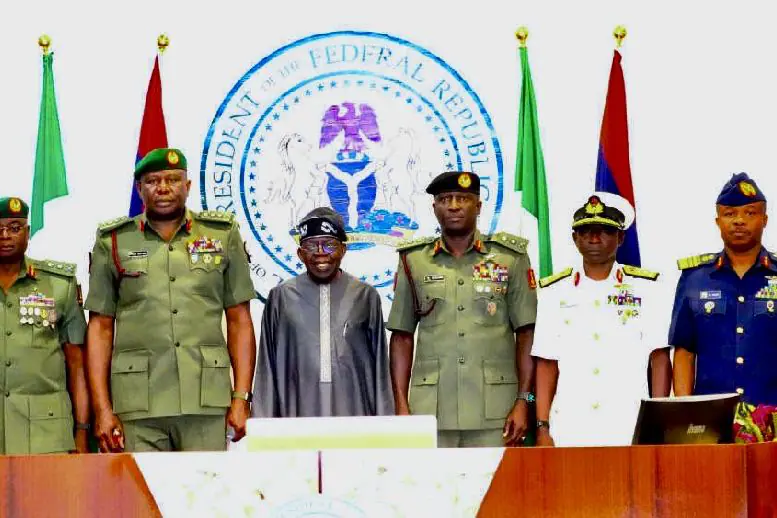
President Bola Ahmed Tinubu’s approval of a substantial salary increase for members of the Nigerian Armed Forces has generated mixed reactions among opposition politicians, with some describing the decision as a necessary welfare intervention while others argue that improved salaries alone cannot resolve the country’s persistent security challenges.
The Federal Government recently approved a salary review of between 30 and 80 per cent for military personnel, increasing the Armed Forces’ annual wage bill from approximately ₦660 billion to ₦924 billion. The revised salary structure is expected to take effect from September 1, 2026, with junior personnel receiving the highest percentage increase. (Punch)
The announcement has triggered renewed political debate over defence spending, troop welfare and national security policy, with opposition figures expressing differing opinions on the government’s approach.
As a result, the Tinubu military pay rise has become one of the most discussed defence policy issues in Nigeria’s current political landscape.
Opposition Expresses Mixed Reactions
While some opposition leaders welcomed the improved welfare package for military personnel, others questioned whether salary adjustments alone would produce meaningful improvements in security operations.
Supporters of the initiative argued that Nigerian soldiers have long deserved better remuneration considering the dangerous conditions under which many of them serve.
Critics, however, maintained that welfare improvements should be accompanied by broader reforms involving military equipment, intelligence gathering, logistics and operational planning.
The differing opinions demonstrate why the Tinubu military pay rise has generated debate beyond partisan politics.
Many commentators agreed on the importance of troop welfare while disagreeing on the broader security strategy.
Government Defends Decision
The Presidency described the salary increase as part of a wider programme aimed at strengthening national security and improving the welfare of members of the Armed Forces.
According to presidential officials, military personnel continue to make enormous sacrifices in confronting terrorism, banditry, kidnapping and other security threats across the country.
Government representatives argued that improved remuneration would strengthen morale, encourage professionalism and recognise the commitment of troops serving in difficult operational environments.
The administration maintained that the Tinubu military pay rise should be viewed alongside ongoing investments in military equipment, infrastructure and operational support.
Officials also stressed that troop welfare remains an important component of national security.
https://ogelenews.ng/tinubu-military-pay-rise
Supporters Welcome Welfare Improvement
Several political stakeholders welcomed the salary increase, arguing that better welfare has become necessary given current economic realities and inflation.
They noted that junior military personnel often operate under demanding conditions while supporting families facing rising living costs.
Supporters also argued that improved remuneration could contribute to higher morale and stronger retention of experienced personnel.
According to these observers, the Tinubu military pay rise recognises the contribution of soldiers who continue to defend the country under extremely difficult circumstances.
They described the measure as a positive step regardless of political affiliation.
Critics Seek Broader Security Reforms
Opposition voices that questioned the policy generally avoided opposing improved salaries themselves.
Instead, they argued that military welfare should form part of a more comprehensive security reform programme.
Among the issues frequently raised were:
- Modern weapons and equipment.
- Better intelligence capabilities.
- Improved military housing.
- Enhanced healthcare services.
- Stronger logistics.
- Transparent defence procurement.
According to these critics, the Tinubu military pay rise should be accompanied by sustained investment in operational effectiveness.
They maintained that salaries alone cannot overcome structural security challenges.
Military Welfare Remains Important
Security experts have consistently emphasised the importance of troop welfare in maintaining operational readiness.
Professional armed forces generally depend upon adequate remuneration, reliable logistics, quality healthcare, modern equipment and continuous training.
Military analysts therefore view welfare as one element of a broader defence capability.
The discussion surrounding the Tinubu military pay rise reflects this wider understanding of military effectiveness.
Well-supported personnel are often better positioned to sustain demanding operational responsibilities.
Defence Spending and Fiscal Implications
The revised salary structure increases annual military personnel expenditure by approximately ₦264 billion, bringing the wage bill to ₦924 billion.
Supporters argue that the additional expenditure represents an investment in national security.
Others caution that increased personnel costs should be balanced with continued investment in capital expenditure, equipment acquisition and operational readiness.
The debate over the Tinubu military pay rise therefore extends beyond politics to broader questions concerning fiscal priorities and defence budgeting.
Economists note that security spending must be carefully managed within overall public finance considerations.
Public Opinion Remains Divided
Outside political circles, many Nigerians have expressed support for improved military welfare while simultaneously calling for measurable improvements in national security.
Citizens affected by insecurity frequently argue that better salaries should translate into stronger operational performance.
Others emphasise that military personnel deserve improved welfare regardless of political disagreements.
The public discussion surrounding the Tinubu military pay rise demonstrates widespread recognition of both the sacrifices made by troops and the need for continued security reforms.
These perspectives are not necessarily contradictory.
Long-Term Impact Will Depend on Implementation
Analysts believe the success of the salary review will ultimately depend on effective implementation.
Timely payment, sustained funding and complementary reforms will determine whether improved remuneration produces lasting operational benefits.
Military institutions also require continuous investment in leadership development, technology, intelligence and logistics.
The Tinubu military pay rise represents one important component of broader defence sector reform rather than a complete solution.
Its long-term impact will become clearer as implementation progresses.
Ogele News Perspective
The differing reactions to the military salary increase reflect the complexity of Nigeria’s security challenges rather than simple political disagreement.
There appears to be broad consensus that members of the Armed Forces deserve improved welfare.
The principal difference lies in whether salary adjustments alone are sufficient to strengthen national security.
Both perspectives contain valid considerations.
Troop welfare influences morale and operational effectiveness.
At the same time, security outcomes also depend on equipment, intelligence, logistics, leadership and institutional capacity.
The Tinubu military pay rise should therefore be evaluated within the broader context of ongoing defence reforms.
If the improved salaries are implemented as scheduled and complemented by sustained investment in military capability, the initiative could contribute positively to both troop welfare and operational readiness.
Ultimately, the effectiveness of the policy will be measured not only by increased salaries but also by measurable improvements in security across the country.