











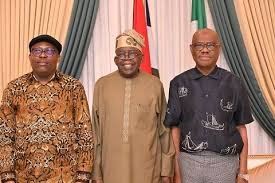
Fubara backs Tinubu and Wike coalition
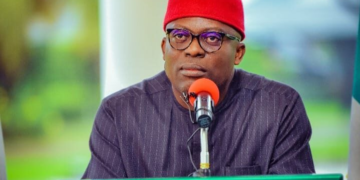
Rivers State Governor Siminalayi Fubara has publicly declared an end to the political hostilities that divided the state, throwing his weight behind President Bola Tinubu and the Rainbow Coalition led by the Minister of the Federal Capital Territory, Nyesom Wike.
Fubara made the declaration on Wednesday, July 22, 2026, during the groundbreaking ceremony for the reconstruction and equipping of the Riven Medical Industries facility in Port Harcourt.
The announcement that Fubara backs Tinubu and Wike coalition represents his clearest public attempt yet to close the chapter on the bitter political confrontation that destabilised Rivers State for nearly three years.
The governor declared his support for Tinubu’s second-term bid and urged his followers to back Kingsley Chinda, the governorship candidate of the All Progressives Congress in Rivers State.
He also announced that he had returned to the political family associated with Wike and had joined the Rainbow Coalition, which brings together politicians from the APC, Peoples Democratic Party and other political blocs in the state.
“We have made peace in the state, and I’m supporting our Rainbow Coalition. President Bola Tinubu is our President, and he is the one we are supporting,” Fubara said.
The governor added that Chinda was the governorship candidate he had chosen to support, directing anyone who believed in his leadership to back every candidate associated with the coalition.
“I’ve gone back to our family. So, please, whoever you are, give your total support to the Rainbow Coalition. We need to move forward. The time of war is over. It is time for peace, and this peace is taking us to another level,” he said.
Fubara warns supporters against political division
As Fubara backs Tinubu and Wike coalition, he warned his supporters not to establish or join political movements in his name that could create fresh divisions in Rivers State.
The governor said his political position had been clearly stated and should not be misrepresented by individuals claiming to defend his interests.
He maintained that he would not associate himself with any organisation or political agenda capable of threatening the peace currently being restored in the state.
Fubara’s statement appeared directed at supporters who had urged him to maintain an independent political structure following his long-running disagreement with Wike.
Some of the governor’s allies had hoped that he would build a separate political movement ahead of the 2027 elections. His latest declaration, however, effectively asks them to abandon that course and align with the coalition now supported by Wike, Tinubu and other political leaders in Rivers State.
The declaration that Fubara backs Tinubu and Wike coalition therefore goes beyond a routine endorsement. It signals the possible dismantling of the separate political camp built around Fubara during the height of the Rivers crisis.
From political war to public reconciliation
The political crisis between Fubara and Wike began shortly after the governor assumed office on May 29, 2023.
Wike, who governed Rivers State from 2015 to 2023, played a central role in Fubara’s emergence as the PDP governorship candidate and eventual successor. Their relationship later deteriorated over control of the state’s political structure, government appointments and the loyalty of state lawmakers.
The disagreement divided the Rivers State House of Assembly, with most members maintaining their allegiance to Wike. It also resulted in impeachment moves against Fubara, court cases, competing legislative factions and persistent uncertainty over the state budget.
The political confrontation eventually contributed to President Tinubu’s decision to declare a state of emergency in Rivers State on March 18, 2025.
Fubara, his deputy and members of the House of Assembly were suspended for six months, while retired Vice Admiral Ibok-Ete Ibas was appointed to administer the state.
Tinubu lifted the emergency rule on September 17, 2025, after stating that intelligence reports showed a new spirit of cooperation among the political leaders. Fubara and the suspended lawmakers returned to office the following day.
The state of emergency generated more than 40 court cases in Abuja, Port Harcourt and Yenagoa, with critics questioning whether the President had the constitutional authority to suspend elected officials. Tinubu defended the measure as necessary to prevent the political crisis from descending into anarchy.
Against that turbulent background, the announcement that Fubara backs Tinubu and Wike coalition is politically significant.
https://ogelenews.ng/fubara-declares-political-truce-backs-tinubu-and-wi…
What is Wike’s Rainbow Coalition?
The Rainbow Coalition is a Rivers-based political alliance promoted by Wike ahead of the 2027 general elections.
It is not a separate registered political party. Instead, it brings together politicians and candidates from different parties who share common electoral objectives, especially support for Tinubu’s re-election.
Wike previously said that the coalition included members of both the APC and PDP. He maintained that its leaders would collectively determine the candidates to support for elective offices in Rivers State.
The FCT minister had earlier argued that politicians seeking relevance in Rivers politics should join the coalition. At the time, he said no final decision had been taken on who would receive the group’s governorship support.
The political landscape has since changed, with Chinda emerging as the APC governorship candidate.
Fubara had obtained the APC governorship nomination form but did not participate in the primary election. Chinda subsequently emerged as the party’s candidate, setting the stage for the governor’s latest endorsement.
By declaring that Fubara backs Tinubu and Wike coalition, the governor has now accepted a political arrangement that could determine not only the presidential vote in Rivers but also the governorship and legislative contests.
Fubara endorses Tinubu’s second term
Fubara’s support for Tinubu is not entirely new.
In April 2026, the governor publicly called for Tinubu’s re-election, describing Nigeria as being in capable hands under the President. He argued that continuity would allow the administration to consolidate its reforms and development programmes.
What is new is Fubara’s decision to connect that endorsement directly to Wike’s Rainbow Coalition and the APC candidates contesting elections in Rivers State.
The declaration that Fubara backs Tinubu and Wike coalition could strengthen the President’s position in the oil-rich state, where Wike has maintained a formidable political organisation despite serving in an APC-led federal government while retaining ties to the PDP.
Wike supported Tinubu during the 2023 presidential election after falling out with the PDP leadership. Tinubu subsequently appointed him Minister of the Federal Capital Territory.
The Rainbow Coalition appears designed to reproduce that cross-party arrangement in 2027, with supporters from different political parties working toward shared electoral objectives.
What Fubara’s surrender of independent structure means
For Fubara, the endorsement may represent a difficult but calculated political decision.
He emerged from the Rivers crisis with considerable public sympathy, particularly among those who saw his confrontation with Wike as a struggle against political godfatherism.
However, the governor also faced an Assembly dominated by Wike’s allies, repeated impeachment threats and uncertainty about his political future.
His withdrawal from the APC governorship primary ended expectations that he would seek a second term on the party’s platform.
By announcing that Fubara backs Tinubu and Wike coalition, the governor has chosen accommodation over another prolonged political battle.
His statement that he had “returned to the family” strongly suggests that he has accepted Wike’s continued influence over the state’s political structure.
Whether that decision will bring lasting peace remains uncertain. Rivers State has witnessed previous reconciliation meetings and presidential interventions that temporarily reduced tensions but failed to resolve the underlying struggle for control.
A credible truce will therefore require more than campaign endorsements. It must lead to stable governance, cooperation with the House of Assembly, transparent management of public resources and an end to politically motivated confrontations.
Rivers residents expect governance, not another political pact
While political actors may celebrate the reconciliation, residents will judge it by its impact on governance.
Rivers State is one of Nigeria’s most economically important states and a major centre of oil and gas production. Prolonged political instability risks discouraging investment, delaying public projects and weakening confidence in government institutions.
The venue of Fubara’s declaration was itself significant.
The governor spoke during the groundbreaking ceremony for the Riven Medical Industries Project, a public-private partnership between the Rivers State Government and Enbay Pharmaceutical Industries Limited.
The project is intended to redevelop the former Integrated Medical Industries into a pharmaceutical manufacturing complex.
When completed, the facility is expected to produce pharmaceutical formulations, intravenous infusions, gelatine capsules and active pharmaceutical ingredients. It is also expected to create employment, support technology transfer and reduce Nigeria’s dependence on imported medical products.
Fubara said the first phase should be completed within three months and warned the investors against failing to meet their obligations.
The governor also revealed that Rivers State was involved in contractual disputes with several companies, with claims reportedly exceeding ₦200 billion.
This development underlines why the message that Fubara backs Tinubu and Wike coalition must ultimately be connected to economic and administrative stability.
Peace declaration or political capitulation?
Fubara’s statement can be interpreted in two ways.
His supporters may view it as a responsible decision to put the interests of Rivers State above personal political ambition. After years of confrontation, reconciliation could allow the government to focus on infrastructure, employment, healthcare and public services.
Critics, however, may see it as political capitulation and evidence that Wike has regained control of the state’s political structure.
Both interpretations will shape the debate ahead of the 2027 elections.
What is clear is that the declaration that Fubara backs Tinubu and Wike coalition has redrawn the political map of Rivers State.
The governor has endorsed Tinubu for President, Chinda for governor and the candidates assembled under the Rainbow Coalition. He has also instructed his supporters to stop promoting separate political arrangements in his name.
For Wike, the announcement represents a major victory. For Tinubu, it promises a more united electoral structure in a strategically important state.
For Fubara, however, the consequences are more complicated. His ability to retain the trust of supporters who stood with him throughout the crisis will depend on whether the political settlement produces peace, development and respect for democratic institutions.
The time of political war may have been declared over, but the durability of the truce will be tested by what happens before, during and after the 2027 elections.
https://guardian.ng/politics/fubara-declares-support-for-wikes-coalition-endorses-chinda
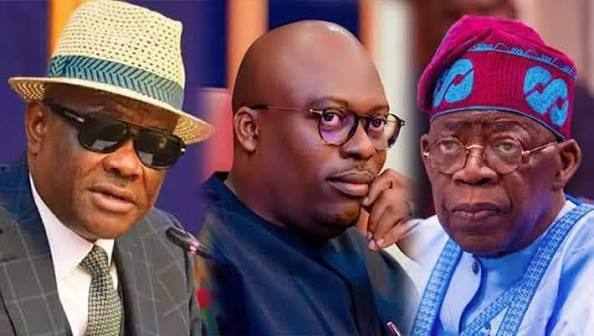
Fubara backs Tinubu and Wike coalition