

















Tinubu re-election support in Kebbi
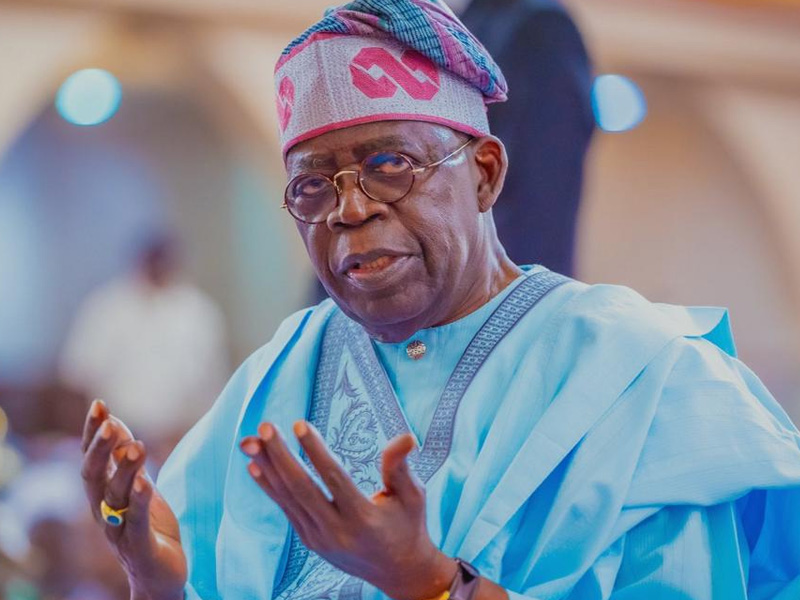
Kebbi State Governor, Nasir Idris, is supporting President Bola Tinubu’s bid for a second term because of what his administration describes as the President’s investment in road infrastructure, renewable energy and other federal projects across the state.
The governor’s political allies maintain that the endorsement is based on the perceived benefits Kebbi has received under the Tinubu administration rather than on party loyalty alone.
At the centre of the Tinubu re-election support in Kebbi is the ongoing Sokoto–Badagry Superhighway, a major federal road project expected to pass through several North-Western communities and improve transportation, trade and agricultural movement.
Idris has also cited renewable-energy initiatives and other federal interventions as evidence that the President has shown commitment to Kebbi’s development.
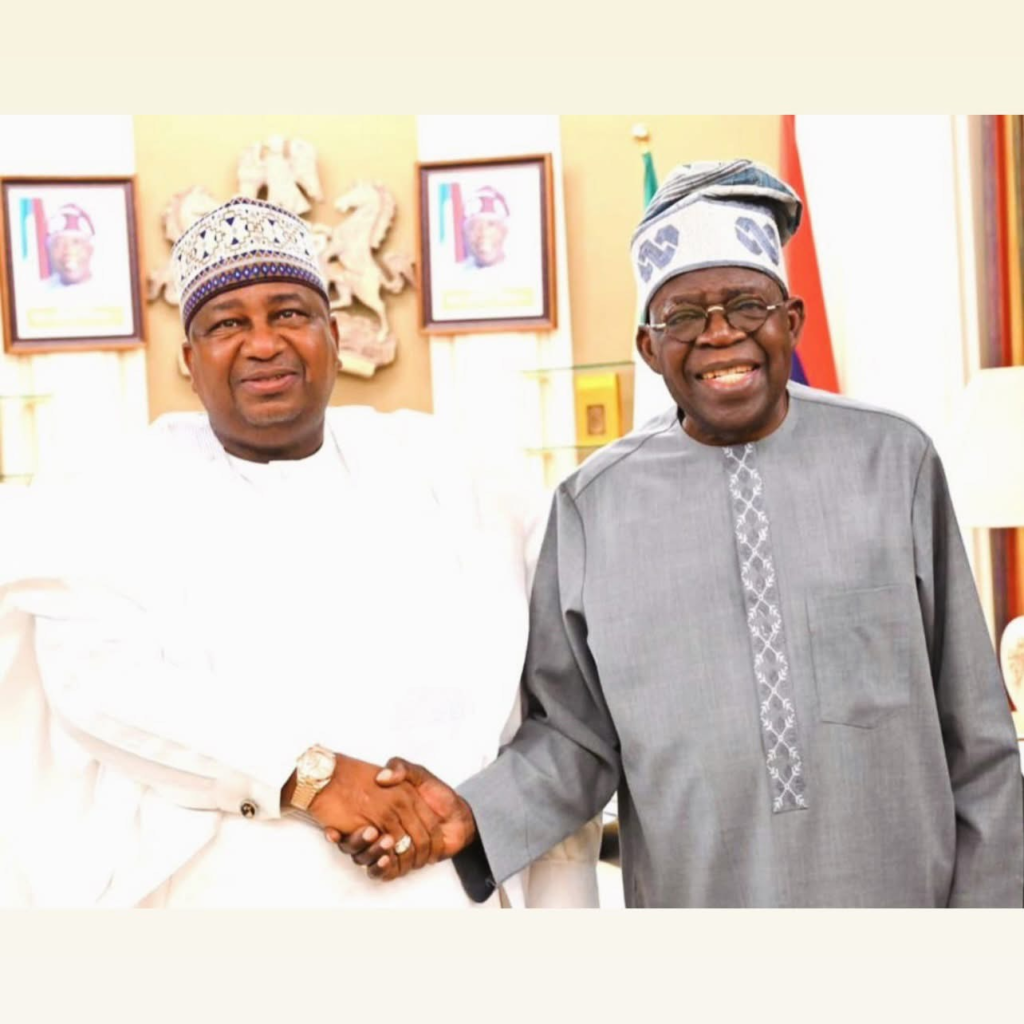
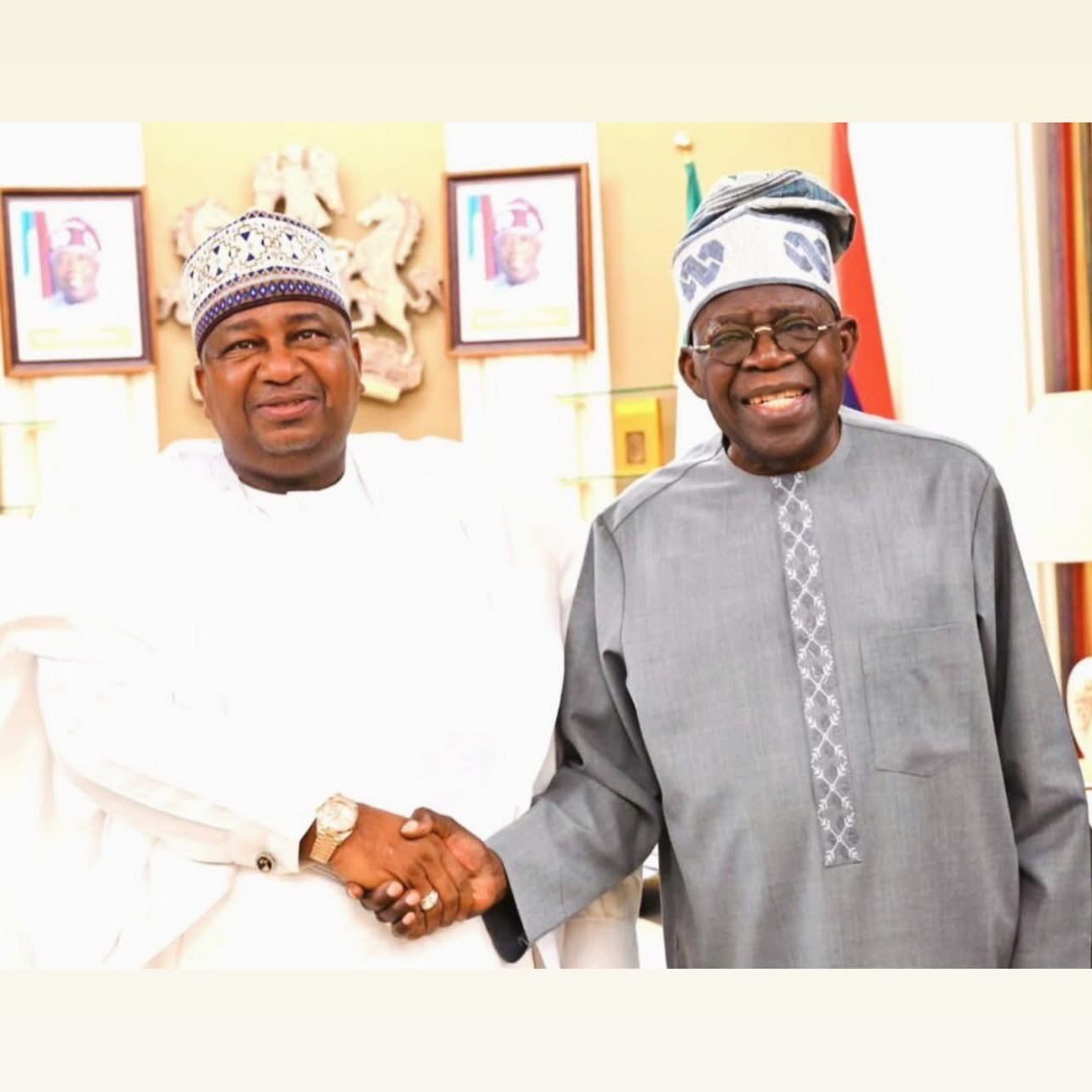
The governor publicly restated that position during an endorsement programme organised by the Tinubu Support Organisation at the Presidential Lodge in Birnin Kebbi.
Supporters at the event endorsed Tinubu and Idris for second terms, presenting the two leaders as partners in a continuing federal-state development arrangement.
Governor cites federal projects
Idris said Kebbi had benefited substantially from the Federal Government since Tinubu assumed office.
According to him, the presence of major infrastructure and renewable-energy projects provided a strong basis for the Tinubu re-election support in Kebbi.
The governor argued that the projects demonstrated the President’s commitment to national development and justified the campaign for continuity beyond 2027.
He also described Tinubu as his political leader and mentor, insisting that he would not apologise for supporting the President.
Idris said critics questioning his endorsement were ignoring the federal projects being implemented in Kebbi and the importance of federal cooperation to the state’s development.
The endorsement is politically significant because Kebbi is one of the states where the All Progressives Congress has traditionally maintained a strong electoral presence.
It is also part of a broader pattern of early declarations by APC governors and party leaders supporting Tinubu ahead of the 2027 presidential election.
Sokoto–Badagry highway central to endorsement
The Sokoto–Badagry Superhighway features prominently in the governor’s explanation.
The road is designed as a major transport corridor linking the North-West to the South-West and supporting movement through key agricultural and commercial areas.
For Kebbi, the project has particular importance because the state is a leading producer of rice and other agricultural commodities.
Improved road access could reduce transportation delays, strengthen links between farms and markets and support trade across state and international borders.
This expectation has become one of the strongest political arguments behind the Tinubu re-election support in Kebbi.
However, political endorsements based on infrastructure should be judged against measurable delivery.
Residents will ultimately assess the project through the pace of construction, the quality of completed sections, compensation for affected communities and the economic benefits produced after completion.
Announcements and groundbreaking ceremonies alone cannot substitute for functional roads.
Renewable-energy initiatives highlighted
The Idris administration has also pointed to renewable-energy projects being pursued by the Federal Government in Kebbi.
The governor said those initiatives, alongside road construction and other interventions, demonstrated that the state was receiving meaningful attention from Abuja.
Kebbi has strong solar-energy potential because of its climate and land availability.
Properly implemented renewable-energy projects could improve electricity access for farming communities, small businesses, health facilities and educational institutions.
They could also support irrigation, cold storage and agricultural processing in communities where unreliable electricity limits productivity.
The renewable-energy argument has therefore become another pillar of the Tinubu re-election support in Kebbi.
Yet the true value of such projects will depend on completion, maintenance and access.
Authorities should disclose the locations, capacities, timelines, contractors and intended beneficiaries of the projects being cited.
Such transparency would allow residents to determine whether the initiatives are improving daily life or remain largely political promises.
Aide presents endorsement as performance-based
The governor’s supporters have portrayed the endorsement as a response to federal performance rather than a personal political arrangement.
Their argument is that Tinubu has supported Kebbi through strategic projects, while Idris has maintained a productive relationship with the Presidency.
This relationship, they say, has allowed the state to attract federal attention and development opportunities.
That explanation gives the Tinubu re-election support in Kebbi a practical campaign message: continuity at the federal level would enable existing projects to continue without disruption.
It is a familiar argument in Nigerian elections, where incumbent governments often present ongoing infrastructure as a reason voters should grant them additional time.
The weakness in that argument is that unfinished projects cannot automatically guarantee future performance.
Voters will need to compare what was promised, what was budgeted and what has actually been delivered.
Kebbi declares early support
Idris has said Kebbi was among the earliest states to publicly endorse Tinubu for another term.
He referred to an earlier gathering at the Haliru Abdu Stadium, where supporters reportedly declared their backing for the President.
The Tinubu Support Organisation later reinforced that position by launching an endorsement campaign in Birnin Kebbi.
Its national leader, Aminu Suleiman, said the organisation intended to expand the campaign to other states and the Federal Capital Territory.
He also pledged that members would mobilise grassroots support for both Tinubu and Idris.
The mobilisation demonstrates that the Tinubu re-election support in Kebbi is not merely an isolated statement by the governor.
It is developing into a structured political campaign involving party officials, support groups and grassroots organisers.
APC governors push continuity argument
The Kebbi endorsement fits into the broader strategy of APC governors campaigning for policy continuity.
First-term APC governors meeting in Kebbi in July unanimously backed Tinubu, arguing that Nigeria required sustained reforms, stronger federal-state cooperation and policies supporting agriculture, enterprise and production.
Their communiqué presented the endorsement as a decision based on governance rather than party sentiment alone.
That argument is likely to become a major theme of the APC’s 2027 campaign.
The party will seek to persuade voters that economic and institutional reforms require more than one presidential term to produce their full benefits.
Opposition parties, by contrast, are expected to focus on living costs, insecurity, unemployment and the social consequences of the administration’s economic policies.
https://ogelenews.ng/kebbi-governor-backs-tinubus-re-election-over-highw…
The Tinubu re-election support in Kebbi must therefore be understood within a wider national debate over whether continuity or political change offers the better route to development.
Security remains an important test
Infrastructure is not the only issue that will determine voter sentiment in Kebbi.
The state has experienced threats from banditry, kidnapping and cross-border criminal activity, particularly in vulnerable rural communities.
The Federal Government has supported the training and deployment of forest guards in Kebbi as part of efforts to improve surveillance and deny criminal groups access to remote forest areas.
More than 800 trained guards were reported to have been deployed following a programme supported through the Federal Government’s security initiative.
The governor’s supporters may cite that cooperation as another justification for the Tinubu re-election support in Kebbi.
Nevertheless, residents are likely to judge security policy by whether farmers can cultivate land safely, children can attend school without fear and rural communities are protected from attacks.
Security statistics and official statements matter, but public confidence depends most strongly on people’s lived experiences.
Agriculture will shape voters’ judgment
Kebbi’s economy is closely tied to agriculture, especially rice production.
Farmers require affordable inputs, irrigation, secure farmland, storage facilities and reliable transportation.
The Sokoto–Badagry corridor and renewable-energy projects could support those needs if properly completed.
Roads can connect farmers with markets, while solar-powered irrigation and processing facilities can reduce production costs.
The political case for the Tinubu re-election support in Kebbi will therefore be stronger where residents can link federal projects to improved agricultural income.
It will be weaker where farmers continue to struggle with insecurity, high transport costs, expensive fertiliser and limited access to credit.
A credible campaign must address those everyday realities rather than rely only on endorsements by political leaders.
Endorsement does not replace electoral choice
A governor’s endorsement may influence party structures, campaign funding and grassroots mobilisation, but it does not determine how every resident will vote.
Kebbi voters retain the right to examine competing candidates and make independent choices.
The governor’s position represents the official political direction of his administration and many APC leaders in the state.
It should not be interpreted as unanimous support among all residents.
Opposition parties are entitled to challenge the administration’s claims and present alternative assessments of the federal projects being cited.
The media must also avoid turning political statements into undisputed facts.
Where an aide or governor says a project has transformed communities, journalists should seek budgets, completion records and testimony from residents.
That scrutiny is particularly important when reporting the Tinubu re-election support in Kebbi, because the endorsement is part of an active political campaign.
Idris also seeking another term
The political arrangement benefits both leaders.
While Idris is mobilising support for Tinubu, the Tinubu Support Organisation and other APC structures have also endorsed the Kebbi governor for another term.
This creates a joint continuity campaign built around cooperation between the federal and state governments.
Supporters argue that re-electing both men would protect ongoing projects and allow them to expand development programmes.
Critics may interpret the mutual endorsements as political self-interest.
Both interpretations should be acknowledged in balanced reporting.
The decisive question is whether the administrations can provide verifiable evidence of improvements in infrastructure, security, education, healthcare and economic opportunity.
Nigerians will decide in 2027
Governor Idris has made his position clear: he believes Tinubu deserves another term because of the federal projects and political attention Kebbi has received.
His aides and supporters have reinforced that message by highlighting the Sokoto–Badagry Superhighway, renewable energy and stronger federal-state collaboration.
These factors explain the Tinubu re-election support in Kebbi, but they do not end the political debate.
The President’s record will be assessed nationally, while Idris’ endorsement will be tested against conditions within Kebbi.
Residents will ask whether projects were completed, whether security improved and whether economic policies raised or reduced their standard of living.
For the APC, the challenge is to convert official endorsements into voter confidence.
For the opposition, the task is to provide a credible alternative and demonstrate where government claims do not match citizens’ experiences.
The Tinubu re-election support in Kebbi may give the President an early organisational advantage in an important North-Western state.
The final decision, however, belongs not to governors, aides or political support organisations, but to voters at the ballot box.