















Tyson Fury vs Anthony Joshua fight
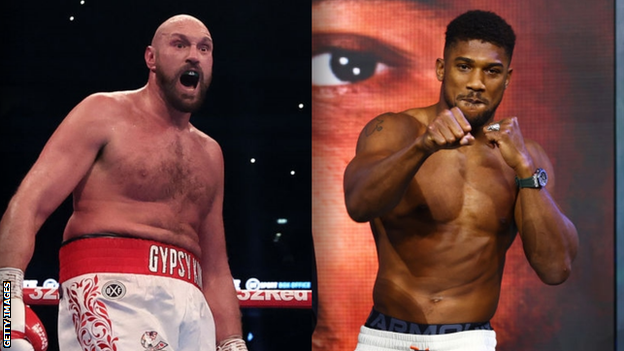
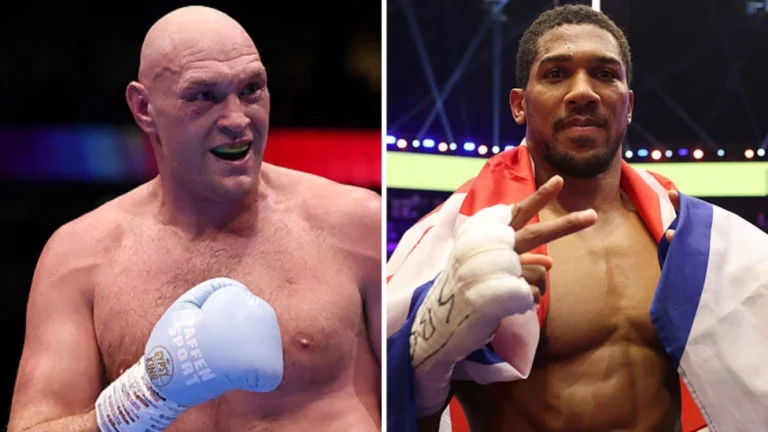
LONDON, United Kingdom — Tyson Fury has thrown fresh uncertainty over his long-awaited heavyweight showdown with Anthony Joshua, warning that one of the biggest fights in British boxing history may not happen as negotiations become increasingly complicated by a dispute over the venue and financial terms.
The latest uncertainty surrounding the Tyson Fury vs Anthony Joshua fight emerged on Friday after Fury claimed negotiations were encountering serious difficulties.
The former heavyweight world champion said the contest no longer appeared certain, despite months of negotiations and growing expectations that the two British rivals would finally settle a rivalry that has dominated heavyweight boxing discussions for years.
The immediate problem centres on plans to stage the fight in the United States rather than Britain.
Joshua’s promoter, Eddie Hearn, maintains that the original contractual arrangement was based on a fight in the United Kingdom and that changing the location requires new commercial terms.
Fury, however, has expressed frustration with the demands emerging from Joshua’s camp.
The dispute has placed a question mark over a contest boxing supporters have waited almost a decade to see.
Tyson Fury vs Anthony Joshua Fight Hits Fresh Trouble
Fury’s latest comments represent a dramatic shift from the optimism surrounding the fight only days ago.
Earlier this week, Fury suggested an announcement confirming the contest was imminent.
By Friday, his language had changed significantly.
The former WBC heavyweight champion said the Tyson Fury vs Anthony Joshua fight did not look likely to happen under the present circumstances.
His frustration was directed particularly at Joshua and Hearn, whom he accused in an angry social-media intervention of allowing financial considerations to complicate negotiations.
The language was characteristically Fury.
But behind the insults lies a genuine contractual disagreement that could determine whether the fight happens this year.
Venue Dispute at Centre of Negotiations
The central question is surprisingly simple.
Where should Fury and Joshua fight?
For British boxing supporters, the obvious answer has always been the United Kingdom.
A contest involving arguably the two biggest British heavyweight stars of their generation appeared tailor-made for a huge British stadium.
Wembley Stadium has repeatedly featured in discussions surrounding the Tyson Fury vs Anthony Joshua fight.
But the latest negotiations have increasingly shifted towards Madison Square Garden in New York.
The Independent reports that Hearn and Saudi boxing powerbroker Turki Alalshikh are involved in discussions over the location, with the original agreement having been structured around staging the contest in Britain.
Moving the fight therefore involves more than changing an address.
It changes the economics.
Joshua Camp Wants Compensation for US Switch
This is where negotiations have become difficult.
Joshua’s camp argues that moving the fight from Britain to America changes the financial circumstances under which the original agreement was reached.
Tax implications are among the issues reportedly being discussed.
Hearn’s position is essentially that if organisers want Joshua to abandon the original UK arrangement and accept a New York fight, the financial terms must reflect that change.
Fury sees matters differently.
He has publicly attacked the additional demands and suggested that the dispute could kill the contest.
The Tyson Fury vs Anthony Joshua fight therefore appears to have reached the familiar territory that has frustrated boxing supporters repeatedly over the years.
Both fighters say they want the fight.
Promoters say they want the fight.
Broadcasters want the fight.
Supporters certainly want the fight.
Yet contractual details continue to stand between the two men and the ring.
Madison Square Garden Could Host Heavyweight Showdown
New York’s Madison Square Garden has emerged as a possible venue.
For boxing, the location needs little introduction.
Muhammad Ali, Joe Frazier, Roberto Duran, Lennox Lewis and countless other champions have fought at the famous arena.
Joshua has personal history there too, although not a pleasant one.
It was at Madison Square Garden in June 2019 that Andy Ruiz Jr produced one of heavyweight boxing’s biggest upsets by stopping Joshua and taking his world heavyweight titles.
A return to New York against Fury would therefore carry considerable historical and commercial appeal.
But it would also mean that perhaps the biggest all-British heavyweight fight of the modern era would take place thousands of miles away from British supporters.
That possibility has already generated disappointment.
British Fans Could Lose Biggest Home Fight
The location debate is not merely commercial.
For British boxing supporters, the Tyson Fury vs Anthony Joshua fight has long been imagined as a national sporting spectacle.
Both fighters were born in England.
Both became heavyweight world champions.
Both built enormous British fan bases.
And their rivalry developed largely within British boxing.
A Wembley fight could potentially attract around 90,000 spectators.
The atmosphere would almost certainly be extraordinary.
Yet the commercial realities of modern elite boxing increasingly extend beyond ticket sales.
Global broadcasting, sponsorship, international promotion and the involvement of Saudi-backed boxing interests can influence where major contests are staged.
That tension is now at the heart of negotiations.
Contracts Were Built Around UK Fight
Hearn has stressed that the contractual situation matters.
According to reports, Joshua’s existing agreement specifies that the fight should take place in the United Kingdom.
Changing that arrangement therefore requires agreement from his side.
That distinction is important because Fury’s public criticism could otherwise create the impression that Joshua is simply demanding more money without justification.
The reality appears more complicated.
If a fighter signs a contract based on one jurisdiction, tax environment, venue and commercial structure, moving the event to another country can materially alter the deal.
Negotiating adjustments in those circumstances is normal.
Whether Joshua’s demands are reasonable is a separate question.
That is what the parties are attempting to resolve.
Fury Says He Is Ready to Fight Anywhere
Fury’s position appears considerably simpler.
He says he wants the fight and is prepared to compete wherever organisers stage it.
That attitude allows Fury to portray himself as the fighter waiting for Joshua’s side to agree.
His camp has repeatedly insisted that Fury wants the Tyson Fury vs Anthony Joshua fight.
Promoter Frank Warren said as far back as December 2025 that Fury had indicated his willingness to return specifically for the Joshua contest if the deal was right.
The two men subsequently moved closer towards finally sharing a ring.
Yet history provides good reason for caution.
Fury-Joshua Has Collapsed Before
Boxing fans have heard versions of this story before.
The Tyson Fury vs Anthony Joshua fight has been discussed since approximately 2016.
At different stages, both men held versions of the heavyweight world championship.
The closest they came to an undisputed heavyweight showdown was arguably in 2021.
Joshua held the WBA, IBF and WBO titles.
Fury held the WBC belt.
A deal appeared possible.
Then an arbitration ruling required Fury to face Deontay Wilder for a third time.
The proposed Joshua contest collapsed.
Joshua subsequently lost his heavyweight titles to Oleksandr Usyk.
Fury later also suffered defeats against Usyk.
The result was one of boxing’s great missed opportunities.
The two biggest British heavyweights of their generation never fought while both were world champions.
https://ogelenews.ng/tyson-fury-casts-fresh-doubt-over-anthony-joshua-me…
Fight No Longer Needs World Titles
That history makes the current negotiations unusual.
The fight does not need a collection of heavyweight belts to sell.
Fury and Joshua themselves are the attraction.
Their personalities are different.
Their careers developed differently.
Their supporters have argued for years about who would win.
Joshua became Olympic champion before establishing himself as a two-time unified heavyweight champion.
Fury dethroned Wladimir Klitschko and later produced a memorable trilogy with Deontay Wilder.
Both subsequently lost to Usyk.
Yet public interest in seeing them fight has survived.
That demonstrates the commercial strength of the Tyson Fury vs Anthony Joshua fight.
Both Men Have Already Taken Preparatory Fights
Another reason Friday’s development is frustrating is that substantial work has already gone into positioning both fighters for the showdown.
Fury returned to competition and defeated Arslanbek Makhmudov by unanimous decision earlier this year.
Joshua also returned to action as preparations intensified for the proposed meeting.
The expectation was that both fighters would come through their respective assignments before finally meeting later in 2026.
That made the contest feel considerably more realistic than previous negotiations.
Now, however, venue and contractual disagreements have reopened uncertainty.
Netflix Adds Major Commercial Dimension
Broadcasting is another important factor.
The proposed contest has been connected with Netflix, adding another layer to the commercial negotiations.
A US-based fight could offer advantages for reaching the American market in prime time.
But that creates scheduling complications for British viewers.
A contest staged late in New York would occur in the early hours in Britain.
For a fight involving two British sporting icons, that would inevitably frustrate supporters who have followed both men throughout their careers.
Organisers therefore face a difficult calculation.
Do they maximise the global commercial opportunity?
Or preserve the cultural significance of staging the fight in Britain?
Dana White Frustrated by Negotiations
The delays have even frustrated UFC chief and Zuffa Boxing figure Dana White.
White recently expressed exasperation at the repeated complications surrounding the contest, arguing that ultimately the fighters either want to fight or they do not.
His frustration reflects a sentiment familiar to boxing supporters.
Major boxing contests frequently involve multiple promoters, broadcasters, sanctioning bodies, managers and financial interests.
Unlike many other sports, there is no single league controlling elite professional boxing.
That fragmentation can make apparently obvious contests extraordinarily difficult to organise.
The Tyson Fury vs Anthony Joshua fight has become one of the clearest examples.
Hearn Still Wants Fight to Happen
Despite Fury’s pessimism, the situation should not yet be reported as a cancellation.
That is crucial.
The fight is in doubt, not officially off.
Hearn has continued negotiating over the terms required to accommodate the potential US venue.
Recent reporting suggests the disagreement concerns contractual amendments rather than Joshua deciding he no longer wants to fight Fury.
That leaves room for compromise.
Money can be negotiated.
Contracts can be amended.
Venues can change.
The question is whether the parties can agree quickly enough.
Time Becoming Increasingly Important
The longer negotiations continue, the greater the risk.
Elite fighters need training camps structured around confirmed dates.
Venues need bookings.
Broadcasters require schedules.
Tickets need to be sold.
International promotion requires time.
Undercards must be assembled.
Medical and regulatory requirements must be completed.
Every week lost to negotiations compresses that process.
For fighters at this stage of their careers, time matters even more.
Fury turned 38 this month.
Joshua is 36.
Neither man has unlimited years remaining at heavyweight’s elite level.
The Tyson Fury vs Anthony Joshua fight has already been delayed for the better part of a decade.
Another collapse would raise legitimate questions over whether it will ever happen.
Legacy Is Now Bigger Than Belts
There is also a legacy issue.
Fury and Joshua have accomplished more than enough to be remembered as major British heavyweights.
But the absence of a fight between them remains conspicuous.
Lennox Lewis fought Frank Bruno.
Fury fought David Haye’s generation of rivals, although their own scheduled fights never materialised.
Joshua fought Wladimir Klitschko.
Fury fought Wilder three times.
Both fought Usyk.
Yet Fury and Joshua have never fought each other.
For future discussions about this heavyweight era, that absence will matter.
The rivalry has been talked about too much and for too long for another failed negotiation to be easily forgotten.
Ogele News Analysis: Don’t Call It Off Yet
The original headline, “Anthony Joshua fight may not happen, says Tyson Fury,” captures Fury’s latest warning but is too vague.
Anthony Joshua is a professional boxer.
He will have other fights.
The headline should identify the contest at risk as the Fury-Joshua mega-fight.
More importantly, Ogele News should resist declaring the fight cancelled.
As of Friday, the evidence does not establish that.
The dispute centres on the proposed switch from Britain to New York and the financial adjustments Joshua’s camp wants before agreeing to that change.
Fury is angry.
Hearn is negotiating.
The deal is under pressure.
That is different from a confirmed cancellation.
There is also an element of theatre to elite boxing negotiations.
Fury is one of the sport’s most effective self-promoters.
Public pressure can itself become part of negotiation strategy.
An angry social-media statement can put pressure on another camp without necessarily meaning the contest is dead.
The responsible approach is therefore straightforward:
Report the danger without announcing a funeral before the fight is dead.
The bigger tragedy would be if another contractual dispute prevents the Tyson Fury vs Anthony Joshua fight from happening at all.
Boxing already missed the opportunity to stage it when both men possessed heavyweight titles.
Today, the belts matter less.
What remains is rivalry, reputation and legacy.
Fury versus Joshua is no longer about discovering the undisputed heavyweight champion.
It is about answering a question British boxing has been asking for nearly a decade:
Who wins when Tyson Fury and Anthony Joshua finally stand across the ring from each other?
Promoters have spent years promising an answer.
They may be running out of time to deliver it.