
















US Green Card public charge rule
US Tightens Green Card Rules as Stricter Public Charge Test Takes Effect September 18
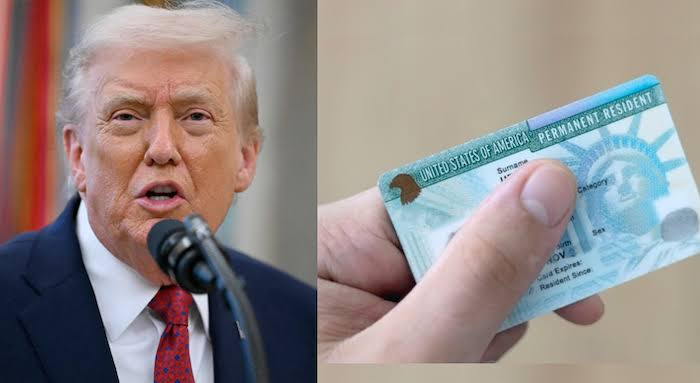
WASHINGTON, United States — The United States has tightened the financial scrutiny facing some immigrants seeking permanent residency, with immigration officers receiving broader discretion to determine whether applicants are likely to depend on government assistance in the future.
Under the revised US Green Card public charge rule, U.S. Citizenship and Immigration Services will assess applicants using a broader examination of their financial position and personal circumstances when determining admissibility.
The new policy guidance follows the Department of Homeland Security’s decision to rescind the 2022 public charge regulation and return greater discretion to immigration officers considering individual cases.
The changes take effect on September 18, 2026, and will affect applicable adjustment-of-status applications filed on or after that date.
USCIS says officers will continue to make decisions based on the totality of an applicant’s circumstances rather than relying on a single financial factor.
For intending immigrants, including Nigerians pursuing permanent residency in the United States, the development makes financial preparedness and accurate documentation increasingly important.US Green Card public charge rule
US Green Card Public Charge Rule Gets Tougher
The US Green Card public charge rule is based on a longstanding provision of American immigration law.
Under Section 212(a)(4) of the Immigration and Nationality Act, certain applicants can be found inadmissible if authorities determine they are likely at any time to become a public charge.
The central question is essentially whether an applicant is likely to become substantially dependent on public support.
What has changed over different administrations is how immigration officers interpret and apply that requirement.
The Biden administration’s 2022 regulation established a more defined framework for making public charge determinations.
The Department of Homeland Security has now rescinded that framework, arguing that it restricted the ability of immigration officers to make sufficiently broad and individualised assessments.
The result is greater discretion for USCIS officers.US Green Card public charge rule
What USCIS Officers Will Consider
Under the updated US Green Card public charge rule, immigration officers can examine several aspects of an applicant’s circumstances.
These include age, health, family status, assets, resources and financial position, as well as education and skills.
The objective is not simply to determine how much money an applicant possesses on the day the application is considered.
Officers are expected to assess the broader picture and determine whether the individual is likely to become a public charge in the future.
That could make employment history, professional qualifications and evidence of financial stability increasingly important.
A younger applicant with strong qualifications, employable skills, stable income and sufficient resources may present a substantially different profile from someone facing serious financial vulnerability.
But there is no single income figure that automatically determines every case.
The decision remains an individual assessment.
Receiving Benefits Does Not Automatically Mean Rejection
This is where the original story requires careful explanation.
The tougher US Green Card public charge rule should not be interpreted to mean that anyone who has received public assistance will automatically have a Green Card application rejected.
USCIS evaluates the totality of the applicant’s circumstances.
Past or current receipt of relevant public assistance can form part of that assessment, but it is not necessarily decisive on its own.
That distinction matters because immigration announcements often generate misinformation online.
Applicants should therefore avoid making major decisions about benefits or immigration applications based solely on social-media interpretations of the new rule.
Where individual circumstances are complicated, professional immigration advice may be appropriate.
September 18 Is Critical Date
The effective date is one of the most important aspects of the change.
The Department of Homeland Security’s final rule rescinding the 2022 public charge regulations becomes effective September 18, 2026.
Applications subject to the new framework from that point will be assessed under the updated approach.
This means applicants considering adjustment of status need to pay close attention to filing dates and current USCIS instructions.
The agency’s official policy guidance should be treated as authoritative where online explanations conflict.
https://ogelenews.ng/us-green-card-public-charge-rule
Biden-Era 2022 Rule Rescinded
Understanding the latest development requires looking at what Washington has changed.
DHS adopted a public charge regulation in 2022 that established specific standards governing how officials determined whether an immigrant was likely to become dependent on government support.
The current administration concluded that the regulation was too restrictive in defining what immigration officers could consider.
DHS said the 2022 framework prevented officers from considering a sufficiently broad range of means-tested benefits and limited their ability to make what the department described as accurate public charge determinations.
The department consequently rescinded the regulation.
That does not abolish the public charge principle itself.
The underlying statutory provision remains.
What has changed is the administrative framework used to apply it.
Greater Discretion for Immigration Officers
This may be the most consequential aspect of the new US Green Card public charge rule.
Removing the 2022 regulatory framework gives immigration officers greater discretion.
That can make individual circumstances more important.
Two applicants with similar incomes could potentially present different overall profiles when their health, family responsibilities, employment prospects, education, skills and other financial circumstances are considered.
DHS says this broader approach is more consistent with the congressional intent behind the public charge provision.
Critics of broad discretionary systems, however, have historically raised concerns that applicants may find it more difficult to predict how their cases will be decided.
That debate is likely to continue as the new framework is implemented.
Public Charge Bonds Could Become Important
Another feature of the system involves public charge bonds.
U.S. immigration law allows certain applicants who might otherwise face a public charge inadmissibility finding to be admitted under a public charge bond where authorities permit it.
The new framework provides rules surrounding such bonds.
A bond is essentially a financial guarantee intended to protect the government against the risk that the immigrant will become a public charge.
But applicants should not assume they can simply submit money with their Green Card application to overcome concerns.
The process depends on the immigration authorities’ determination and applicable procedures.
Current guidance indicates that applicants cannot simply pre-submit a public charge bond before USCIS determines one is appropriate.
Not Every Green Card Applicant Is Subject to Public Charge Test
Another important qualification is frequently lost in headlines about the US Green Card public charge rule.
The public charge ground does not apply equally to every immigration category.
Certain groups are exempt under U.S. immigration law.
These can include refugees, asylees and some other protected categories, depending on the immigration benefit being sought.
Applicants should therefore establish whether the public charge ground applies to their particular immigration category before assuming that the September changes affect them.US Green Card public charge rule
Family-based adjustment applicants may face different considerations from refugees or other exempt categories.
What Nigerian Applicants Should Understand
For Nigerians planning permanent migration to the United States, the change deserves attention but not panic.
The new US Green Card public charge rule does not close America’s permanent-residence system to applicants from Nigeria or any particular country.
Nationality is not what the policy change is about.
The relevant question is whether an applicant subject to the public charge ground is considered likely to become dependent on government support.
Nigerian applicants should therefore ensure that financial and employment information submitted to USCIS is accurate and properly documented.
Applicants should also avoid concealing relevant information.
An attempt to make a financial profile appear stronger by providing false information can create immigration problems considerably more serious than the original public charge concern.
Financial Documentation Becomes More Important
The stricter approach makes documentation particularly important.
Applicants may need to demonstrate their financial position through information relevant to their immigration category and the forms USCIS requires.
Employment can matter.
Assets can matter.
Education and occupational skills can matter.
Family circumstances can matter.
Health can also form part of the statutory assessment.
But applicants should distinguish between documents formally required by USCIS and additional material that someone on social media claims they must provide.
Immigration forms and requirements change.US Green Card public charge rule
The official USCIS website should therefore be checked when preparing an application.
USCIS Policy Manual on Public Charge Inadmissibility
Change Forms Part of Wider Immigration Shift
The public charge changes form part of a broader tightening of U.S. immigration administration under President Donald Trump’s second administration.
The administration has pursued tougher policies across multiple areas of immigration enforcement and legal migration.
Public charge policy has historically been particularly politically contentious.
During Trump’s first presidency, the administration introduced a significantly broader public charge rule in 2019.
That approach was later abandoned during the Biden administration, which eventually implemented its own 2022 regulation.
The policy has therefore shifted substantially between administrations.
In July 2026, DHS formally rescinded the 2022 rule, saying the framework did not provide the discretion required to properly implement the statutory public charge test.
Policy Could Affect Immigration Decisions Before Applications Are Filed
One consequence of tougher public charge rules may occur before immigration officers even review applications.
Prospective immigrants may reconsider whether they meet the financial expectations of the U.S. immigration system.
Families sponsoring relatives may examine their financial circumstances more carefully.
Applicants may also place greater emphasis on professional qualifications, employment prospects and financial planning.
But the risk is that fear and misinformation could cause eligible immigrants to unnecessarily abandon benefits or immigration applications.
That happened during earlier periods of intense public debate around public charge policies, when immigrant advocates reported concern among families about using services for which they were legally eligible.US Green Card public charge rule
The precise legal effect of the new US Green Card public charge rule should therefore be distinguished from rumours about it.
Legal Challenges Could Still Shape Implementation
Immigration policy in the United States frequently produces litigation.
The first Trump administration’s 2019 public charge rule became the subject of extensive legal challenges before it was eventually abandoned under the Biden administration.
The current changes could also attract litigation from immigration organisations or state governments.
For applicants, this creates another reason to rely on current information.
A policy announced in August may later be modified by administrative guidance or judicial decisions.
As things currently stand, however, DHS’s rescission of the 2022 rule is scheduled to take effect on September 18, 2026.US Green Card public charge rule
Ogele News Analysis: Tougher, But Not an Automatic Green Card Ban
The original headline, “US tightens green card rules with stricter public charge test,” is broadly accurate.
But it risks creating a more dramatic impression than the policy itself supports.
The United States has not announced that immigrants who have ever received public assistance will automatically be denied Green Cards.
Nor does the rule apply identically to every immigrant category.
The real change is subtler but still significant.
The 2022 regulatory framework has been rescinded.
USCIS officers have greater room to examine an applicant’s overall circumstances.
Financial resources, age, health, family situation, education and skills can all become relevant to the decision.
That means the US Green Card public charge rule may make some applications less predictable and financial preparedness more important.
For Nigerians considering U.S. permanent residency, the practical message is straightforward.
Do not panic.US Green Card public charge rule
Do not rely on WhatsApp interpretations of American immigration law.
Do not assume receiving any government assistance automatically destroys a Green Card application.
And do not assume the rule applies to you without checking your immigration category.
Instead, applicants should use current USCIS instructions and, where necessary, seek advice from a qualified U.S. immigration lawyer.
The most important date is September 18, 2026.
That is when the new framework becomes effective.
The public charge principle itself is not new.
What has changed is how much discretion immigration authorities have when deciding who falls within it.
That distinction is the heart of the story.US Green Card public charge rule
WASHINGTON, United States — The United States has tightened the financial scrutiny facing some immigrants seeking permanent residency, with immigration officers receiving broader discretion to determine whether applicants are likely to depend on government assistance in the future.
Under the revised US Green Card public charge rule, U.S. Citizenship and Immigration Services will assess applicants using a broader examination of their financial position and personal circumstances when determining admissibility.
The new policy guidance follows the Department of Homeland Security’s decision to rescind the 2022 public charge regulation and return greater discretion to immigration officers considering individual cases.
The changes take effect on September 18, 2026, and will affect applicable adjustment-of-status applications filed on or after that date.
USCIS says officers will continue to make decisions based on the totality of an applicant’s circumstances rather than relying on a single financial factor.
For intending immigrants, including Nigerians pursuing permanent residency in the United States, the development makes financial preparedness and accurate documentation increasingly important.
US Green Card Public Charge Rule Gets Tougher
The US Green Card public charge rule is based on a longstanding provision of American immigration law.
Under Section 212(a)(4) of the Immigration and Nationality Act, certain applicants can be found inadmissible if authorities determine they are likely at any time to become a public charge.
The central question is essentially whether an applicant is likely to become substantially dependent on public support.
What has changed over different administrations is how immigration officers interpret and apply that requirement.
The Biden administration’s 2022 regulation established a more defined framework for making public charge determinations.
The Department of Homeland Security has now rescinded that framework, arguing that it restricted the ability of immigration officers to make sufficiently broad and individualised assessments.
The result is greater discretion for USCIS officers.US Green Card public charge rule
What USCIS Officers Will Consider
Under the updated US Green Card public charge rule, immigration officers can examine several aspects of an applicant’s circumstances.
These include age, health, family status, assets, resources and financial position, as well as education and skills.
The objective is not simply to determine how much money an applicant possesses on the day the application is considered.
Officers are expected to assess the broader picture and determine whether the individual is likely to become a public charge in the future.
That could make employment history, professional qualifications and evidence of financial stability increasingly important.
A younger applicant with strong qualifications, employable skills, stable income and sufficient resources may present a substantially different profile from someone facing serious financial vulnerability.
But there is no single income figure that automatically determines every case.
The decision remains an individual assessment.US Green Card public charge rule
Receiving Benefits Does Not Automatically Mean Rejection
This is where the original story requires careful explanation.
The tougher US Green Card public charge rule should not be interpreted to mean that anyone who has received public assistance will automatically have a Green Card application rejected.
USCIS evaluates the totality of the applicant’s circumstances.
Past or current receipt of relevant public assistance can form part of that assessment, but it is not necessarily decisive on its own.
That distinction matters because immigration announcements often generate misinformation online.
Applicants should therefore avoid making major decisions about benefits or immigration applications based solely on social-media interpretations of the new rule.
Where individual circumstances are complicated, professional immigration advice may be appropriate.US Green Card public charge rule
September 18 Is Critical Date
The effective date is one of the most important aspects of the change.
The Department of Homeland Security’s final rule rescinding the 2022 public charge regulations becomes effective September 18, 2026.
Applications subject to the new framework from that point will be assessed under the updated approach.
This means applicants considering adjustment of status need to pay close attention to filing dates and current USCIS instructions.
The agency’s official policy guidance should be treated as authoritative where online explanations conflict.
Biden-Era 2022 Rule Rescinded
Understanding the latest development requires looking at what Washington has changed.
DHS adopted a public charge regulation in 2022 that established specific standards governing how officials determined whether an immigrant was likely to become dependent on government support.
The current administration concluded that the regulation was too restrictive in defining what immigration officers could consider.
DHS said the 2022 framework prevented officers from considering a sufficiently broad range of means-tested benefits and limited their ability to make what the department described as accurate public charge determinations.
The department consequently rescinded the regulation.
That does not abolish the public charge principle itself.
The underlying statutory provision remains.
What has changed is the administrative framework used to apply it.US Green Card public charge rule
Greater Discretion for Immigration Officers
This may be the most consequential aspect of the new US Green Card public charge rule.
Removing the 2022 regulatory framework gives immigration officers greater discretion.
That can make individual circumstances more important.
Two applicants with similar incomes could potentially present different overall profiles when their health, family responsibilities, employment prospects, education, skills and other financial circumstances are considered.
DHS says this broader approach is more consistent with the congressional intent behind the public charge provision.
Critics of broad discretionary systems, however, have historically raised concerns that applicants may find it more difficult to predict how their cases will be decided.
That debate is likely to continue as the new framework is implemented.US Green Card public charge rule
Public Charge Bonds Could Become Important
Another feature of the system involves public charge bonds.
U.S. immigration law allows certain applicants who might otherwise face a public charge inadmissibility finding to be admitted under a public charge bond where authorities permit it.
The new framework provides rules surrounding such bonds.US Green Card public charge rule
A bond is essentially a financial guarantee intended to protect the government against the risk that the immigrant will become a public charge.
But applicants should not assume they can simply submit money with their Green Card application to overcome concerns.
The process depends on the immigration authorities’ determination and applicable procedures.
Current guidance indicates that applicants cannot simply pre-submit a public charge bond before USCIS determines one is appropriate.
Not Every Green Card Applicant Is Subject to Public Charge Test
Another important qualification is frequently lost in headlines about the US Green Card public charge rule.
The public charge ground does not apply equally to every immigration category.
Certain groups are exempt under U.S. immigration law.
These can include refugees, asylees and some other protected categories, depending on the immigration benefit being sought.
Applicants should therefore establish whether the public charge ground applies to their particular immigration category before assuming that the September changes affect them.
Family-based adjustment applicants may face different considerations from refugees or other exempt categories.
What Nigerian Applicants Should Understand
For Nigerians planning permanent migration to the United States, the change deserves attention but not panic.
The new US Green Card public charge rule does not close America’s permanent-residence system to applicants from Nigeria or any particular country.
Nationality is not what the policy change is about.
The relevant question is whether an applicant subject to the public charge ground is considered likely to become dependent on government support.
Nigerian applicants should therefore ensure that financial and employment information submitted to USCIS is accurate and properly documented.
Applicants should also avoid concealing relevant information.
An attempt to make a financial profile appear stronger by providing false information can create immigration problems considerably more serious than the original public charge concern.US Green Card public charge rule
Financial Documentation Becomes More Important
The stricter approach makes documentation particularly important.
Applicants may need to demonstrate their financial position through information relevant to their immigration category and the forms USCIS requires.
Employment can matter.
Assets can matter.
Education and occupational skills can matter.
Family circumstances can matter.
Health can also form part of the statutory assessment.
But applicants should distinguish between documents formally required by USCIS and additional material that someone on social media claims they must provide.
Immigration forms and requirements change.
The official USCIS website should therefore be checked when preparing an application.US Green Card public charge rule
USCIS Policy Manual on Public Charge Inadmissibility
Change Forms Part of Wider Immigration Shift
The public charge changes form part of a broader tightening of U.S. immigration administration under President Donald Trump’s second administration.
The administration has pursued tougher policies across multiple areas of immigration enforcement and legal migration.
Public charge policy has historically been particularly politically contentious.
During Trump’s first presidency, the administration introduced a significantly broader public charge rule in 2019.
That approach was later abandoned during the Biden administration, which eventually implemented its own 2022 regulation.
The policy has therefore shifted substantially between administrations.
In July 2026, DHS formally rescinded the 2022 rule, saying the framework did not provide the discretion required to properly implement the statutory public charge test.US Green Card public charge rule
Policy Could Affect Immigration Decisions Before Applications Are Filed
One consequence of tougher public charge rules may occur before immigration officers even review applications.
Prospective immigrants may reconsider whether they meet the financial expectations of the U.S. immigration system.
Families sponsoring relatives may examine their financial circumstances more carefully.
Applicants may also place greater emphasis on professional qualifications, employment prospects and financial planning.
But the risk is that fear and misinformation could cause eligible immigrants to unnecessarily abandon benefits or immigration applications.
That happened during earlier periods of intense public debate around public charge policies, when immigrant advocates reported concern among families about using services for which they were legally eligible.US Green Card public charge rule
The precise legal effect of the new US Green Card public charge rule should therefore be distinguished from rumours about it.
Legal Challenges Could Still Shape Implementation
Immigration policy in the United States frequently produces litigation.
The first Trump administration’s 2019 public charge rule became the subject of extensive legal challenges before it was eventually abandoned under the Biden administration.
The current changes could also attract litigation from immigration organisations or state governments.
For applicants, this creates another reason to rely on current information.
A policy announced in August may later be modified by administrative guidance or judicial decisions.
As things currently stand, however, DHS’s rescission of the 2022 rule is scheduled to take effect on September 18, 2026.
Ogele News Analysis: Tougher, But Not an Automatic Green Card Ban
The original headline, “US tightens green card rules with stricter public charge test,” is broadly accurate.
But it risks creating a more dramatic impression than the policy itself supports.
The United States has not announced that immigrants who have ever received public assistance will automatically be denied Green Cards.
Nor does the rule apply identically to every immigrant category.
The real change is subtler but still significant.
The 2022 regulatory framework has been rescinded.
USCIS officers have greater room to examine an applicant’s overall circumstances.
Financial resources, age, health, family situation, education and skills can all become relevant to the decision.
That means the US Green Card public charge rule may make some applications less predictable and financial preparedness more important.
For Nigerians considering U.S. permanent residency, the practical message is straightforward.
Do not panic.
Do not rely on WhatsApp interpretations of American immigration law.US Green Card public charge rule
Do not assume receiving any government assistance automatically destroys a Green Card application.
And do not assume the rule applies to you without checking your immigration category.
Instead, applicants should use current USCIS instructions and, where necessary, seek advice from a qualified U.S. immigration lawyer.
The most important date is September 18, 2026.
That is when the new framework becomes effective.
The public charge principle itself is not new.
What has changed is how much discretion immigration authorities have when deciding who falls within it.
That distinction is the heart of the story.