

















Babachir Atiku defeat prediction
The African Democratic Congress has dismissed former Secretary to the Government of the Federation Babachir Lawal’s prediction that its presidential candidate, Atiku Abubakar, will lose the 2027 election, arguing that the claim is unsupported by facts, polling or any identifiable method of electoral analysis.
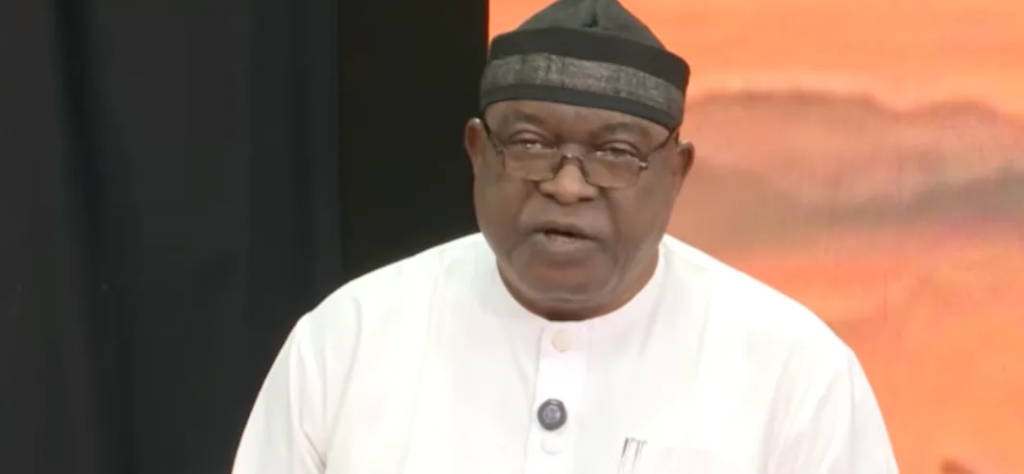
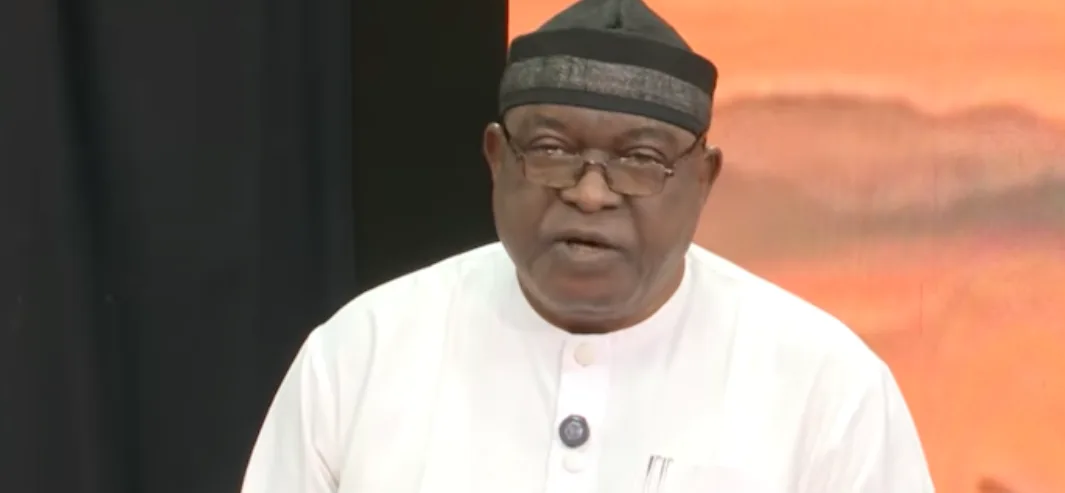
Chille Igbawua, Special Adviser on Research, Policy and Strategy to the ADC national chairman, challenged Lawal’s position during an interview with ARISE News on Tuesday, July 28, 2026.
Igbawua said the former SGF appeared to be expressing a personal wish rather than offering an evidence-based assessment of Atiku’s electoral chances.
He maintained that the Babachir Atiku defeat prediction could not be treated as a scientific projection because Lawal did not provide data, explain his assumptions or identify the political trends on which he based his conclusion.
According to the ADC official, the party is concentrating on its manifesto, organisational work and preparations for the election rather than responding to unsupported political forecasts.
The exchange represents another phase in the increasingly bitter dispute between Lawal and Atiku following the former SGF’s resignation from the ADC after the party’s presidential primary.
ADC official questions basis of prediction
Igbawua said Lawal’s declaration was difficult to debate because it was presented partly as a prayer that Atiku would be defeated.
He argued that every Nigerian had the right to hold a personal political preference, but such a preference should not automatically be presented as a credible forecast.
The ADC official said a meaningful electoral projection should be supported by measurable evidence, including voter behaviour, regional strength, party organisation, opinion polling and campaign capacity.
He maintained that the Babachir Atiku defeat prediction did not meet that standard.
Igbawua said the ADC had developed programmes and policy documents through which it hoped to persuade voters that it offered an alternative to the governing All Progressives Congress.
He described the party’s objective as rescuing Nigeria from what he called the continuing national drift under the present administration.
According to him, the ADC’s confidence does not rest only on political rhetoric but also on internal analysis and work being undertaken ahead of the election.
That claim will ultimately be tested by the party’s ability to unite its members, attract undecided voters, mobilise across Nigeria’s six geopolitical zones and defend votes at polling units.
What Babachir Lawal predicted
Lawal reportedly argued that Atiku would lose the 2027 presidential election and expressed preference for an alternative opposition arrangement.
In comments reported on July 26, the former SGF projected that a ticket involving former Anambra State governor Peter Obi and former Kano State governor Rabiu Musa Kwankwaso could have a considerably stronger chance of defeating both Atiku and President Bola Tinubu.
Lawal was quoted as giving an Obi–Kwankwaso arrangement a 70 per cent chance, while stating that Atiku would not win.
However, no publicly available nationwide poll, state-by-state projection or statistical methodology accompanied the percentages.
The Babachir Atiku defeat prediction therefore remains a political opinion rather than a demonstrable electoral forecast.
Lawal is entitled to criticise Atiku and assess his prospects. Presidential candidates seeking the highest office must be subjected to scrutiny concerning their record, competence, alliances and electability.
But precise percentages can create an appearance of statistical certainty. Where a politician states that one candidate has a 70 per cent chance, the public deserves to know how that number was calculated.
Without such an explanation, the figure carries little analytical value.
Dispute followed controversial ADC primary
The confrontation did not begin with Lawal’s latest prediction.
Lawal resigned from the ADC on June 1 after alleging that the party’s presidential primary had been manipulated to favour Atiku and his associates.
He argued that supporting Atiku would improve President Tinubu’s chances of securing a second term and said he could not remain in the party under those circumstances.
Atiku’s camp rejected the accusation, saying Lawal had supplied no documents, witnesses or verifiable evidence showing that the primary was rigged.
The former vice-president’s aides described the allegations as the reaction of a dissatisfied politician whose preferred candidate did not emerge.
Reports said Atiku received 1,846,370 votes in the primary, ahead of Rotimi Amaechi, who recorded 504,117 votes, and Mohammed Hayatu-Deen, who received 177,120 votes. Amaechi and Hayatu-Deen reportedly rejected the outcome and stayed away from the formal announcement of the results.
Those disagreements provide the political background to the Babachir Atiku defeat prediction.
Lawal’s criticism can no longer be separated from his rejection of the primary and subsequent departure from the party.
That does not automatically make every concern he raises invalid. It does, however, mean his statements should be understood as coming from a former insider now openly opposed to the ADC candidate.
ADC defends its presidential primary
Igbawua also defended the process through which Atiku emerged as the party’s candidate.
He said the exercise complied with the ADC constitution, the Electoral Act and the Nigerian Constitution.
The party official acknowledged that the primary might not have been perfect but argued that the ADC had subjected itself to a more open internal process than parties that selected candidates through consensus or direct appointment.
He said critics who accused the party of manipulation should produce evidence supporting their allegations.
This defence addresses the wider controversy behind the Babachir Atiku defeat prediction, but the ADC still has a responsibility to publish enough information for members and the public to assess the credibility of its process.
That should include accreditation figures, state-by-state results, voting procedures, complaint mechanisms and the decisions taken on petitions submitted by aspirants.
Internal democracy cannot be established merely by declaring that rules were followed.
A credible political party should demonstrate compliance through records that can withstand independent scrutiny.
Lawal says Atiku should be replaced
Lawal has previously urged the ADC to replace Atiku with what he described as a more qualified and electorally competitive candidate.
He argued that the former vice-president did not possess the capacity required to defeat Tinubu and the APC.
Lawal also defended his right to examine the character and competence of anyone seeking to become Nigeria’s president.
That general principle is valid.
Atiku’s experience, previous electoral performances, policy programme, age, alliances and political record are legitimate subjects of public debate.
The former vice-president has contested for the presidency several times and was the Peoples Democratic Party candidate in the 2019 and 2023 elections.
However, criticism must be separated from claims presented as established facts.
The Babachir Atiku defeat prediction is not proof that the ADC candidate will lose. Similarly, the ADC’s confidence is not proof that Atiku will win.
The election will be determined by voters, the quality of party organisation, the strength of competing candidates and the credibility of the electoral process.
Atiku camp accused Lawal of ethnic profiling
The conflict later became more inflammatory after Atiku’s camp accused Lawal of ethnic profiling.
The former vice-president’s media team said some of Lawal’s comments moved beyond legitimate criticism of an individual candidate and risked portraying an entire ethnic community negatively.
Lawal rejected the suggestion that his criticism of Atiku amounted to an attack on all Fulani people.
He maintained that political leaders must not be shielded from scrutiny by ethnic sentiment.
The distinction is important.
A politician’s record should be questioned firmly, but criticism should not associate alleged individual shortcomings with an ethnic or religious group.
Nigeria’s political history shows how quickly campaign disagreements can deepen regional and communal divisions.
The debate over the Babachir Atiku defeat prediction should therefore remain focused on policies, electoral strategy, leadership record and governance capacity.
Personal insults and ethnic generalisations do not help voters make an informed choice.
https://ogelenews.ng/babachir-atiku-defeat-prediction
ADC says its coalition existed before Obi joined
Igbawua also addressed the role of Peter Obi in the opposition coalition.
He said the movement that eventually adopted the ADC as its platform had begun before Obi formally joined the party on December 31, 2025.
According to him, the coalition had already completed important consultations and selected a political platform before Obi’s arrival.
He used that explanation to challenge the impression that Obi’s later exit or political movement destroyed the original coalition structure.
The statement is relevant because Lawal’s electoral analysis gives significant weight to a possible Obi–Kwankwaso alliance.
The Babachir Atiku defeat prediction assumes that such an arrangement would combine Obi’s following, particularly among younger and southern voters, with Kwankwaso’s political base in Kano and parts of the North-West.
That possibility may appear politically attractive, but electoral alliances are more complicated than adding the votes previously secured by two candidates.
Supporters do not automatically transfer their loyalty when leaders form alliances.
The choice of presidential candidate, running mate, party structure, regional negotiations and campaign message would all influence how voters respond.
Past results cannot simply be added together
Political commentators frequently estimate the strength of a coalition by combining the votes its leading figures received in a previous election.
That approach is unreliable.
Voters may change their preferences because of economic conditions, security, candidate selection, party disputes or government performance.
Turnout can rise or fall sharply from one election to another.
A candidate may also lose supporters after entering an alliance that some members of the original movement oppose.
Consequently, the Babachir Atiku defeat prediction cannot be validated merely by adding Obi’s 2023 votes to Kwankwaso’s votes and assuming the total would remain intact in 2027.
The same warning applies to the ADC.
Atiku cannot assume that every voter who supported him under the PDP in 2023 will automatically follow him to a different party.
The ADC must build functioning structures in every state, recruit credible candidates and convince voters that it represents more than a temporary coalition of political elites.
Atiku faces genuine electoral challenges
Rejecting Lawal’s unsupported prediction does not mean the ADC should ignore the weaknesses facing its candidate.
Atiku must explain why Nigerians should support another presidential campaign after previous unsuccessful attempts.
He must also manage divisions arising from the primary, address concerns among former aspirants and unite politicians who entered the coalition with different ambitions.
The Babachir Atiku defeat prediction may lack a scientific foundation, but it reflects a broader concern about whether the opposition can defeat a sitting president while divided.
Incumbency gives the governing party access to established political structures, governors, lawmakers and officeholders across the federation.
The ADC will need extensive polling-unit organisation, agents, legal teams, financial resources and credible candidates in other elections held alongside the presidential poll.
A strong manifesto alone will not be enough.
The party must translate policy promises into a campaign understood by citizens dealing with inflation, unemployment, insecurity, electricity challenges and declining purchasing power.
Tinubu also faces a public verdict
The debate should not create the impression that the 2027 election is solely about Atiku and the opposition.
President Tinubu and the APC will also have to defend their record before voters.
Economic reforms, security conditions, food prices, employment, public debt, infrastructure and the cost of living are likely to influence public opinion.
Lawal has previously criticised the Tinubu administration and predicted that the APC could lose badly in a free and fair election.
He later argued that Tinubu might still defeat Atiku, particularly if the opposition presented a candidate he considered weak.
These changing assessments demonstrate the danger of treating partisan commentary as reliable forecasting.
The Babachir Atiku defeat prediction should be considered alongside Lawal’s previous statements, alliances and disagreements with different political groups.
Voters need evidence rather than the certainty often expressed by politicians.
Credible polling remains limited
Nigeria does not have a deeply established culture of frequent, transparent and nationally representative political polling comparable to some older democracies.
Online polls are particularly unreliable because participants select themselves and may not reflect the wider voting population.
Social-media popularity also cannot be treated as a direct measure of electoral strength.
Large crowds at rallies may demonstrate enthusiasm but do not always translate into votes.
A credible assessment of the Babachir Atiku defeat prediction would require a transparent sample, geographical representation, demographic weighting, clearly written questions and disclosure of the margin of error.
It would also need to consider registered voters, expected turnout and the constitutional requirement for geographical spread.
Without that information, numerical claims about a candidate’s chances are political rhetoric rather than research.
Media organisations should therefore avoid turning unsupported percentages into authoritative headlines.
ADC must respond with evidence, not confidence alone
Igbawua was correct to ask for the basis of Lawal’s claim, but the ADC must apply the same standard to its own assurances.
Saying that the party is doing the work required to win does not establish that it is currently ahead.
The party should explain its policy priorities, organisational progress and strategy for attracting voters who do not belong to established political blocs.
It should also resolve internal disputes transparently and avoid dismissing every criticism as bitterness.
The controversy surrounding the Babachir Atiku defeat prediction presents an opportunity for the ADC to demonstrate maturity.
Rather than exchanging insults with a former member, the party should answer doubts through organisation, policy clarity and measurable public support.
Lawal, for his part, should provide the data behind his forecasts or present them honestly as personal political judgments.
Nigerians deserve issue-based politics
The 2027 presidential campaign should not become a contest of unverified predictions.
Nigerians need detailed answers on how candidates will stabilise the economy, create employment, improve electricity supply, protect communities, reform public institutions and reduce corruption.
Atiku and the ADC must defend their programme.
Tinubu and the APC must account for their record.
Any alternative coalition involving Obi, Kwankwaso or other candidates must explain how it would govern and how competing interests would be reconciled.
The Babachir Atiku defeat prediction may generate headlines, but it does not resolve any of the questions facing the country.
An election cannot be responsibly forecast through prayer, personal disagreement or unsupported percentages.
Lawal has the right to oppose Atiku, campaign against him and recommend another candidate.
The ADC has the right to reject his conclusions and defend its presidential nominee.
The final judgment, however, belongs to Nigerian voters.
Until credible polling, candidate lists and clearer campaign alignments emerge, every confident declaration about the outcome of the 2027 election should be treated as political opinion rather than established fact.