













Plateau 2025 audited accounts
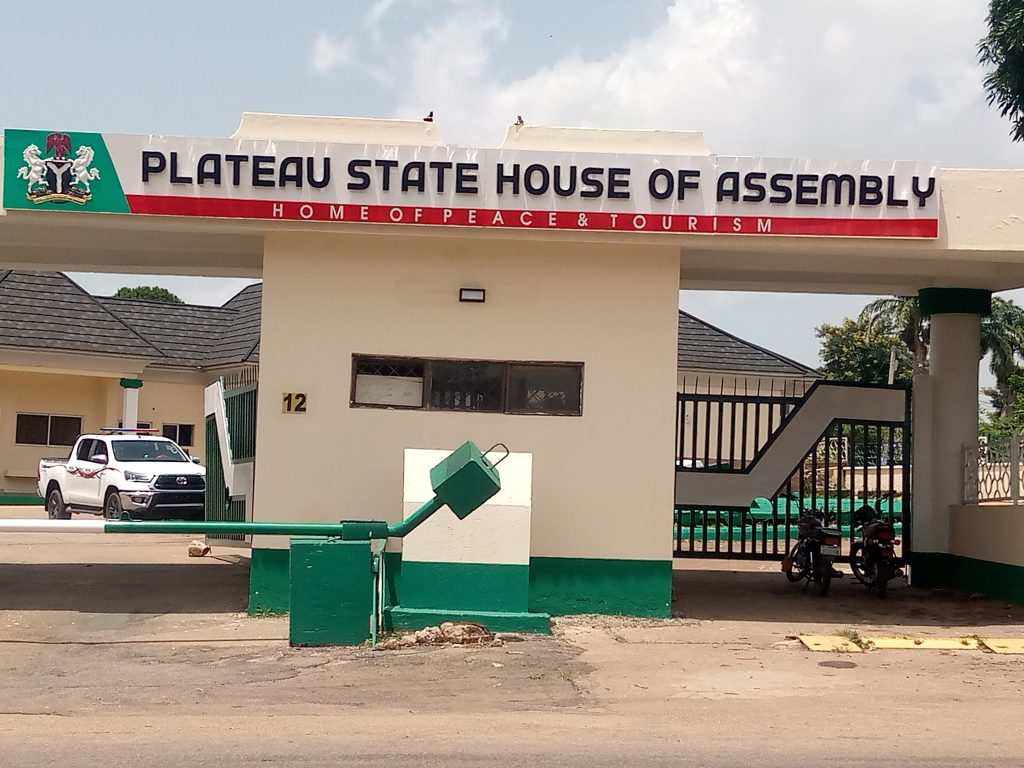
The Plateau State House of Assembly has received the audited financial accounts of the state government and its 17 local government councils for the 2025 financial year, opening another important phase in the scrutiny of public revenue and expenditure.
The reports are expected to provide lawmakers with detailed information on how government funds were received, managed and spent during the year under review.
They should also reveal whether ministries, departments, agencies and local government councils complied with approved budgets, financial regulations and established public-accounting procedures.
The submission of the Plateau 2025 audited accounts is an important constitutional and administrative requirement. However, the real value of the exercise will depend on what the House does with the documents after receiving them.
Audited accounts should not be treated as ceremonial reports that are presented, acknowledged and subsequently forgotten in legislative archives.
They are meant to help the Assembly identify unauthorised expenditure, weak financial controls, unretired advances, abandoned projects, unsupported payments and other matters requiring explanation.
For Plateau residents, the central question is therefore not merely whether the reports have reached the legislature. It is whether lawmakers will examine them thoroughly, hold responsible officials to account and ensure that public money delivers measurable benefits.
Reports cover state and local councils
The documents presented to the House cover the finances of the Plateau State Government and all 17 local government areas for the year ended December 31, 2025.
Plateau State’s councils are Barkin Ladi, Bassa, Bokkos, Jos East, Jos North, Jos South, Kanam, Kanke, Langtang North, Langtang South, Mangu, Mikang, Pankshin, Qua’an Pan, Riyom, Shendam and Wase.
Including the councils in the audit process is particularly important because local governments are the tier of government closest to the people.
They are responsible for services that directly affect communities, including primary healthcare, local roads, markets, sanitation, rural infrastructure and aspects of basic education.
The Plateau 2025 audited accounts should show how much each council received from the Federation Account, how much it generated internally and how the money was applied.
Residents should be able to compare allocations with visible projects and services in their communities.
Where a council received substantial revenue but recorded limited development, lawmakers must demand a clear explanation.
Submission is only the beginning
Receipt of the reports does not amount to legislative approval or confirmation that every expenditure was properly made.
The next stage should involve referral to the House Committee on Public Accounts or any other committee empowered to examine audit reports.
The committee is expected to study the observations, findings and recommendations contained in the documents.
Accounting officers may then be invited to respond to queries concerning expenditure under their supervision.
The Public Accounts Committee should seek clarification where the reports identify payments without supporting documents, contracts awarded outside established procedures, revenue not remitted or funds spent outside approved purposes.
The Plateau 2025 audited accounts may also contain observations relating to procurement, payroll administration, asset management, bank reconciliation and compliance with budgetary limits.
Each material query should be tracked until it is resolved.
It would defeat the purpose of public auditing if officials simply appear before the Assembly, offer general explanations and leave without providing documents or correcting identified weaknesses.
Constitutional responsibility of the Assembly
Section 125 of the 1999 Constitution establishes the framework for auditing the public accounts of state governments.
It provides for the Auditor-General of a state to audit the public accounts and submit reports to the House of Assembly.
The legislature is then expected to consider the reports through the committee responsible for public accounts.
The constitutional arrangement is intended to preserve a degree of independence in the scrutiny of government finances.
The executive prepares and implements the budget, while the auditor examines the resulting accounts and reports to the legislature.
The House must therefore approach the Plateau 2025 audited accounts as part of its constitutional oversight responsibility, not as a favour to the executive.
Lawmakers were elected to represent citizens and protect public resources.
Their duty includes asking difficult questions about spending, regardless of the political party or public official involved.
Effective oversight requires independence, professional support and access to reliable documentation.
What the audit reports should reveal
A comprehensive audit report should go beyond listing income and expenditure.
It should examine whether transactions were lawful, properly authorised, accurately recorded and supported by credible evidence.
The reports should indicate whether the state and councils complied with the approved 2025 budgets.
They should also identify any expenditure exceeding authorised limits or made under budget lines different from those approved by lawmakers.
Other areas requiring attention include internally generated revenue, statutory deductions, personnel costs, pensions, contract payments and capital-project implementation.
The Plateau 2025 audited accounts should enable legislators and residents to determine whether financial statements correspond with the actual condition of public services.
For example, where money was reported as spent on a road, health centre, school or water project, the Assembly should confirm whether the project exists and whether the amount recorded reflects the work completed.
Financial records should not be considered in isolation from physical outcomes.
An account may appear properly documented while the corresponding project remains abandoned, poorly executed or unavailable to the intended beneficiaries.
Local government autonomy increases scrutiny
The finances of local governments have attracted increased national attention following legal and political debates about financial autonomy.
In July 2024, the Supreme Court affirmed the constitutional right of democratically elected local government councils to receive and manage allocations without unlawful control by state governments.
That decision increased public expectations that councils would exercise greater control over their finances and become more directly accountable for their performance.
The Plateau 2025 audited accounts should therefore clarify the financial relationship between the state and the councils during the period under review.
The reports should identify funds received by each local government and any deductions, transfers or joint arrangements affecting the money.
Where deductions were made, the legal basis, purpose and beneficiary should be clearly stated.
Local government chairmen cannot demand autonomy while resisting transparency.
Greater financial control must be accompanied by stronger reporting, independent auditing and public disclosure.
Assembly must examine audit queries
Audit queries are among the most important parts of any Auditor-General’s report.
They draw attention to transactions or practices that require clarification.
An audit query does not automatically prove corruption. It may arise from missing documents, weak record-keeping, procedural errors or conflicting information.
However, unresolved queries can indicate significant risks to public funds.
The Assembly should publish a summary of the major issues identified in the Plateau 2025 audited accounts.
Such disclosure would help citizens understand the scale and nature of the financial-management challenges facing the state.
Where officials provide satisfactory documentation, the query may be resolved.
Where explanations are inadequate, the House should recommend recovery of funds, disciplinary action or referral to the appropriate investigative authority.
The process must distinguish between honest administrative mistakes and deliberate financial misconduct.
It must also avoid becoming a platform for political victimisation.
https://ogelenews.ng/plateau-2025-audited-accounts
Public access is essential
The Plateau State Government maintains an online portal containing budgets, financial statements and other public documents.
Publication of financial information is an important step towards transparency, but the documents must be easy to locate, download and understand.
The Plateau 2025 audited accounts should be published promptly on the state government and House of Assembly websites.
Local government audit reports should also be uploaded separately, allowing residents to find the accounts of their individual councils without searching through one oversized document.
Publication should not be limited to hundreds of pages of technical accounting tables.
The authorities should produce citizen-friendly summaries showing:
- total revenue received;
- internally generated revenue;
- recurrent expenditure;
- capital expenditure;
- debt obligations;
- major audit findings;
- unresolved queries; and
- actions taken in response.
Financial transparency is meaningful only when citizens can understand the information disclosed.
Follow-up has often been the weak link
Across Nigeria, many audit reports are submitted without producing visible consequences.
Queries may remain unresolved for years, while recommendations are repeated in subsequent reports.
The delay weakens deterrence and allows financial-management problems to become institutional habits.
Plateau lawmakers should avoid this pattern.
The committee reviewing the Plateau 2025 audited accounts should establish deadlines for ministries, agencies and councils to respond.
It should also create a public audit-recommendation tracker showing each query, the responsible institution, the requested corrective action and the current status.
This would allow residents, journalists and civil-society organisations to monitor whether the Assembly’s recommendations are implemented.
Without follow-up, an audit becomes a historical description of what went wrong rather than a tool for preventing future losses.
Procurement deserves close attention
Public procurement is frequently one of the highest-risk areas in government finance.
The Assembly should examine whether contracts were advertised where required, awarded to qualified companies and executed according to approved specifications.
It should also determine whether mobilisation payments were protected by valid guarantees and whether contractors received money for work that was incomplete.
The Plateau 2025 audited accounts should be cross-checked against procurement records, budget implementation reports and physical project inspections.
Lawmakers should pay particular attention to repeated variations, emergency procurement, contract splitting and payments made near the end of the financial year.
These practices do not always prove wrongdoing, but they can be used to avoid competition or weaken scrutiny.
The Assembly should also check whether projects were evenly distributed according to public need or concentrated for political reasons.
Revenue collection must be scrutinised
Accountability is not limited to expenditure.
The audit process should determine whether all revenue due to the state and councils was properly assessed, collected and remitted.
Potential areas of revenue include taxes, licences, fees, market charges, land-related payments and earnings from government assets.
Where collecting agents retain public revenue or fail to transfer it promptly, the government loses resources needed for essential services.
The Plateau 2025 audited accounts should show whether revenue leakages were identified and what corrective action was recommended.
The Assembly should also examine the cost of revenue collection.
A government may record higher internally generated revenue while spending an excessive proportion on consultants, commissions and administrative arrangements.
Citizens deserve to know both the gross amount collected and the net amount available for public services.
Payroll and pension obligations
Personnel expenditure is another area requiring detailed scrutiny.
The accounts should indicate whether payroll records were regularly verified and whether ghost workers, duplicate records or payments to ineligible persons were detected.
The Assembly should seek explanations for unexplained increases in salary expenditure.
It should also examine the treatment of pensions, gratuities and other obligations owed to retired workers.
The Plateau 2025 audited accounts should disclose any arrears and show whether funds appropriated for retirees were applied as intended.
Delayed pension payments cause severe hardship to people who spent decades in public service.
Where money was budgeted but not released, the responsible authority should explain why.
Where it was released but beneficiaries were not paid, the financial trail must be followed.
Audit institutions need independence
The quality of public auditing depends on the independence and capacity of the offices responsible for it.
Auditors must be able to examine records without political interference and report their findings honestly.
They also require trained personnel, appropriate technology, secure record systems and adequate operational funding.
Plateau State enacted an Audit Law in 2021 as part of efforts to strengthen the legal framework for public-sector auditing and financial autonomy.
The law can only achieve its purpose if the audit institutions are genuinely protected from executive and political pressure.
The Assembly should assess whether the offices that prepared the Plateau 2025 audited accounts had sufficient access to financial records and enough resources to complete their work.
Any ministry, department, agency or council that withheld documents should be identified.
Public officials must understand that government records are not personal property and cannot be concealed from constitutionally authorised auditors.
Citizens should follow the process
The submission of audited accounts may appear technical, but the consequences affect daily life.
Every naira that is mismanaged represents a road that may remain damaged, a clinic without medicine, a school without facilities or a community without safe water.
Residents should therefore follow the Assembly’s consideration of the reports.
Civil-society organisations, professional accounting bodies and community associations can help interpret the findings and demand appropriate action.
The media also has a responsibility to move beyond reporting the ceremonial submission.
Journalists should examine the Plateau 2025 audited accounts, identify major findings and compare financial claims with conditions in affected communities.
Public hearings should be accessible to reporters and interested citizens, except where narrowly defined legal reasons require confidentiality.
A major test for the legislature
Receiving the audited accounts is a positive procedural step, particularly where submission is completed within the period required by law.
However, timeliness alone does not guarantee accountability.
The House must demonstrate that it is prepared to question officials, verify claims and insist on corrective action.
The Plateau 2025 audited accounts provide lawmakers with an opportunity to strengthen public confidence in state and local government finances.
The Assembly should announce when committee scrutiny will begin, publish the schedule of appearances and release its final recommendations.
It should also ensure that recommendations are implemented rather than abandoned after public attention fades.
Plateau residents deserve more than confirmation that their government’s books were audited.
They deserve evidence that revenue was lawfully managed, expenditure produced value and any official responsible for financial misconduct will face consequences.
That is the true purpose of public auditing and the standard against which the Assembly’s handling of the reports should be judged.
https://www.plateaustate.gov.ng