















Liverpool ticket touting crackdown
LIVERPOOL — Liverpool Football Club have issued 432 lifetime bans and 115 indefinite suspensions following an extensive investigation into unauthorised ticket sales during the 2025–26 football season.
The disciplinary action forms part of a wider partnership between the Premier League club and Merseyside Police aimed at dismantling organised networks that exploit supporters seeking tickets for matches at Anfield.
The Liverpool ticket touting crackdown has also led investigators to more than £1.2 million in assets linked to suspected organised touting operations. The assets have been detained by Merseyside Police’s Economic Crime Team under proceeds-of-crime legislation while a number of investigations remain active.
Liverpool said the police operation was focused on identifying and restricting the laundering of money generated through illegal ticket sales. Three touting-related cases connected to the club emerged over the past 12 months, with two resulting in convictions and another expected before a court in August.
The development represents one of the strongest coordinated actions taken by an English football club against the illicit resale of match tickets.
Club confirms exact breakdown of sanctions
Under the Liverpool ticket touting crackdown, 383 of the 432 lifetime bans were imposed on All Red members. Forty-one affected season-ticket holders, while eight were issued to seasonal hospitality members.
Liverpool also handed out 115 indefinite suspensions. Of that number, 91 concerned All Red members and 24 involved season-ticket holders.
The distinction between the two sanctions is important. A lifetime ban permanently removes the affected account holder’s ticketing privileges. An indefinite suspension normally carries a minimum period—typically three years—after which the individual must apply for reinstatement.
Liverpool said those sanctioned retain the right to appeal the club’s decision and may subsequently take their case to the Independent Football Ombudsman.
Most sanctions arose from the unauthorised resale of season tickets, membership tickets or hospitality packages in breach of Liverpool’s terms and conditions. The club stressed that the measures reflected its zero-tolerance policy toward illegal or unauthorised match-ticket sales.
This means the sanctions should not automatically be described as criminal convictions. They are club-imposed penalties, although some related activities are also being investigated by the police.
More than £1.2m in assets detained
The Liverpool ticket touting crackdown extends beyond the closure of supporter accounts.
Working with Liverpool’s investigations department, Merseyside Police detained assets valued at more than £1.2 million from suspected organised ticket touts.
According to the club, half of any money eventually recovered through the relevant legal process would go to Merseyside Police, while the other half would be transferred to the Home Office.
The partnership targets individuals and networks believed to profit from tickets purchased through manipulated accounts, automated systems, false registrations or legitimate supporter accounts used for unauthorised resale.
Liverpool’s official figures show that ticket touting has developed far beyond individuals standing outside stadiums and offering spare tickets. Modern operators increasingly use websites, social-media groups, encrypted messaging platforms, multiple digital identities and so-called burner phones.
These methods enable tickets to be transferred or displayed on devices controlled by sellers, sometimes at prices far above their official value.
The police involvement suggests the club now considers parts of the problem to be organised financial crime rather than merely a breach of membership rules.
Liverpool analyses nearly 700,000 registrations
During the 2025–26 season, the Liverpool ticket touting crackdown involved the examination of almost 700,000 ticket registrations.
Liverpool blocked or cancelled 67,663 accounts suspected of being fake. A further 121,379 accounts remained under investigation when the club published its update.
The club also cancelled 3,847 tickets after detecting suspicious purchasing activity. Those tickets were returned to general admission sales, increasing the number available through authorised channels.
These figures demonstrate the scale of the demand for Liverpool tickets and the commercial opportunity that demand creates for unauthorised sellers.
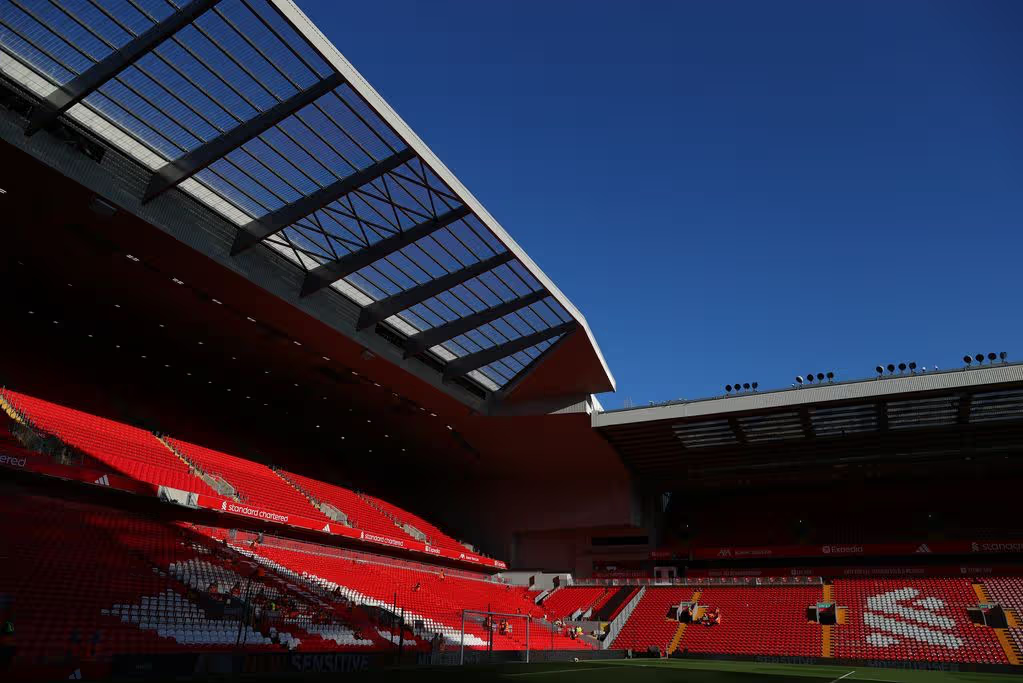
Anfield has a capacity of just over 61,000, while Liverpool’s global support base runs into millions. High-profile Premier League and European matches are regularly oversubscribed, leaving many supporters unable to obtain tickets through official sales.
Touts exploit that imbalance by acquiring tickets and selling them at inflated prices. In some cases, buyers pay large sums only to discover that the ticket does not exist, has already been sold to several people or has been cancelled by the club.
Liverpool’s research suggests that more than nine out of every 10 tickets advertised on unofficial websites either do not exist or are genuine tickets being touted, sometimes to multiple buyers.
Matchday checks rise by 847 per cent
The Liverpool ticket touting crackdown was also visible at stadium turnstiles.
Liverpool increased the number of targeted matchday stops from 381 during the 2024–25 season to 3,608 in 2025–26. That represented an increase of approximately 847 per cent.
The checks were conducted at Anfield and during away matches in the Premier League and European competitions. Liverpool said it carried out an average of about 300 interventions at each home fixture.
Investigators focused on accounts displaying suspicious activity and supporters attempting to access matches using tickets that had not been transferred through approved channels.
There was also a 33 per cent increase in the number of burner phones identified by the club. Some holders were denied entry, while other devices were seized by Merseyside Police.
A burner phone may be used by an unauthorised seller to pass a digital ticket between buyers while retaining control of the account. Such an arrangement can expose the buyer to removal from the stadium and the loss of the money paid.
Liverpool has warned that season-ticket holders or members who use burner phones to distribute tickets risk suspension, cancellation and the permanent loss of future ticket access.
Previous season produced more than 1,000 bans
The latest figures follow an even larger Liverpool ticket touting crackdown announced in September 2025.
Liverpool revealed that it had issued a record 1,114 lifetime bans during the 2024–25 season. Almost half were connected to the mass manipulation of ticketing software.
That figure represented a dramatic increase from the 75 lifetime bans recorded during the 2023–24 campaign.
Investigators also closed 45,000 fake ticket accounts and examined a further 10,000. The club shut down 162 social-media groups with a combined membership exceeding one million users.
Those groups were accused of advertising non-existent tickets or reselling genuine tickets at extortionate prices.
Liverpool attributed the reduction in newly created fake accounts to stronger preventive technology, including multi-factor authentication, single sign-on systems and more advanced fraud-analysis tools.
The comparison between seasons requires care. The 1,114 bans announced in September 2025 related to the preceding campaign, while the latest 432 lifetime bans concern the 2025–26 season.
Therefore, the fall in lifetime bans does not necessarily mean enforcement has weakened. The sharp rise in blocked accounts and matchday interventions indicates that the club may be stopping suspicious activity before tickets reach the turnstiles.
Unauthorised football-ticket resale is an offence
The Liverpool ticket touting crackdown is supported by legislation governing football tickets in England and Wales.
Section 166 of the Criminal Justice and Public Order Act 1994 makes it an offence for an unauthorised person to sell or otherwise dispose of a ticket for a designated football match.
The restriction applies to Premier League, Football League, UEFA and international matches staged at major grounds in England and Wales. It was introduced partly because unauthorised resale could undermine supporter segregation and create public-order risks.
The Premier League similarly advises supporters to purchase tickets directly from clubs or their recognised partners.
According to the league, buyers using unauthorised sellers risk receiving fake or cancelled tickets, losing their payments, having personal or banking details compromised, or being placed in sections allocated to opposing supporters.
Tickets bought from unauthorised sources may be invalidated, with holders denied entry or removed from the stadium.
Liverpool’s authorised ticket-forwarding system remains the approved method for sharing a general admission ticket with another eligible supporter.
Official hospitality may be purchased directly from the club or through listed match-break partners whose packages include authorised tickets alongside travel or accommodation.
https://ogelenews.ng/liverpool-ticket-touting-crackdown
Genuine supporters bear the cost
The strongest justification for the Liverpool ticket touting crackdown is the protection of genuine supporters.
Ticket touting creates artificial scarcity because individuals or organised groups obtain tickets without intending to attend the match. Their objective is to resell access at a profit.
This leaves ordinary supporters competing against automated systems, fake accounts and coordinated purchasing networks.
Overseas supporters may be particularly vulnerable because they often arrange flights and accommodation before discovering that a purchased ticket is fake. By the time the fraud becomes clear, the buyer may have lost not only the ticket fee but also considerable travel expenses.
There is also a security dimension. Clubs must know who occupies each seat, particularly where rival supporters must be kept in separate areas.
Unauthorised transfers weaken that system and may place supporters in the wrong section of the stadium.
The Premier League’s move toward digital ticketing is intended partly to address these risks. From the 2026–27 season, league rules envisage digital delivery as the default for home and away tickets, with authorised transfer schemes also operating electronically.
Digital tickets can include hidden or rotating barcodes, making duplication and unauthorised use more difficult.
Technology alone, however, will not eliminate touting. Organised operators continually adapt, making cooperation between clubs, police, technology companies and supporters essential.
Appeals and fairness remain important
While Liverpool has a responsibility to protect its ticketing system, enforcement must also remain transparent.
The club says cases are heard through an official sanctions process involving club representatives and a member of an independent supporters’ association.
Account holders should receive details of the alleged breach and a genuine opportunity to challenge incorrect findings. This is particularly important where suspicious activity may result from compromised accounts, innocent forwarding errors or identity theft.
Lifetime bans carry serious consequences for long-standing supporters, and decisions must therefore be based on reliable evidence.
Liverpool’s appeal process and access to the Independent Football Ombudsman offer safeguards, but the club should continue communicating clearly about how suspicious activity is detected and how innocent members can establish their position.
Strong enforcement and procedural fairness are not competing objectives. Both are necessary if supporters are to trust the system.
Liverpool sends uncompromising message
Liverpool’s latest action sends an unmistakable warning to those treating match tickets as instruments of organised profiteering.
The club has combined technology, account analysis, matchday inspections, disciplinary proceedings and police investigation in an effort to reduce illegal resale.
The detention of more than £1.2 million in suspected assets raises the stakes considerably. It shows that authorities are not simply cancelling tickets but following the financial proceeds generated by organised operations.
For supporters, the safest course remains purchasing directly from Liverpool or an officially recognised partner.
Any offer promising guaranteed access through an unofficial website, social-media account or private seller should be treated with caution, especially where the seller demands an inflated payment or control of the ticket through an unfamiliar mobile device.
Liverpool’s challenge will be sustaining the operation without unfairly penalising genuine fans.
Nevertheless, with 432 lifetime bans, 115 indefinite suspensions, tens of thousands of fake accounts removed and more than £1.2 million in assets detained, the club has made clear that ticket touting will be pursued inside the stadium, across digital platforms and through the criminal-justice system.
https://www.liverpoolfc.com/tickets/tickets-availability