
















Ogogo message to daughter
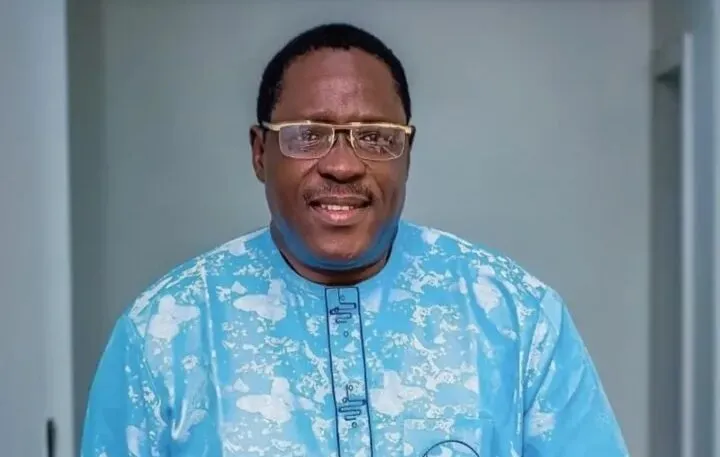
LAGOS, Nigeria — An emotional conversation between late Nollywood veteran Taiwo Hassan, popularly known as Ogogo, and his daughter Kira Taiwo has surfaced following the actor’s death, revealing how the screen legend tried to comfort his child even as he battled a serious illness.
The Ogogo message to daughter was exchanged weeks before the veteran Yoruba actor died on Sunday, August 23, 2026, at the age of 66 after battling stage-four cancer.
Kira shared the conversation publicly on Monday as family members, colleagues and admirers continued to mourn the actor.
In the exchange, Ogogo asked his daughter why she was crying and told her that seeing her and her sisters happy strengthened him during his illness.
He encouraged her to remain strong and place her faith in Allah.
“Don’t cry, my princess,” he told her.
Kira responded by assuring her father that she trusted in Allah and loved him, to which Ogogo replied affectionately.
The conversation has since attracted emotional reactions online, providing a deeply personal glimpse into the veteran actor’s relationship with his children during the difficult final weeks of his life.
Ogogo Message to Daughter Reveals a Father Trying to Stay Strong
The significance of the Ogogo message to daughter lies not simply in the words exchanged but in the circumstances surrounding them.
Ogogo was already facing serious health challenges.
Yet rather than dwelling on his condition, the actor appeared more concerned about how his illness was affecting his daughter emotionally.
According to the conversation shared by Kira, he told her that seeing his children smiling gave him strength and that her tears would make him sad and worried.
That exchange has resonated strongly with many Nigerians because it presents Ogogo away from the cameras and movie sets that made him famous.
For decades, audiences knew him as one of Yoruba cinema’s most recognisable actors.
The conversation reveals something different: a father attempting to reassure his daughter at a moment when his own health was deteriorating.
Kira Shared Conversation After Father’s Death
Kira published the exchange on her Instagram Story on Monday, one day after her father’s death.
The messages had been exchanged weeks earlier.
The Ogogo message to daughter consequently acquired a significance neither father nor daughter could necessarily have anticipated when the conversation originally took place.
Ogogo told Kira to remain strong and expressed confidence that nothing would happen to him, God willing.
She responded with similar faith and reassured him of her love.
The brief exchange ended affectionately between father and daughter.
It is a simple conversation.
That simplicity is precisely what gives the story its emotional weight.
There is no need to exaggerate it.
A seriously ill father was trying to comfort his daughter.
Weeks later, she was mourning him.
Ogogo Died at 66 After Cancer Battle
Ogogo died on Sunday after battling stage-four cancer.
His daughter Kira confirmed his death during an emotional Instagram Live session.
The veteran actor’s condition had become public only days earlier after members of his family appealed for assistance in securing appropriate medical treatment.
Reports said the family was seeking access to hospitals and medical specialists capable of managing his advanced condition.
The Ogogo message to daughter was therefore exchanged against a background of a serious health crisis that the wider public would only later fully understand.
His death came just days after another daughter had been forced to dismiss false reports claiming that the actor had already died.
On August 18, the family strongly denied those reports and urged members of the public to stop circulating misinformation while Ogogo was still alive and receiving care.
Five days later, the family announced his actual death.
Family Had Sought Urgent Medical Assistance
Before Ogogo’s death, his daughters had publicly discussed the severity of his illness.
They revealed that he was battling stage-four cancer and sought assistance in finding medical facilities and specialists capable of handling his condition.
Importantly, the family clarified that its immediate appeal was not simply for money.
They were seeking medical intervention.
One of his daughters explained that the family had only recently become aware of the seriousness of the illness because Ogogo’s physical appearance had initially not reflected how advanced his condition had become.
That background makes the Ogogo message to daughter even more poignant.
While his children were confronting the possibility of losing their father, he was attempting to keep them hopeful.
Faith Runs Through Ogogo’s Message
Faith occupies an important place in the conversation.
Ogogo repeatedly encouraged Kira to trust in Allah.
He told her that he was strong and expressed hope that he would recover.
Kira responded in the same spirit, assuring him that she trusted in Allah.
For a Muslim family confronting serious illness, those words represented more than ordinary reassurance.
They reflected an attempt to find strength in faith during uncertainty.
The Ogogo message to daughter should therefore not be reduced to the most emotional sentence simply because it makes a powerful headline.
The wider conversation reveals a father encouraging courage, hope and faith.
https://ogelenews.ng/dont-cry-my-princess-ogogos-emotional-message-to-da…
From Automobile Mechanic to Nollywood Veteran
Ogogo leaves behind a career extending more than four decades.
Born in Ilaro, Ogun State, in 1959, Taiwo Hassan did not begin his working life as a film star.
He trained as an automobile mechanic and reportedly worked in that profession before eventually committing himself fully to acting.
Over the years, he became one of the defining faces of Yoruba-language cinema.
His career stretched across major transformations in Nigeria’s entertainment industry, from the earlier Yoruba theatre tradition and television era through the home-video revolution and into modern Nollywood.
Reports following his death have highlighted notable appearances in productions including Owo Blow, Omo Ghetto and Aníkúlápó.
For generations of Nigerian viewers, however, his name alone was enough.
Ogogo had become a brand.
Four Decades Before the Camera
Longevity is one of the strongest measures of Ogogo’s contribution.
Nigeria’s film industry changed dramatically during his career.
Production technologies changed.
Distribution changed.
Audience expectations changed.
Home video gave way increasingly to cinema releases and streaming platforms.
New generations of actors emerged.
Yet Ogogo remained recognisable.
He worked as an actor, filmmaker and screenwriter, building a career that spanned more than four decades.
That longevity explains why his death generated such widespread reaction.
He was not simply another contemporary celebrity.
He belonged to a generation that helped build the foundation upon which today’s Yoruba-language Nollywood industry stands.
His Death Triggered Outpouring of Grief
News of Ogogo’s death spread rapidly on Sunday.
Video footage circulated showing Kira struggling emotionally as she confirmed that her father had died.
The footage intensified the public response, with colleagues and fans paying tribute across social media.
The resurfaced Ogogo message to daughter now adds another dimension to that grief.
The public saw Kira crying after her father’s death.
The private conversation reveals that weeks earlier, her father had been trying to persuade her not to cry.
That contrast explains why the story has resonated so strongly.
Ogogo’s Death Also Exposes Danger of False Celebrity Reports
There is another lesson in the events surrounding Ogogo’s final days.
Only days before his actual death, social media carried false reports claiming he had died.
His family had to publicly deny the story.
Lima Taiwo described the reports as fake and urged people to stop circulating them.
That episode should concern journalists.
Speed cannot replace verification.
Celebrity death reports are particularly sensitive because false information does not merely mislead readers. It can inflict distress on people already dealing with serious illness.
The fact that Ogogo subsequently died does not make the earlier false report retrospectively acceptable.
At the time it was published, it was false.
Responsible journalism requires waiting for confirmation.
A Private Father-Daughter Moment Becomes Public Memory
Celebrity deaths frequently produce a flood of photographs, old interviews and personal stories.
Some add genuine understanding.
Others merely exploit grief.
The Ogogo message to daughter belongs in the first category because Kira herself chose to share the exchange and because it provides meaningful insight into her father’s final weeks.
But restraint remains necessary.
The public does not need every private detail of a family’s mourning.
Kira’s disclosure already tells readers enough.
Her father was ill.
She was frightened.
He knew she was crying.
And instead of focusing on his own fear, he tried to make her feel better.
That is the story.
Cancer Should Not Become Ogogo’s Entire Legacy
The circumstances of Ogogo’s death will inevitably form part of his obituary.
But cancer should not become the definition of his life.
Before the illness, there were decades of performances.
There were films.
There were characters remembered by audiences.
There were younger performers who watched his work and colleagues who shared sets with him.
There was also a family that knew him not as “Ogogo,” the Nollywood star, but as a father and relative.
The Ogogo message to daughter brings those two identities together.
It allows the public to see the celebrated actor through the eyes of one of his children.
Ogele News Analysis: Emotion Needs Restraint, Not Exaggeration
The original headline, “‘Don’t cry, my princess,’ Ogogo told daughter weeks before death,” is strong.
It is emotional without being excessively sensational.
However, Ogele News should resist the temptation to upgrade the conversation into “Ogogo’s final words” unless there is evidence that these were literally the last words he communicated to Kira.
Current reports establish that Kira shared an emotional conversation from weeks before his death.
That is enough.
The Ogogo message to daughter already contains everything required for a compelling human-interest story.
A father battling advanced cancer discovers that his daughter has been crying.
He asks her to stop.
He tells her that seeing his daughters smile makes him stronger.
He encourages her to trust in Allah.
She tells him she loves him.
He tells her he loves her too.
Weeks later, he dies.
A veteran journalist should recognise when the facts have already done the emotional work.
There is no need for melodrama.
Ogogo spent more than four decades building a public identity through acting.
Yet one of the stories Nigerians are now reading after his death contains no movie script and no camera.
It is simply a conversation between a father and his daughter.
Perhaps that is why it matters.
Millions knew the actor.
Kira knew the father.
And in sharing the Ogogo message to daughter, she has allowed Nigerians to glimpse the man behind the famous name.