















Dangote charity wealth pledge
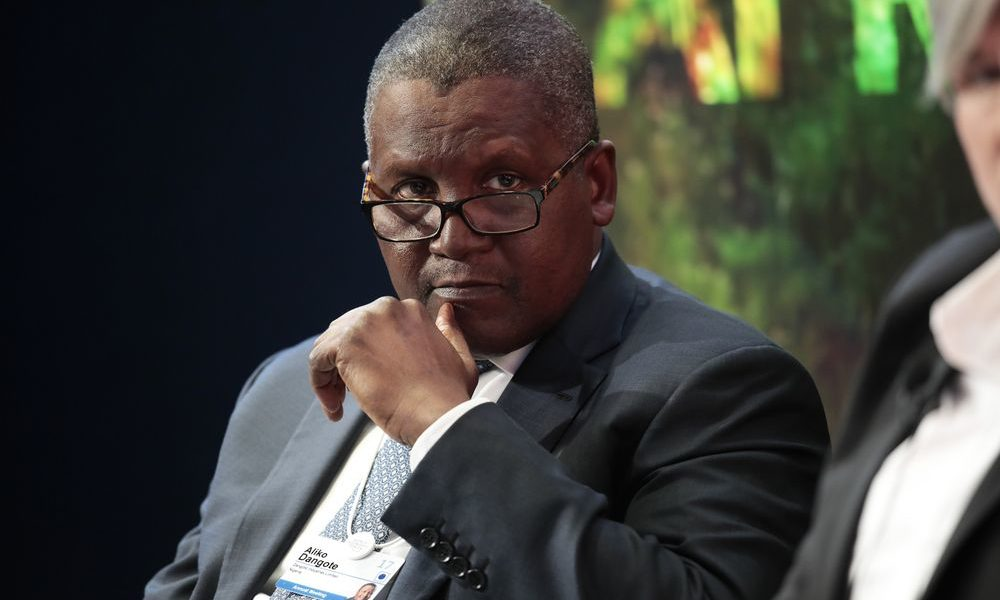
Africa’s richest businessman, Aliko Dangote, plans to commit one-third of his wealth to charitable causes under a succession arrangement supported by members of his family, his daughter, Halima Dangote, has revealed.
Halima, a trustee of the Aliko Dangote Foundation, disclosed the arrangement during an interview with Bloomberg published on Tuesday, July 28, 2026.
She said her father had incorporated philanthropy into his succession plan and obtained the backing of his daughters and mother for 33 per cent of his estate to be dedicated to humanitarian purposes.
The Dangote charity wealth pledge could become one of the largest philanthropic commitments publicly associated with an African billionaire if the arrangement is fully implemented.
Dangote’s fortune was estimated at approximately $35.1 billion by the Bloomberg Billionaires Index in one report published on Tuesday. At that valuation, one-third would amount to about $11.7 billion.
The figure is not fixed. Billionaires’ wealth estimates rise or fall according to the value of listed shares, privately owned businesses, debts, currencies and other assets. The eventual amount transferred to charity will therefore depend on the value and structure of Dangote’s estate when the commitment takes effect.
Nevertheless, the scale of the proposed allocation could significantly strengthen privately funded interventions in health, education, nutrition, poverty reduction and humanitarian relief across Nigeria and the wider African continent.
Family members endorse philanthropic plan
According to Halima, Dangote asked her, her two sisters and his mother to sign the family arrangement allowing him to devote 33 per cent of his inheritance to humanity.
She explained that the decision reflected both the family’s religious values and her father’s desire to ensure that charitable giving continued beyond his lifetime.
Halima said philanthropy had become an inseparable part of the family’s activities and that Dangote regarded the success of his businesses as connected to the responsibility to give back to society.
Her disclosure suggests that the Dangote charity wealth pledge is not an informal promise made at a public event. It forms part of a broader discussion about succession, estate planning and the future management of Africa’s largest privately owned industrial empire.
Public support from his heirs is significant because inheritance disagreements can weaken even carefully designed philanthropic plans.
Family endorsement may reduce uncertainty over whether assets intended for charity will later become the subject of conflict among beneficiaries.
However, the lasting effect of the arrangement will depend on the legal instruments used, the assets covered and the governance structure established to administer the funds.
One-third may be worth billions of dollars
A valuation of $35.1 billion would place the possible charitable share at approximately $11.7 billion.
Another report citing a more recent Bloomberg estimate placed Dangote’s wealth at about $36.5 billion, which would increase the theoretical value of one-third to more than $12 billion.
The difference illustrates why Ogele News should not describe any particular figure as the final donation.
Much of Dangote’s wealth is connected to business interests rather than money held in a bank account. His holdings include interests in cement, oil refining, fertiliser, sugar, salt and food-processing operations.
The Dangote charity wealth pledge could therefore be implemented through shares, dividends, trusts, endowment funds, cash or a combination of different assets.
How those assets are transferred will matter.
A foundation that receives productive shares may benefit from continuous dividend income, but it may also become exposed to market risk and changes in company performance.
A large cash transfer can finance immediate programmes, but without careful investment management, its long-term value may decline because of inflation and operating expenses.
A properly managed endowment would seek to preserve the underlying capital while using investment returns to fund charitable work over many generations.
Existing foundation dates back to 1994
The planned commitment builds on the work of the Aliko Dangote Foundation, which was established in 1994.
Halima said the foundation was endowed with $1.25 billion about a decade ago and later received an additional $700 million.
She added that approximately 70 per cent of its expenditure is directed towards programmes in Nigeria, with 20 per cent supporting projects elsewhere in Africa and the remaining portion funding interventions in other parts of the world.
The foundation’s activities have covered healthcare, education, nutrition and humanitarian relief.
It has also worked with government institutions and international organisations on public-health initiatives.
The Dangote charity wealth pledge would substantially expand the financial base available to the foundation if the planned estate allocation is ultimately placed under its management.
However, the foundation will require a clear long-term strategy to ensure that a larger endowment produces measurable social results rather than simply expanding administrative structures.
The quality of philanthropic spending is as important as its size.
A billion-dollar programme that lacks reliable data, local consultation or effective supervision may produce less impact than a smaller initiative carefully targeted at a proven problem.
Contribution to fight against polio
Among the foundation’s most recognised interventions is its involvement in the campaign against wild poliovirus.
The Aliko Dangote Foundation worked with the Bill & Melinda Gates Foundation and northern state governments to support immunisation and disease-eradication efforts.
Africa was certified free of indigenous wild poliovirus in 2020 after years of vaccination, surveillance and community mobilisation.
The achievement resulted from the combined work of governments, international organisations, health workers, traditional leaders and private donors.
It demonstrates the potential value of philanthropy when private funding is aligned with public-health institutions and clear national objectives.
The Dangote charity wealth pledge could support similar partnerships in areas where African governments face severe funding and capacity gaps.
Possible priorities include maternal and child healthcare, malnutrition, infectious-disease control, education, vocational training and support for communities displaced by conflict or natural disasters.
The foundation should nevertheless avoid replacing government.
Private philanthropy can support innovation and fill urgent gaps, but elected authorities remain responsible for providing essential public services and accounting to citizens.
Education and nutrition likely to remain central
Halima identified health and education as important areas within the structure her father has established.
These sectors present enormous challenges in Nigeria.
Millions of children remain vulnerable to poor nutrition, inadequate schooling and preventable illnesses. Public institutions face shortages of teachers, health workers, classrooms, medical equipment and reliable infrastructure.
A carefully administered Dangote charity wealth pledge could fund programmes capable of operating at national scale.
In education, the foundation could support teacher training, school infrastructure, scholarships, technical education, research and digital learning.
In healthcare, it could finance primary health centres, immunisation systems, maternal care, disease surveillance and affordable access to essential treatment.
Nutrition programmes could focus on pregnant women, infants, schoolchildren and communities affected by food insecurity.
Yet large donations should be guided by evidence.
Programmes must have clearly defined beneficiaries, measurable objectives and independent evaluation.
Success should not be judged by the number of ceremonies held or cheques presented. It should be judged by improved learning, lower mortality, reduced malnutrition and lasting community capacity.
Succession plan extends beyond philanthropy
Halima’s disclosure also offers an important glimpse into the future of the Dangote business empire.
Dangote has gradually expanded the responsibilities of his daughters, Halima, Fatima and Mariya, within the family’s business and philanthropic operations.
Reports indicate that Halima oversees family-office activities, while her sisters hold responsibilities in energy, food and other parts of the group.
The family’s public endorsement of the Dangote charity wealth pledge suggests that business succession and philanthropic succession are being planned together.
This approach may help protect the foundation from becoming disconnected from the companies that generate the family’s wealth.
It could also ensure that future generations understand philanthropy as a core family responsibility rather than an optional activity controlled only by the founder.
However, governance should not depend entirely on family relationships.
An institution intended to operate for generations needs professional management, independent trustees, conflict-of-interest rules and a transparent process for selecting projects.
It should be capable of making sound decisions even when family leadership changes.
https://ogelenews.ng/dangote-charity-wealth-pledge
Philanthropy and the Islamic inheritance context
Halima linked the arrangement to Islamic inheritance principles, under which a person may make a charitable bequest within defined limits while protecting the inheritance rights of recognised heirs.
She said the family members were asked to endorse the arrangement, reflecting her father’s desire to combine religious obligations, family consent and charitable giving.
Ogele News is not offering a legal interpretation of Dangote’s private estate plan. The final effect will depend on the specific will, trust instruments, jurisdictions, asset ownership structures and applicable laws.
The Dangote charity wealth pledge may involve assets located in several countries and held through different companies.
That complexity requires specialist legal, tax, investment and succession advice.
It also means the ultimate charitable transfer may occur in stages rather than as one immediate transaction.
Clear documentation will be essential to prevent confusion between corporate assets belonging to shareholders, personal assets belonging to Dangote and assets already held by the foundation.
Giving Pledge comparison requires context
Some reports have compared Dangote’s plan with the Giving Pledge, an international initiative through which wealthy individuals commit to giving away the majority of their wealth.
A one-third allocation would be below the majority-of-wealth threshold generally associated with that initiative.
However, the comparison should be treated cautiously.
Dangote’s commitment can still be historically significant without matching another organisation’s benchmark.
One-third of a fortune estimated above $35 billion would represent an extraordinary philanthropic allocation in an African context.
The Dangote charity wealth pledge may also be supplemented by donations made during his lifetime, existing foundation assets and continuing annual expenditure.
The more useful question is not whether his percentage exceeds that of another billionaire.
It is whether the money will be governed transparently and used to address urgent human needs effectively.
Philanthropy should not become a competition based only on publicised dollar figures.
Transparency will determine public confidence
The larger the proposed donation, the greater the need for public accountability.
The Aliko Dangote Foundation is privately funded, but its programmes affect communities, work with governments and may influence public priorities.
It should therefore publish comprehensive annual reports showing income, investment returns, operating costs, grants, beneficiaries and programme outcomes.
The reports should distinguish between fresh donations, investment income and commitments that have not yet been paid.
The foundation should also disclose how trustees are appointed, how conflicts of interest are managed and how projects are selected.
Independent audits would strengthen confidence in the Dangote charity wealth pledge and demonstrate that the commitment is producing real benefits.
Transparency would also protect the Dangote family’s legacy.
Without reliable reporting, exaggerated claims or misinformation could circulate about how much was donated and where the funds went.
Open accounts and measurable results would provide a stronger answer than publicity campaigns.
Questions about wealth and inequality remain
Major philanthropic announcements often produce both praise and criticism.
Supporters argue that successful entrepreneurs should use part of their wealth to improve society, particularly in countries where governments struggle to meet essential needs.
Critics respond that philanthropy cannot replace fair taxation, responsible business conduct, competition and effective public institutions.
Both arguments can be valid.
The Dangote charity wealth pledge should not exempt any business from paying taxes, complying with regulations or treating workers and communities fairly.
Charitable donations and corporate responsibility are separate obligations.
A company should not cause avoidable harm and then rely on philanthropy to repair its public image.
At the same time, rejecting large-scale charitable giving simply because the donor is wealthy would deny vulnerable communities potentially valuable support.
The appropriate response is to welcome genuine philanthropy while demanding transparency, ethical business practices and strong public institutions.
Government must not abandon its duties
Nigeria’s fiscal pressures make private support valuable, but ministries and state governments must not use billionaire philanthropy as an excuse to withdraw from their responsibilities.
Healthcare, education, sanitation, security and poverty reduction are fundamental duties of government.
Private foundations are not elected, and citizens cannot vote out their trustees if programmes fail.
Government partnerships with the Dangote Foundation should therefore be governed by written agreements, defined responsibilities and transparent financial arrangements.
Public agencies must retain control of policy while benefiting from private expertise and funding.
The Dangote charity wealth pledge will have its strongest impact when it strengthens systems that can continue working after a particular grant ends.
For example, constructing a health facility is useful, but funding staff training, supply chains, maintenance and data systems may determine whether it remains functional after its opening ceremony.
Potential to reshape African philanthropy
Dangote’s planned commitment could encourage other wealthy Africans to formalise their charitable giving.
Many business leaders make donations during emergencies, religious celebrations or public fundraising events. Fewer establish permanent institutions with professional management and multigenerational funding.
The Dangote charity wealth pledge could help shift African philanthropy from occasional gifts towards long-term endowments focused on measurable development outcomes.
It could also support African-led research into problems that international donors may not fully understand.
Local foundations often possess stronger cultural knowledge and closer relationships with communities.
However, the concentration of philanthropic power in the hands of a few wealthy families also deserves scrutiny.
Large donors can influence which social issues receive attention, even though their priorities may not always reflect those of affected communities.
Strong partnerships should therefore include governments, local organisations, researchers and intended beneficiaries.
Legacy will be measured by impact
Halima Dangote’s disclosure presents her father’s charitable plan as a central part of his legacy.
That legacy will not ultimately be measured by the percentage announced or the estimated dollar value attached to it.
It will be measured by lives improved, diseases prevented, children educated and communities strengthened.
The Dangote charity wealth pledge has the potential to become one of the most consequential philanthropic commitments in African history.
But potential is not the same as impact.
The family and foundation must translate the succession arrangement into legally secure assets, professional governance and well-designed programmes.
They must publish enough information for the public to understand what has been committed, what has been transferred and what results have been achieved.
Dangote has built an industrial empire whose influence reaches across Africa.
His plan to commit one-third of his wealth to charity suggests that he wants part of that empire’s value to continue serving humanity beyond his lifetime.
The seriousness of that ambition will be demonstrated not by the announcement alone, but by the institutions, accountability systems and lasting human progress that follow it.
https://punchng.com/dangote-to-donate-one-third-of-wealth-to-charity-daughter-reveals/