
















Strait of Hormuz authority
Iran has introduced a new Strait of Hormuz authority to regulate maritime transit through one of the world’s most strategic waterways, deepening concerns over shipping safety, energy security and rising tensions in the Persian Gulf.
The new body, described by Iranian state media as the Persian Gulf Strait Authority, will reportedly issue guidance to vessels intending to pass through the Strait of Hormuz. Under the new framework, ships are expected to comply with Iran’s transit rules and obtain prior authorisation before crossing the waterway. Reuters reported that Iran said it had introduced a new mechanism to manage vessel transit through the strait, with commercial ships required to coordinate passage with Iranian military authorities.
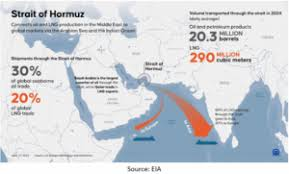
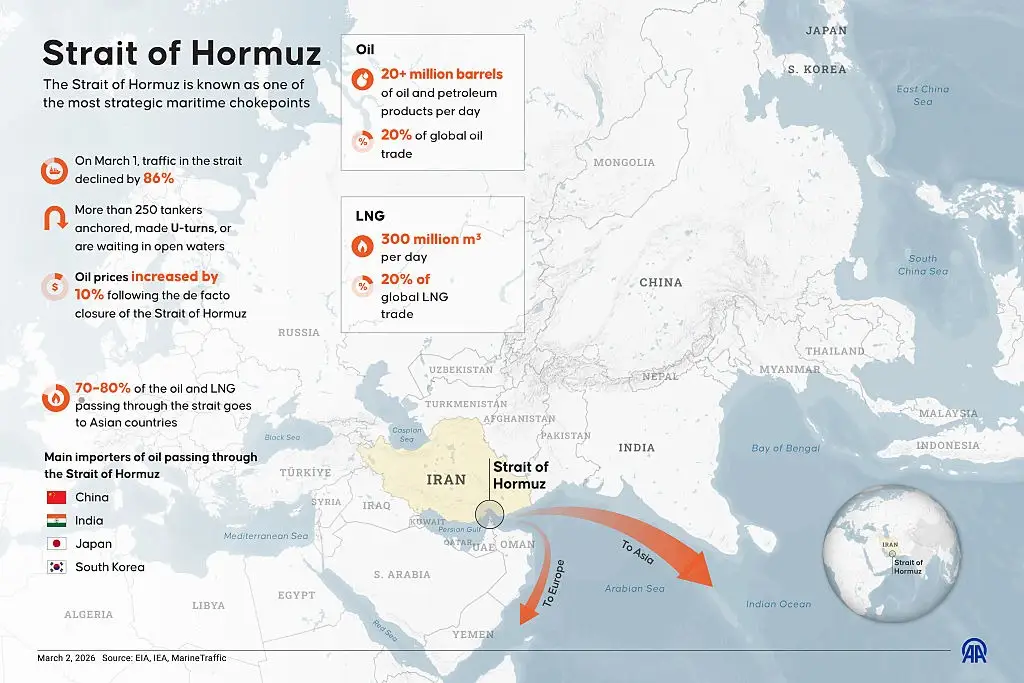
The development immediately raises the stakes in a region that already carries heavy geopolitical risk. The Strait of Hormuz is a narrow but vital maritime corridor linking the Persian Gulf with the Gulf of Oman and the Arabian Sea. It is one of the most important energy chokepoints in the world because a major share of global oil and gas shipments passes through it.
For global markets, the creation of a Strait of Hormuz authority is not a minor bureaucratic step. It signals that Iran is trying to convert military and geographic leverage into formal control over vessel movement. That could affect oil tankers, container ships, naval vessels and commercial traffic moving through the corridor.
According to reports, vessels intending to transit the waterway will receive instructions through an official email address outlining Iran’s rules for passage. PUNCH reported that ships must comply with the framework and receive prior authorisation before crossing.
Iran’s move comes amid a tense contest over who controls movement through the strait. Argus Media reported that the United States and Iran have both announced measures designed to challenge each other’s claims over navigation, while commercial traffic through the strait remains far below normal levels.
The new Strait of Hormuz authority also follows recent warnings from Iran to the United States Navy. Reuters reported that Tehran’s new arrangement included a warning directed at the US Navy to avoid the waterway, while Iran also released a revised map suggesting an expanded area under its control.
This is why the move is drawing attention beyond the Middle East. The issue is not just Iran’s domestic announcement. It touches international navigation rights, energy supply, insurance risk, maritime law and the safety of crews on commercial vessels.
The timing is also sensitive. Al Jazeera reported that Iran’s Islamic Revolutionary Guard Corps navy said safe transit through the Strait of Hormuz would be ensured after US threats ended and new procedures were put in place. The report came after the United States said it was pausing operations to help stranded ships move through the waterway.
The Strait of Hormuz authority announcement may therefore be read by Tehran as a security measure, but by Washington and Gulf allies as an attempt to impose unilateral control over an international waterway. That disagreement is likely to shape the next phase of regional diplomacy and naval posture.
The stakes became even clearer after reports of fresh attacks on shipping. Reuters reported that a CMA CGM container vessel was attacked while transiting the Strait of Hormuz, injuring eight crew members. The report said the broader conflict had brought shipping in the waterway to a near standstill and disrupted a major portion of global oil trade.
Such incidents show why shipowners and insurers are worried. Even when vessels are not directly targeted, uncertainty alone can raise shipping costs, delay deliveries and force companies to reroute cargo. For oil-dependent economies, any disruption around the strait can quickly affect prices, supply forecasts and inflation pressure.
The United States and its Gulf allies have also taken the matter to the United Nations. The Associated Press reported that they submitted a draft resolution to the UN Security Council threatening sanctions or other measures if Iran fails to end what they described as a chokehold on the Strait of Hormuz. The proposal reportedly demands that Iran stop attacking ships, laying mines and imposing illegal tolls in the waterway.
https://ogelenews.ng/iran-creates-strait-of-hormuz-authority-raises-fres…
That diplomatic response shows how seriously the Strait of Hormuz authority is being treated. For Iran, the new mechanism may be presented as a way to organise transit and assert security control. For its opponents, it may look like an attempt to regulate a route that should remain open under international norms.
The crisis also matters to countries far from the Gulf, including Nigeria. Any sustained disruption in the Strait of Hormuz can affect oil prices, shipping rates and energy markets. For an oil-producing country like Nigeria, higher crude prices may appear beneficial at first glance, but global instability can also worsen fuel import costs, inflation and foreign exchange pressure.
For ordinary consumers, the connection may not be obvious immediately. But when shipping routes become unsafe, the cost of moving goods rises. When oil trade becomes uncertain, energy markets react. When energy markets react, transport costs, food prices and business expenses can follow.
The Strait of Hormuz authority story is therefore not just a foreign affairs item. It is a global economic story with direct implications for energy security and international commerce.
Still, there are important legal and diplomatic questions. Can Iran unilaterally require vessels to obtain permission before passing through the strait? How will shipping companies respond? Will Gulf states accept the new arrangement? Will the United States resume escort operations if maritime risks rise again? These questions remain open.
What is clear is that the announcement has added another layer of uncertainty to a region already under pressure. The Persian Gulf has always been a strategic theatre, but formalising a new authority over the strait pushes the dispute into a more structured phase.
In the final analysis, Iran’s creation of a Strait of Hormuz authority marks a serious escalation in the struggle over one of the world’s most important maritime corridors. It gives Tehran a formal instrument to assert control over ship movement, but it also increases the risk of diplomatic confrontation and market disruption.
For now, shipping companies, energy traders, governments and naval forces will be watching closely. The Strait of Hormuz is too important to ignore. Any change in who controls passage through it will be felt far beyond Iran, the Gulf and the United States.
Strait of Hormuz authority.