
















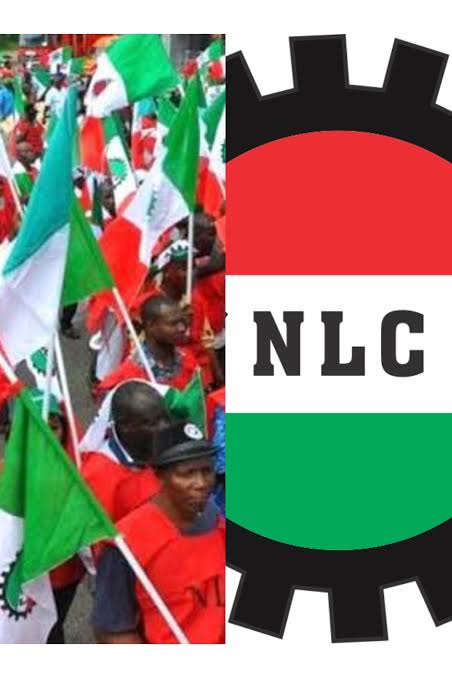
NLC ₦500,000 minimum wage
BIRNIN KEBBI — The Nigeria Labour Congress has signalled that it will push for a national minimum wage of about ₦500,000 when fresh negotiations with the Federal Government begin, arguing that the current ₦70,000 wage has been overwhelmed by the rising cost of living.
NLC President Joe Ajaero said anything below ₦500,000 would be inadequate for Nigerian workers under prevailing economic conditions.
Ajaero made the position known at the Rights of Workers Summit in Birnin Kebbi, Kebbi State, where he was represented by the NLC Deputy President, Audu Titus Amba.
The proposed NLC ₦500,000 minimum wage marks a dramatic escalation in organised labour’s campaign for higher earnings and could set the stage for another difficult round of negotiations involving the Federal Government, state governors and private-sector employers.
Ajaero argued that the existing ₦70,000 national minimum wage should not be confused with a living wage, insisting that workers’ incomes have been substantially eroded by inflation and increases in the cost of food, transportation, rent, electricity, education and healthcare.
He said the union was preparing to engage federal and state governments rather than seeking confrontation with the authorities.
NLC says ₦70,000 no longer meets basic needs
At the heart of the NLC ₦500,000 minimum wage proposal is Labour’s contention that the purchasing power of Nigerian workers has deteriorated considerably since the ₦70,000 minimum wage was approved in 2024.
Ajaero said the issue should be considered against the economic realities confronting families rather than simply as a nominal salary increase.
For many workers, ₦70,000 must cover transportation to and from work, food, accommodation, utility bills and other household expenses.
The NLC president maintained that the difference between a statutory minimum wage and a genuine living wage had become increasingly obvious.
The argument echoes comments he made earlier in 2026, when he warned that even a salary of ₦1 million would mean little if inflation and currency weakness continued destroying workers’ purchasing power.
Labour’s position is therefore not merely that salaries should rise, but that wages should maintain enough real value to support basic living standards.
Fresh negotiations approaching
The push for an NLC ₦500,000 minimum wage follows months of preparation for another national wage negotiation.
During the 2026 Workers’ Day celebration, the NLC and Trade Union Congress announced plans to begin the renegotiation process ahead of the statutory review date.
The unions said early negotiations were intended to prevent the delays and prolonged disputes that characterised previous minimum wage talks.
The existing ₦70,000 minimum wage was signed into law in July 2024 after months of contentious negotiations between organised labour, government representatives and the organised private sector.
The amendment also shortened the periodic review of the national minimum wage from five years to three years.
That distinction is important.
The legal review framework does not mean the ₦70,000 wage simply ceased to exist in July 2026. Rather, organised labour is seeking to open negotiations early as economic conditions change and the next statutory review approaches.
Until a new wage is negotiated, enacted and implemented, ₦70,000 remains the national statutory benchmark.
₦500,000 figure recalls 2024 negotiations
The NLC ₦500,000 minimum wage figure is not entirely new.
During the 2024 negotiations, organised labour initially proposed ₦615,000 based on a calculation of what it considered the monthly needs of an average Nigerian working family.
Labour later reduced the figure to ₦500,000 and subsequently ₦497,000 as negotiations continued.
The Federal Government and employers argued at the time that such figures were unaffordable and could create serious consequences for state governments and private businesses.
Eventually, President Bola Tinubu approved ₦70,000 after negotiations with organised labour.
The gap between Labour’s proposed figure and the amount ultimately approved demonstrated how difficult national wage negotiations can become.
The latest ₦500,000 proposal indicates that those fundamental disagreements over affordability and living standards are likely to return.
Kebbi governor promises support
Kebbi State Governor Nasir Idris, who spoke at the summit, assured workers that his administration would support efforts to improve their remuneration.
Idris said Kebbi had already implemented a ₦75,000 minimum wage, above the nationally prescribed ₦70,000 benchmark.
The governor pledged to champion the welfare of workers through the Nigeria Governors’ Forum whenever discussions on another national wage review formally begin.
He described civil servants as important contributors to national development who deserve adequate compensation.
Such support could become significant because state governments are central actors in minimum wage negotiations.
In previous wage negotiations, several governors expressed concern that large increases could become difficult to sustain, particularly for states dependent heavily on federal allocations.
Affordability will dominate negotiations
The biggest obstacle confronting the NLC ₦500,000 minimum wage proposal is likely to be affordability.
Moving the national wage floor from ₦70,000 to ₦500,000 would represent an increase of more than 600 per cent.
Such a change would have consequences far beyond entry-level workers.
Government salary structures usually require consequential adjustments for workers already earning above the minimum wage to preserve differences between grades.
As a result, the total payroll impact could be substantially larger than simply multiplying ₦500,000 by the number of minimum-wage employees.
Private employers would face similar considerations.
Small businesses operating on narrow profit margins could argue that a sharp wage increase would force them to raise prices, reduce staff or automate some functions.
Organised labour, however, is expected to counter that employers cannot use affordability indefinitely to justify wages that no longer provide basic sustenance.
That debate will become central once formal negotiations begin.
https://ogelenews.ng/nlc-₦500000-minimum-wage
Labour wants living wage, not headline figure
Ajaero has repeatedly argued that wage negotiations must focus on real purchasing power.
That position gives the NLC ₦500,000 minimum wage debate a dimension that goes beyond the headline figure.
If inflation continues increasing rapidly after salaries rise, workers may discover that their improved nominal income buys little more than their previous wage.
Labour has therefore advocated wage-setting mechanisms that reflect changes in the cost of living.
Such a system could involve periodic adjustments linked to inflation, although implementing such arrangements would require agreement among government, employers and trade unions.
The argument is straightforward: workers should not have to wait several years for a new wage negotiation while inflation continuously erodes their earnings.
But employers would also require predictability to plan personnel costs and investment.
Balancing those competing interests will be one of the major challenges facing the next negotiating committee.
States likely to raise sustainability questions
Nigeria operates a national minimum wage, but the capacity of states to pay varies considerably.
Oil-producing and commercially active states generally have stronger internally generated revenue than states that depend heavily on monthly allocations from the Federation Account.
During previous negotiations, governors repeatedly warned that wage increases must take state finances into consideration.
Labour has traditionally resisted proposals that would allow states to independently determine their own minimum wages, arguing that workers deserve a national wage floor regardless of where they are employed.
The NLC ₦500,000 minimum wage proposal is therefore likely to reopen the debate about fiscal federalism, worker protection and the financial capacity of subnational governments.
Some states already pay above the national minimum, demonstrating that the ₦70,000 figure represents a floor rather than a ceiling.
But moving the national floor to ₦500,000 would be an entirely different fiscal undertaking.
Government may demand productivity gains
The Federal Government could also insist that any substantial wage increase be accompanied by improved productivity and public-sector reform.
Higher salaries may improve morale, reduce financial stress and make public service more attractive to skilled professionals.
But sustainable wage growth ultimately depends on higher economic productivity and stronger government revenue.
If wages rise substantially without corresponding improvements in productivity, output and revenue, policymakers may fear renewed inflationary pressure.
The debate should therefore extend beyond what workers are paid to how Nigeria can build an economy capable of sustaining better wages.
Improved electricity supply, transport infrastructure, agricultural productivity, manufacturing capacity and security could reduce the cost of living while increasing employers’ capacity to pay.
Inflation remains central to Labour’s case
The strongest argument supporting the NLC ₦500,000 minimum wage demand is the erosion of real income.
A worker may receive a salary increase on paper but become effectively poorer if food, transportation and accommodation costs rise faster than wages.
This explains Labour’s increasingly strong emphasis on a living wage.
Ajaero has previously argued that strengthening the value of the naira and reducing inflation could be as important as raising nominal salaries.
The union has also criticised electricity tariffs, food costs and transportation expenses as major burdens on workers.
A successful wage agreement must therefore form part of a broader economic programme.
Without price stability, even another historic salary increase could quickly become inadequate.
Another difficult negotiation awaits Nigeria
The NLC ₦500,000 minimum wage proposal is certain to generate intense debate.
Workers will point to declining purchasing power and argue that ₦70,000 bears little relationship to contemporary living costs.
Governments will examine payroll implications and competing demands for infrastructure, healthcare, security and education.
Private employers will calculate whether their businesses can absorb significantly higher salary bills without reducing employment or increasing prices.
These concerns are legitimate, but so is Labour’s central question: what should the minimum wage mean if a full-time worker cannot afford basic necessities?
That is the issue the next round of negotiations must confront.
For organised labour, ₦500,000 has become a marker of how far it believes workers’ living standards have deteriorated.
For governments and employers, the challenge will be demonstrating what level can be sustainably financed.
The final figure may emerge through compromise, as previous wages have.
What cannot be ignored is that Nigeria has entered another period in which wages, inflation and household survival are again at the centre of national economic debate.
The NLC ₦500,000 minimum wage demand has placed the opening marker on the table. Formal negotiations will determine how close the eventual settlement comes to it.